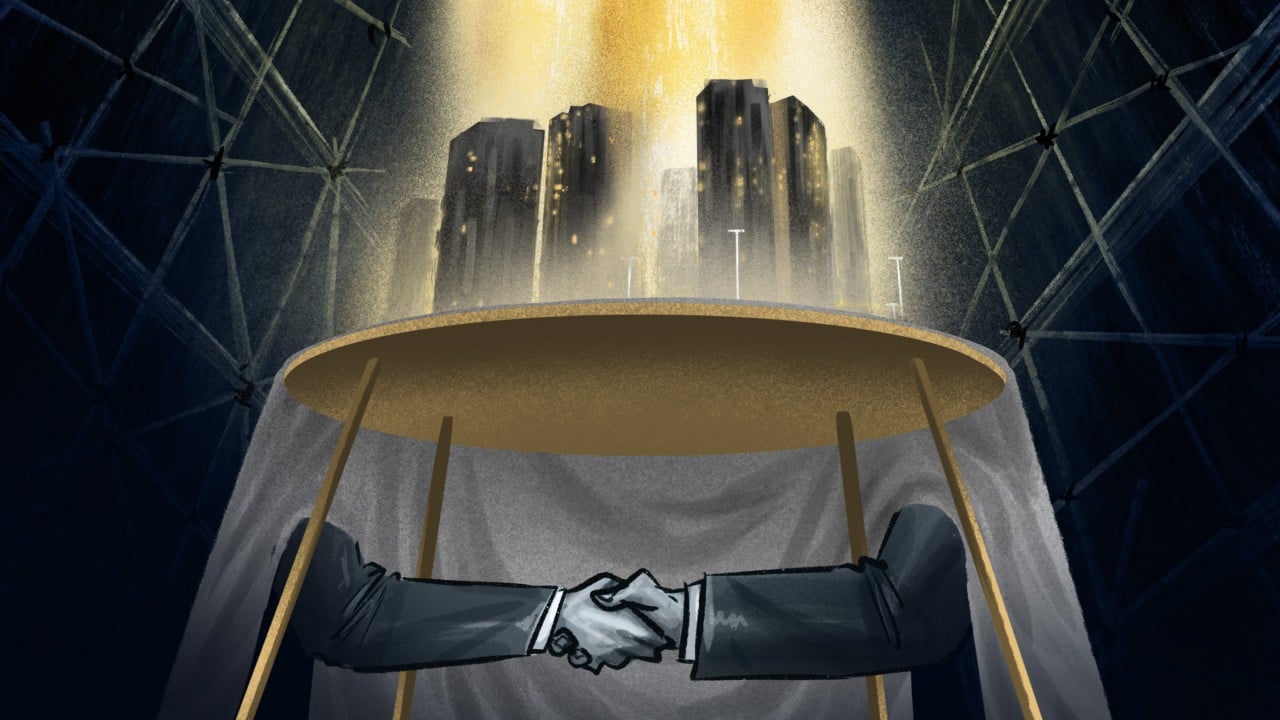
One lit cigarette doesn't kill 168 people on its own. Systems fail first, paperwork gets rubber-stamped second, and corners get cut along the way until a spark has nowhere left to go but up.
When the Wang Fuk Court residential complex in Tai Po burned on November 26, 2025, flames tore through seven of the estate's eight buildings. Nearly a year later, the independent inquiry's findings and the sweeping reforms rolled out in late October 2026 force a hard question on Hong Kong. Will the city actually fix the broken machinery behind the Tai Po fire, or just build new boxes around the same old habits? Don't forget to check out our earlier article on this related article.
Why the Tai Po fire turned into a systemic reckoning
To understand what happened at Wang Fuk Court, you have to look past the spark and look at the renovation environment surrounding it. An independent committee spent more than seven months reviewing over a million documents, holding 30 hearings, and taking testimony from 80 factual and expert witnesses. Their conclusion wasn't pretty. Combustible materials, a lit cigarette, and human fault combined in a high-rise setting where safety oversight had hollowed out over years.
Honestly, that's the part that angers residents most. When warnings go up and nobody owns the risk, disaster stops feeling like a freak accident. The inquiry found that government departments effectively passed the ball on safety complaints, leaving residents stuck while risks piled up. Meanwhile, police and the Independent Commission Against Corruption built a massive joint investigation that led to 35 arrests within six months and 25 charges against seven individuals and two companies. If you want more about the context of this, NPR provides an in-depth breakdown.
Officials eventually bowed their heads in a public apology in late October 2026, admitting decades of failure. Housing chief Winnie Ho resigned to take political responsibility, and the government pledged to disband the Independent Checking Unit—the housing arm singled out as carrying the greatest responsibility for the tragedy—while launching a review of up to 50 civil servants.
Still, apologies after 11 months hit a nerve. Survivors who lost homes, neighbors, and family members are right to ask why accountability took nearly a year to arrive and whether shuffling units or names fixes what's broken on the ground.
Bid-rigging and building maintenance are the real fault lines
If you work around high-rise maintenance or property management, you know bid-rigging isn't a secret rumor. It's a structural rot that distorts who gets hired, what materials show up on site, and how much oversight survives once a contract is signed.
That's why the government's push to criminalize bid-rigging and treat it more like organized crime matters so much. Authorities plan to combine intelligence and enforcement powers across the police, the Independent Commission Against Corruption, and the Competition Commission through a dedicated task force, aiming to pass legislative amendments by April 2027.
"The sun is really the best disinfectant." — That line, echoed by legal commentators in discussions around building governance reforms, captures why secrecy in tender processes and proxy voting has been so dangerous for everyday homeowners.
Too often, owners' corporations are made up of well-meaning volunteers trying to read thick engineering proposals without technical training. Concentrating proxy votes or letting opaque tendering processes run unchecked makes it far easier for bad actors to steer multimillion-dollar renovation contracts. Experts like Tse Wai-chuen, founding president of the Hong Kong Property and Facilities Management Association of the Greater Bay Area, and legal voices from the Hong Kong Bar Association have pointed to practical fixes:
- Clearer conflict declarations: Requiring broader disclosures of direct, indirect, and even non-existent interests from consultants and contractors so hidden ties don't slip by unnoticed.
- Smarter voting rules: Expanding electronic voting—such as through the iAM Smart digital platform—and warning clearly against proxy form falsification so owners aren't sidelined on major renovation votes.
- Real training for volunteers: Giving owners' corporation members accessible guidance so they don't have to guess what technical specifications actually mean.
Creating a new body—the planned Building Maintenance Support and Services Council—to help owners pick qualified professionals and evaluate performance sounds promising on paper. Yet ministers have already noted questions around liability if oversight falls short, and separating support from enforcement only works if real teeth back up both sides.
What happens when rules meet daily enforcement
A tough law on paper doesn't put out a high-rise blaze. Enforcement does.
In dense cities like Hong Kong, thousands of aging residential towers rely on periodic maintenance and external works. When scaffolding, netting, or temporary storage sits near active residential blocks, fire safety isn't a theoretical checklist item under the Buildings Department's Code of Practice for Fire Safety in Buildings. It's a daily operational discipline.
Here's a mistake people make after major tragedies: assuming a new committee or a fresh task force automatically changes site behavior. It doesn't. Contractors still look for ways to shave costs when margins get squeezed. Site supervisors still get pulled in ten directions at once. And if a resident calls a hotline or flags a hazard and two agencies shrug and point elsewhere, the old failure loop is still alive.
There's also a genuine tension in how far political accountability goes. Keeping the core leadership team in place to drive multi-year reforms and a five-year disaster strategy has a clear logic—continuity matters when overhauling laws and agencies. On the other hand, critics and grieving residents reasonably wonder whether stepping back from broader ministerial resignations softens the sense of personal reckoning. Both views deserve honest scrutiny because public trust runs thin after a tragedy of this scale.
Practical steps homeowners and building managers can take now
Waiting eleven months for policy overhauls is exhausting if you live in an aging block or sit on a building committee right now. You don't have to wait for every bill to clear the legislature before tightening up what you control.
- Audit your current renovation and maintenance contracts. Ask for written details on fire-retardant standards for temporary materials, waste disposal routines, and daily housekeeping rules before work starts or continues.
- Demand transparent tender records. Push for open comparison of bids, clear conflict-of-interest declarations from consultants and contractors, and plain-language explanations of scope changes rather than last-minute add-ons.
- Fix how your owners' corporation votes and communicates. Encourage accessible participation and digital verification where allowed so major repair decisions reflect genuine resident consensus instead of last-minute proxy maneuvers.
- Escalate unresolved hazards in writing. Keep dates, photos, and reference numbers whenever you report blocked exits, improper storage, or fire hazards to management or authorities, and follow up until a single office gives a clear response.
Reform isn't finished when a press conference wraps up or a report hits the shelf. It only counts when the next cigarette, the next contractor bid, and the next resident complaint meet a system that actually works.