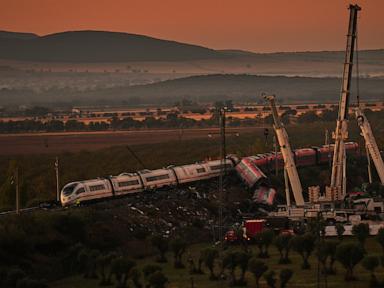
Infrastructure disasters rarely happen in a vacuum. When a railway network experiences two fatal collisions within a single year, public confidence evaporates overnight. Spain is currently confronting that exact nightmare. Following a devastating rear-end high-speed train collision in central Spain near Urda that claimed 68 lives, the political landscape has shifted dramatically. With a national election looming, Prime Minister Pedro Sánchez faces an intense test of leadership.
The tragedy marks the second major railway disaster of the year on the critical Madrid-Seville line, the historic corridor that inaugurated Spain's high-speed rail network back in 1992. Both recent collisions involved a state-owned RENFE train and a private competitor operated by IRYO. This detail sits at the center of the brewing political storm. Spain liberalized its high-speed rail market in 2021, introducing private operators to increase competition and lower ticket prices. Now, critics are asking whether rapid market expansion outpaced essential safety oversight and infrastructure maintenance.
When Sánchez called for early elections, he hoped to capitalize on voter frustration concerning soaring housing costs and expensive urban rents. That strategy has backfired. Opposition leaders, led by conservative Popular Party chief Alberto Núñez Feijóo, have shifted the national debate entirely toward infrastructure safety, government accountability, and the management of privatized transit corridors.
Rail experts point out that modernizing and managing mixed-operator high-speed lines requires immense technological synchronization. Signaling systems, track maintenance, and automated braking tolerances must be faultless. When two trains end up on the same track segment with fatal consequences, the public demands clear answers, not bureaucratic deflection. As search teams finish recovering victims from the wreckage strewn along the gravel slopes of central Spain, engineers and investigators are scrambling to determine whether human error, mechanical failure, or signal software glitches caused the disaster.
Politically, tragedies of this magnitude create a volatile climate. Political science experts at institutions like Madrid's Complutense University note that while disasters rarely benefit incumbent parties, voters often react harshly to opposition figures who appear to politicize human loss too aggressively. Striking the right tone remains a delicate tightrope walk for every party involved.
Beyond the immediate political fallout, Spain must now execute a transparent, comprehensive audit of its entire high-speed rail network. Commuters want reassurance that boarding a train in Madrid or Seville doesn't carry fatal risks. Restoring trust in public-private rail management will take years of strict oversight, massive infrastructure investments, and undeniable accountability. The upcoming ballot box will show whether voters believe the current administration can deliver those vital reforms.