You trust modern rail systems to get you from city to city without a second thought. You board a high-speed train, settle into your seat, and expect technology to keep you safe. But what happens when that technology fails, and human choices collide with catastrophic results?
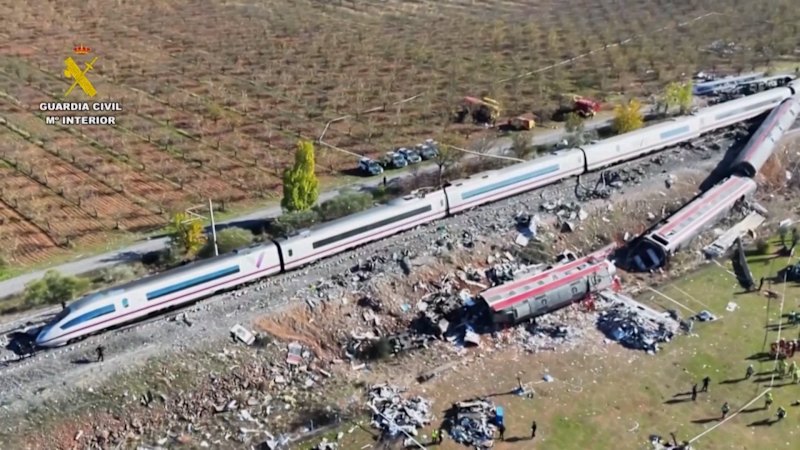
At least 68 people are dead and over 100 injured following a horrific high-speed train collision in central Spain's Toledo province. Two passenger trains—an Iryo service and a Renfe AVE train carrying nearly 540 people combined—collided on the Madrid-Seville line near Los Yébenes. With emergency crews working through mangled carriages, this disaster has shattered public confidence in one of Europe's premier rail networks.
Let's look at what actually went wrong, why this disaster happened twice in one year, and what it means for high-speed rail safety going forward.
The Timeline of a Disaster
The catastrophe unfolded on the morning of October 28, 2026. The Iryo train departed Madrid Atocha station bound for Seville with 147 people on board. Six minutes later, a Renfe AVE train carrying 397 passengers left the same station on the exact same route.
Somewhere near kilometer marker 118, the Iryo train came to a sudden halt. Minutes later, the AVE train barreled down the track at high speed, slamming into the rear of the stationary service. Two carriages of the Iryo train were knocked entirely off the rails and plunged down an embankment. A heavy steel rail from the track lifted up and pierced directly through a carriage, compounding the lethality of the impact.
Survivors described chaotic scenes inside the cars. Passengers were thrown from their seats, luggage flew through the air, and the structural integrity of the cabins buckled instantly. First responders, military emergency units, and local residents rushed to the scene, converting local sports halls into makeshift triage units while heavy cranes attempted to separate the wreckage.
Why Did the Signaling System Fail?
Transport Minister Óscar Puente didn't mince words when addressing the press, calling the sequence of events "inexplicable." Initial reports point to a critical breakdown in the automated LZB signaling system along a 63-kilometer stretch of the track.
When automated sensors and safety systems go dark, rail operators must rely on manual control protocols managed from central dispatch posts. Investigators are focusing heavily on why the control centre in Atocha authorized the second train to resume normal operations while the first train was still stopped and disabled on the track ahead.
Rail experts point out that high-speed rail relies on redundant safety layers. When automation drops offline, the margin for human error shrinks to zero. A single miscommunication or premature green light at a central control desk can turn a multi-billion-dollar transit network into a disaster zone.
A Troubling Pattern for Spain Rail Network
This isn't an isolated incident, and that's what makes the tragedy so difficult for the public to accept. Back in January, southern Spain suffered another catastrophic rail accident when a train jumped the track and collided with an oncoming service, claiming 45 lives.
Following that January incident, government officials promised immediate, comprehensive safety audits across every high-speed rail corridor in the country. Yet, less than ten years after Spain's deadliest modern rail disaster in 2013, the nation is mourning another massive loss of life on a premier route.
Prime Minister Pedro Sánchez declared three days of national mourning, joining European leaders in expressing profound grief. But symbols of mourning won't answer the pressing questions commuters are asking. If a major transit corridor can suffer two fatal collisions in a single year, systemic safety protocols require a radical overhaul.
What Needs to Change Now
Transparency and accountability must drive the ongoing investigation by the Independent Authority for the Technical Investigation of Accidents and Incidents. Engineers, dispatchers, and corporate operators cannot hide behind bureaucratic statements.
If manual override procedures are too prone to human error, automated fail-safes must be hardcoded into the network architecture so that trains cannot physically move into occupied blocks, regardless of dispatcher commands. Until passengers know those safeguards are absolute, the anxiety of stepping onto a high-speed rail platform will linger long after the tracks are cleared.