High-speed rail has long been billed as the gold standard of modern transport. Fast, efficient, and seemingly foolproof. But when two high-speed trains collide on a straight stretch of track, the illusion of absolute safety shatters instantly.
That is the grim reality facing Spain right now. A devastating crash in the central province of Toledo has left at least 10 people dead—with local officials warning that the death toll will likely climb. This disaster on the vital Madrid-Andalusia line isn't just an isolated tragedy. It marks the second major catastrophe to rock Spain's high-speed rail network this year, following a horrific derailment in January that claimed 45 lives.
Let us look at what happened, why it matters, and how a system praised globally for its vast infrastructure is suddenly under intense scrutiny.
The Anatomy of the Toledo Disaster
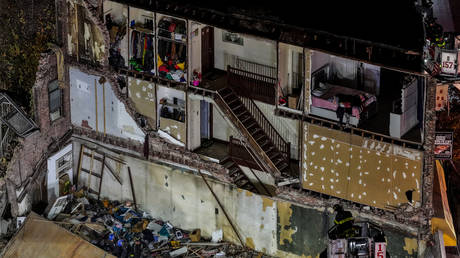
The crash occurred mid-morning on a Wednesday when a state-owned Renfe AVE train rear-ended a stationary Iryo train on the high-speed rail line connecting Madrid to Seville. The impact was violent enough to send carriages tumbling down an embankment, turning a routine morning commute into a rescue operation.
According to rail system operator ADIF, traffic between Madrid, Ciudad Real, and Andalusia was immediately suspended. Emergency responders rushed to the scene in Toledo, where hundreds of passengers had been onboard—397 in the Renfe train and 147 in the Iryo train.
Early reports and ongoing investigations point heavily toward human error. Details emerging from the ground suggest a maintenance worker handling a signalling system fault may have failed to properly warn the approaching AVE train about the stationary Iryo train ahead. While official confirmation is still pending, the prospect that a single communication breakdown could bypass modern safety protocols is terrifying.
A Brutal Year for Spanish Railways
For a country boasting one of the largest high-speed rail networks in Europe, 2026 has been a catastrophic year.
Back in January, 45 people died in southern Spain when a train jumped the tracks and collided with an oncoming service. Before this year, Spain had largely avoided disasters of this magnitude since the tragic 2013 rail crash that killed 80 people. Experiencing two major fatal incidents within a single year has completely shaken public confidence.
Prime Minister Pedro Sánchez took to social media to express shock, promising government coordination and support for grieving families. Yet, expressions of sympathy from political leaders do little to comfort passengers stepping onto a platform today. People want to know how a network equipped with advanced automation and signaling allows two massive trains to occupy the same stretch of track.
Where Technology Fails and Human Error Prevails
Modern high-speed rail relies heavily on automatic braking systems and sophisticated signaling to maintain safe separation distances between trains. European Rail Traffic Management System (ERTMS) standards are supposed to prevent rear-end collisions entirely by stopping a train automatically if it gets too close to another.
When these systems fail—or when manual overrides and maintenance work bypass digital safeguards—catastrophe follows.
Rail experts point out that human error during maintenance windows remains one of the hardest vulnerabilities to eliminate. If a technician is repairing a fault and fails to log a track occupancy or transmit a manual restriction properly, automated safety layers can sometimes be compromised. It raises a harsh question for transport authorities across the globe: are we relying too much on fail-safe technology while underestimating the risks of manual intervention during repairs?
The Broader Fallout
The suspension of the Madrid-Andalusia high-speed line cuts off a vital economic and travel artery. Thousands of daily commuters, business travelers, and tourists are stranded, forcing a scramble for alternative buses and flights.
More importantly, this crash strikes at the heart of Spain's national pride. High-speed rail was marketed as a triumph of engineering and a sustainable alternative to aviation. Every time a tragedy like this happens, it deals a heavy blow to public trust in public transit infrastructure.
Authorities face immense pressure to release transparent findings from the Toledo investigation. If systemic flaws in maintenance protocols or signaling oversight contributed to the crash, sweeping operational changes across ADIF and Renfe will be mandatory.
Safety isn't guaranteed by the speed of a train or the sleekness of its design. It comes down to relentless, flawless execution across every single link in the chain—from the digital control room to the technician working on the tracks. Until Spain proves it can secure every one of those links, passengers will board with lingering hesitation.