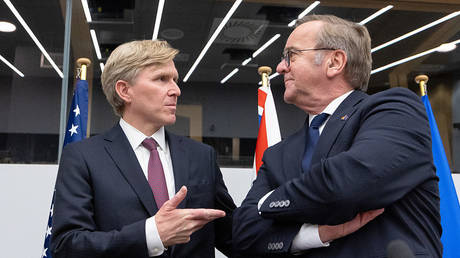
Solomon Islands Prime Minister Matthew Wale is sitting down with Australian Prime Minister Anthony Albanese in Canberra to ink a sweeping security treaty. At the same time, word broke that Honiara has told Beijing it won't renew its 2022 security pact when it lapses next April.
On paper, it looks like a clean geopolitical flip. Canberra gets a huge strategic win. Beijing gets shown the door on policing and security.
Honestly, it's not that simple.
When you strip away the diplomatic handshakes and big speeches about regional order, Honiara isn't choosing a side out of pure ideological loyalty to Canberra. Small island states rarely play zero-sum games like that. Wale took office in May and has been juggling domestic survival, economic needs, and big-power pressure all at once. A security treaty with Australia doesn't automatically erase years of Chinese infrastructure financing, trade ties, or domestic political friction back home.
What Actually Changed Between Honiara, Canberra, and Beijing
To understand why this moment matters, you have to look back at April 2022. That's when former Prime Minister Manasseh Sogavare's government signed a secretive security agreement with China. Even though the final text stayed under wraps, leaked drafts sparked alarm across Australia and the United States because they appeared to open the door to Chinese police and military deployments in a chain of islands roughly 1,600 kilometers northeast of Queensland.
Canberra treated that pact like a flashing red light. Since taking office in May 2022, Albanese's government has spent years stitching together bilateral security deals across the Pacific—with nations like Papua New Guinea, Fiji, Tuvalu, Nauru, and Vanuatu—aimed at positioning Australia as the primary security partner in its neighborhood.
Wale's government shifting away from the 2022 China pact and moving toward a comprehensive treaty with Australia fills a major gap in that effort. Foreign Minister Penny Wong has framed the push around regional cooperation and keeping outside security ambitions in check. Meanwhile, Beijing's Foreign Ministry has pushed back against the framing of a geopolitical contest, insisting its cooperation with Pacific nations rests on equality, mutual respect, and development.
Still, let's be clear about what ending a security pact actually means. Walking away from a security arrangement doesn't mean the Solomon Islands cuts off economic ties with China. Senior figures from the broader political establishment have pointed toward rebalancing toward economic growth rather than leaning on foreign policing arrangements. That distinction matters a lot if you're trying to read what comes next.
Why Honiara's Move Isn't a Blank Check for Australia
If you're a policymaker in Canberra or Washington watching this unfold, it's tempting to celebrate and move on. That would be a mistake.
Pacific leaders routinely test how much attention and concrete support they can get when major powers compete for influence. In Honiara, security is only one piece of the puzzle. Everyday pressures—roads, schools, jobs, health clinics, and budget stability—shape how voters judge a government far more than strategic communiques in Canberra. Reports around the Canberra talks point to practical incentives like school education funding and constituency community grants alongside broader security commitments.
There's also a real risk of over-interpreting diplomatic momentum as permanent alignment. Governments in the Solomon Islands change. Coalitions shift. No-confidence motions are a recurring feature of Honiara politics, and Wale already had to weather a challenge in September amid tense political maneuvering.
Here's a trap observers fall into all the time: assuming that because a country signs a treaty with Australia today, its foreign policy is locked in for a decade. In reality, Pacific diplomacy is transactional, fluid, and deeply tied to local survival. A future prime minister or shifting parliamentary numbers could renegotiate priorities fast if economic deliverables fall short.
The Domestic Tightrope Matthew Wale Walks at Home
Any serious look at the Solomon Islands has to account for domestic politics, not just big-power chess. Wale stepped into the top job in May after years in opposition. Governing is a completely different beast from criticizing from the sidelines.
At home, Wale has to manage rival factions, rural constituencies that feel neglected by Honiara, and outside pressures that don't always play out in public view. When a leader moves away from a security deal that another faction championed, pushback isn't theoretical. It shows up in parliamentary votes, party loyalties, and local patronage networks.
That's why framing this story purely as "Australia beats China" misses half the picture. Wale isn't just answering to Anthony Albanese or Beijing. He's trying to hold a fragile political coalition together while showing ordinary Solomon Islanders tangible results.
What This Means for the Wider Pacific
Zooming out, the Solomon Islands' shift adds weight to Canberra's broader Pacific strategy. Having a formal treaty with Honiara helps close a security loophole that worried Australian defense planners for years.
Yet the wider Pacific isn't marching in lockstep. Other island nations have their own histories, infrastructure needs, and diplomatic instincts. Some welcome closer ties with Australia; others want to keep multiple partners engaged so they aren't overly dependent on any single capital.
If Canberra wants this treaty to hold real staying power, treaties alone won't do the heavy lifting. Follow-through on infrastructure, climate resilience, education, and economic opportunity will determine whether Honiara views the partnership as genuinely helpful or merely reactive to great-power rivalry.
Practical Ways to Track What Happens Next
If you want to follow this story without getting swept up in hype, keep your eye on a few concrete markers over the coming months:
- Read the actual treaty text and implementation details. Look past press statements to see what obligations, policing arrangements, and funding commitments are legally spelled out once the agreement is finalized.
- Watch what happens leading up to April. The 2022 pact with China is slated to lapse in April, so pay attention to how policing cooperation winds down—or continues in quieter forms—on the ground.
- Monitor Honiara's parliamentary stability. Track how Wale's coalition holds up at home, since domestic political pressure remains the biggest wild card for any foreign policy shift in the Solomon Islands.
- Compare promises against local delivery. Check whether announced education, community, and development support actually reaches provinces and towns outside the capital.