Capital flows wherever political attention points. When a high-profile digital endorsement meets defense procurement budgets, things move fast. That reality explains the sudden rise of Powerus, a drone manufacturer that transformed from a small collection of assets into a massive enterprise in record time.
If you look past the headlines about presidential shout-outs and family investments, you find a calculated playbook on modern defense contracting, corporate mergers, and supply chain positioning. Let's break down how this happened and what it means for the broader technology market.
From Humble Assets to Defense Contracts
Powerus didn't start with a blank check from a legacy aerospace prime. It was assembled out of modest beginnings, initially holding just over five million dollars in raw assets. Founders like former U.S. Army intelligence soldier Brett Velicovich and CEO Andrew Fox saw an immediate gap in the market. They wanted to bridge battle-tested Ukrainian drone innovations with domestic U.S. manufacturing demands.
Speed defines this operation. Within months of formation, the company secured a staggering ninety million dollar contract with the Department of Defense, including a massive order from the U.S. Air Force for drone interceptors. That kind of velocity is unheard of for traditional defense suppliers, who usually spend years navigating bureaucratic red tape before seeing a single federal dollar.
The Political and Financial Engine
You cannot talk about Powerus without addressing the financial backing. Donald Trump Jr. and Eric Trump became tied to the venture through investment channels like Dominari, injecting both capital and high-level visibility.
When a brand receives direct social media amplification from political figures, normal customer acquisition costs drop to zero. Investors noticed. The company scaled its valuation to three hundred million dollars by merging with a public Florida golf-course operator, ultimately listing on the Nasdaq exchange.
Skeptics point out that political connections greased the wheels, and they aren't entirely wrong. But defense tech has always relied on proximity to power. What Powerus did differently was package itself for public markets while the iron was hot, capitalizing on sweeping federal tariffs targeting imported foreign drones.
The Manufacturing Reality Behind the Hype
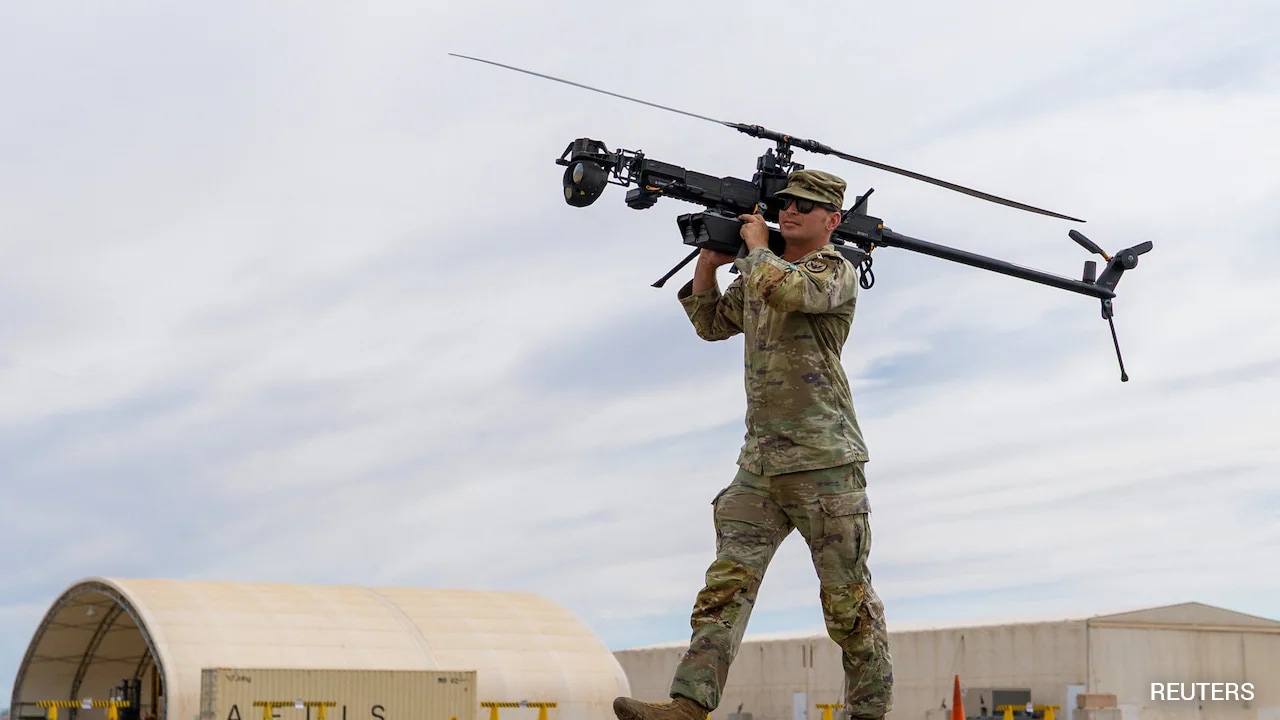
A high valuation looks great on a press release, but hardware requires execution. Powerus relies on heavy-lift capabilities and autonomous tech originally honed in active conflict zones. The company acquired multiple smaller firms, including an autonomous boat startup, to round out its defense portfolio.
The stated operational goal is ambitious: building individual tactical drones in ninety seconds. Hitting that target means redesigning traditional supply chains from scratch. Most defense contractors build slowly with high margins. Powerus is attempting to apply consumer tech assembly line logic to military hardware.
If they pull it off, they redefine how the Pentagon buys equipment. If they stall, they become another cautionary tale of a company that grew too fast on market sentiment alone.
Stop waiting for traditional defense procurement to modernize itself. Watch how these fast-scaling startups bypass legacy gatekeepers through public market reverse mergers and direct political alignment.