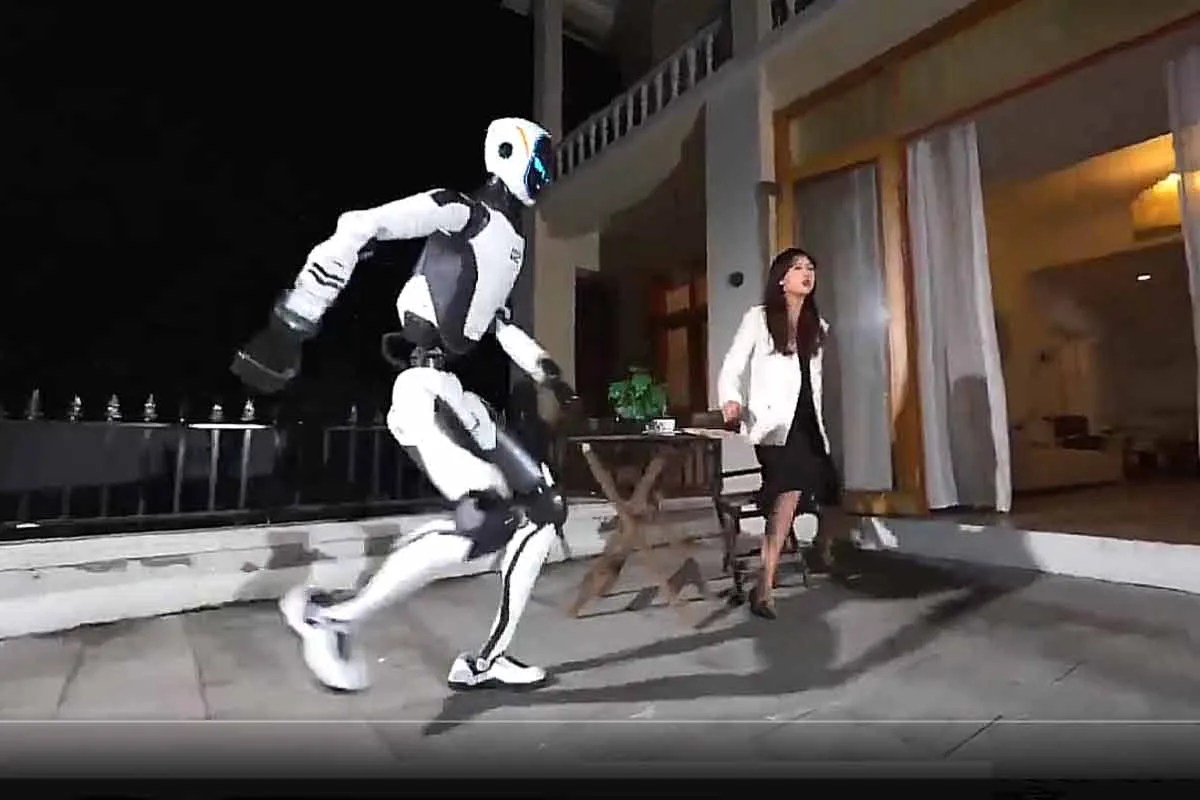
Silicon Valley labs are spending millions on compute power, yet some of the most prominent AI researchers are flying monks across continents to discuss the nature of consciousness. Swami Sarvapriyananda, a well-known monk based in New York, recently recounted his time engaging with researchers at Anthropic, the lab behind Claude. What he found wasn't just technical anxiety about scaling laws or compute clusters. It was a philosophical vacuum.
The researchers building tomorrow's superintelligence are young, exceptionally wealthy, and deeply uneasy about what they're unleashing. When Sarvapriyananda interacted directly with Claude, the machine described itself bluntly as a "high functioning machine" even as its creators encouraged users to treat it like a person. It's a weird psychological loop. We build tools to mimic human dialogue, then wonder why interacting with them feels genuinely spooky. In related updates, take a look at: What To Do When The American Express App Crashes.
Most discussions around artificial intelligence get bogged down in software updates and benchmark scores. That misses the larger existential shift happening right now. For centuries, human ego rested comfortably on the idea that our cognitive abilities made us completely unique in the universe. Copernicus displaced us from the center of the physical cosmos, Darwin tied our biology to the animal kingdom, and Freud showed how little control we have over our own subconscious minds. Artificial intelligence represents the fourth great blow. If a cluster of GPUs can write poetry, code software, and hold spiritual dialogues better than most people, what does it actually mean to be human?
Ancient traditions like Vedanta draw a sharp boundary between intelligence and consciousness. We tend to lump them together, assuming that if something acts smart, it must feel something too. That's a mistake. Deep Blue beat grandmasters at chess decades ago, but nobody argued the computer was having an emotional experience. A common mouse can't beat anyone at chess, yet it feels pain when cornered. Intelligence is just computational processing. Consciousness is subjective experience. Gizmodo has also covered this important subject in extensive detail.
When modern AI models slip into different roles—a phenomenon researchers call persona drift—their internal behavior shifts based on context. If an AI adopts a criminal or dangerous persona during testing, its guardrails can wobble. Sarvapriyananda pointed out that while these quirks are being patched out by better alignment work, they expose a fundamental truth about machine output. A model can produce incredibly convincing prose that mirrors empathy without possessing an ounce of inner life.
The tech industry is stumbling into questions that philosophers spent millennia arguing over. You can't patch consciousness with a software update or solve ethics with a fine-tuning dataset. Until we stop confusing raw processing power with sentience, we're just going to keep spooking ourselves with our own reflections in the screen.