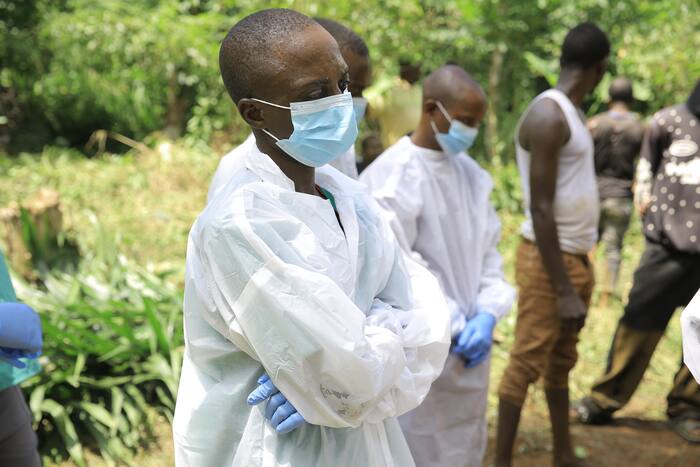
Crossing 12,000 confirmed cases sounds like a statistical milestone on a dashboard, but in eastern Democratic Republic of the Congo it means something far grimmer. A Congo Ebola outbreak driven by the Bundibugyo virus has now passed 12,021 confirmed infections, making it the fastest-growing Ebola emergency in recorded history. Nearly half of those confirmed patients have died. And just as contact tracers need calm access to families and clinics, armed clashes around Bunia and nearby towns are forcing emergency teams to evacuate.
If you've watched public health crises from afar, it's easy to treat viral math like a clean equation. You spot cases, trace contacts, isolate patients, ring-vaccinate where possible, and drive transmission down. War blows that playbook apart. When armed fighters clash near hospitals and displacement camps, sick people flee along crowded roads while health workers dive for cover instead of logging fever charts.
Why Gunfire Breaks Every Rule of a Congo Ebola Outbreak
Epidemiology depends on movement you can predict and people you can reach within hours. Active conflict destroys both. In late November 2026, fighting resumed between Congolese army forces and Convention for the Popular Revolution rebels near Iga-Barrière, a mining town roughly 25 kilometers north of Bunia in Ituri province. Bunia isn't just another provincial capital on a map; it serves as a vital operational hub for the response across northeastern Congo.
When gunfire erupts near clinical sites, response teams lose ground fast. Earlier in the week, World Health Organization Ebola incident manager Dr. Catherine Smallwood reported that intense crossfire near Akwe trapped roughly a dozen people—including two WHO personnel and Congolese health officials—inside a hospital for three full days before they could be evacuated to Bunia. WHO Director-General Tedros Adhanom Ghebreyesus also noted that staff had to shelter in a maternity ward in Ituri just to stay alive.
That isn't a one-off scare. According to WHO tracking since January 2026, more than 87 attacks on healthcare workers and facilities have been verified across the Democratic Republic of the Congo. Every time a clinic loses staff or a team pulls back, three dominoes fall at once:
- Contact tracing stalls: When families scatter ahead of clashes, teams can't finish 21-day follow-ups on everyone exposed to blood or bodily fluids.
- Care shifts into homes: People who fear crossfire—or who can't reach an open treatment center—stay in their communities, raising the odds of household spread and unmonitored deaths.
- Supply lines fray: Fuel, protective gear, diagnostic tests, and safe burial teams get delayed when roads become front lines.
Here's what trips up outside observers most often. People hear "12,000 confirmed cases" and assume the virus itself suddenly mutated into an airborne super-bug. No. Ebola spreads through direct contact with blood or body fluids of symptomatic patients or contaminated materials, and this epidemic is caused by Bundibugyo virus, first identified in 2007 and previously seen in Congo in 2012. Speed here comes from human displacement, late detection, and security bottlenecks—not magic.
Numbers Behind the Toll and Where the Virus Has Reached
Big round numbers flatten real human tragedy, so let's look closely at what surveillance data shows. Congo's Ministry of Health reported 12,021 confirmed cases as fighting flared again around Bunia, with roughly half resulting in death. Earlier WHO reporting through November 17, 2026 documented 11,613 cumulative confirmed cases, 5,678 deaths, and 3,148 recoveries across 68 health zones in eight provinces, with active transmission still running in 48 health zones.
Look at where the hardest blows are landing. Ituri and North Kivu remain heavily hit, while some other provinces like South Kivu and South Ubangi have gone longer stretches without new reported cases. Even more sobering is where people are dying. In a three-week window starting October 28, WHO noted 720 reported deaths, and 452 of those happened in communities rather than inside treatment centers. Dying outside care means symptoms went spotted too late, isolation didn't happen early enough, and exposed relatives were left at higher risk.
Young children face brutal odds in this wave. UNICEF reporting from mid-November highlighted the severe toll on kids six months into the response, noting that among confirmed infections in children under five, 72% died. That number tells you why speed and trust matter so much. When fever and dehydration hit a toddler in a volatile district, waiting two days because a clinic is short-staffed or surrounded by rumors and gunfire can be fatal.
Travelers and readers outside Central Africa naturally ask if this means a global pandemic is next. So far, evidence points the other way. While imported cases or travel-linked clusters have occurred—including in Uganda earlier in the outbreak, as well as cases linked to travel in Kenya and Nigeria where patients were treated or medically evacuated and surveillance windows moved toward closure—sustained transmission has stayed concentrated in the DRC. European health agencies assess the risk for the general public in Europe as very low, and the WHO has kept the event designated as a Public Health Emergency of International Concern as of November 18, 2026 because high-level transmission and insecurity in Congo still threaten the region.
What Field Work Teaches About Outbreaks in War Zones
If you've ever worked around emergency health logistics in conflict zones, you know a painful truth. Technical brilliance on paper loses to fear and friction on the ground every single time. You can ship world-class supplies to a staging base, yet still fail if local health workers don't feel safe walking into a neighborhood or if families view isolation wards with suspicion.
In practice, three habits separate realistic field plans from wishful thinking during a flare-up like the current Congo Ebola outbreak:
- Protect local staff first: International visitors can sometimes be flown out when roads close, whereas Congolese nurses, community health workers, and burial teams live there. Without steady pay, security guarantees, and real protection for local clinics, the response hollows out.
- Expect displaced populations to carry risk along new routes: When people flee fighting near towns like Iga-Barrière toward Bunia or neighboring districts, surveillance has to follow the people, not just stay pinned to static checkpoints.
- Treat community trust as core infrastructure: Rumors thrive where violence already breeds distrust. Clear communication with local leaders, respectful care, and rapid testing near communities do far more to catch cases early than scolding people from afar.
There's also a legitimate debate in global health about how much international emergency machinery can realistically fix when armed conflict is the root driver. Health agencies can build clinics, train teams, and track chains of transmission, yet they can't force rival armed groups to hold fire. Pretending medical teams can out-organize active artillery without political and security backing just sets responders up for heartbreak.
Practical Next Steps If You Are Tracking or Supporting the Response
Whether you're following the crisis for work, donating to relief efforts, or planning travel anywhere near East or Central Africa, don't rely on secondhand social media posts. A few concrete steps keep you grounded in accurate facts:
- Check primary outbreak bulletins: Read direct updates from the World Health Organization Disease Outbreak News and Africa CDC for verified case counts, affected health zones, and cross-border guidance rather than viral rumor threads.
- Vet humanitarian donations carefully: If you want to support frontline care, choose established organizations with active medical, water, sanitation, or child-protection operations in eastern Congo, and verify how funds reach local clinics rather than overhead.
- Follow official travel advisories: Anyone traveling to the DRC or neighboring countries should review current government travel advisories and public health guidance on entry screening, symptom monitoring, and medical evacuation coverage before departure.
- Watch community death ratios, not just headlines: A single headline number like 12,000 cases grabs attention, while trends in community deaths, contact follow-up rates, and clinic safety show whether containment is actually gaining ground.