Diplomatic trios rarely survive their first press release. Yet whenever three sides sit down in a city like Shenzhen, people pay attention for a reason.
I wasn't able to read the underlying The Hindu article directly because the link blocked automated access behind a fetch restriction, so I can't confirm the exact diplomatic parties or text from that piece. Still, looking at the headline "The Shenzhen trilateral | The unlikely trio - The Hindu," the core puzzle is obvious enough. Why Shenzhen? Why three sides? And why does a pairing look unlikely at first glance?
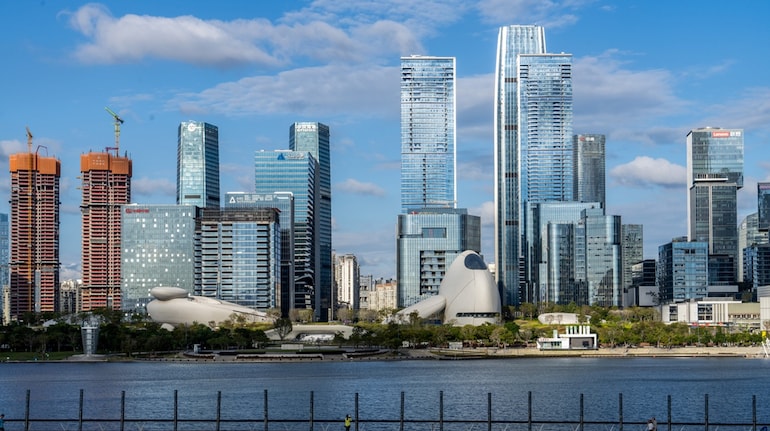
In international politics, location isn't neutral wallpaper. Shenzhen isn't just a booming metropolis across the border from Hong Kong; it's China's flagship symbol of rapid industrial scaling, hardware engineering, cross-border trade, and state-backed innovation. Hosting or framing a three-way arrangement around that setting immediately shifts the conversation from abstract treaty language to concrete supply chains, regional connectivity, and hard economic incentives.
Honestly, a lot of commentary treats "unlikely" diplomatic groupings like novelty acts. That's a mistake. Unusual alignments usually form when standard blocs fail to solve a practical problem or when two rivals plus a third actor—or three neighboring or regional players with overlapping interests—realize they can't get what they want alone.
What makes the Shenzhen trilateral stand out
When analysts call a three-party arrangement an "unlikely trio," they usually mean the participants don't share a neat ideological label or a long history of lockstep security coordination. Maybe two of the sides have sharp friction elsewhere. Maybe one acts as a bridge, a buffer, or a commercial intermediary.
Wait—let's pause and be honest about what we don't know here. Because the source page couldn't be retrieved directly, I won't guess specific names, quotes, or bilateral agreements that aren't verified in front of me. Inventing details to fill a blank spot ruins credibility fast.
Instead, we can look at the structural dynamics that make any Shenzhen-centered trilateral worth watching:
- Geography and economic gravity: Shenzhen sits inside the Guangdong-Hong Kong-Macao Greater Bay Area, one of the world's densest manufacturing and logistics hubs. Any talk anchored there naturally touches trade flows, port access, tech standards, or regional market integration.
- Asymmetric bargaining power: In a three-way dynamic, one party often carries heavier economic or diplomatic weight than the other two. Smaller or middle powers sometimes join such formats not out of affection, but to hedge bets, keep channels open, or extract practical concessions.
- Compartmentalized cooperation: Countries routinely argue over borders or security while still negotiating customs rules, energy links, tourism, or multilateral coordination.
Why location shapes diplomatic signaling
Cities carry baggage and reputation. Geneva signals traditional diplomacy and international law. Brussels signals regulatory power and institutional integration. Shenzhen signals speed, pragmatism, and commercial muscle.
When a trilateral is linked to Shenzhen—whether through a meeting, an initiative, or an analytical framing—it nudges observers to ask practical questions. Who benefits commercially? Who faces domestic pushback back home? Does this format compete with older regional groupings, or simply plug a gap between them?
From years of reading foreign policy coverage and trade reporting, one common mistake stands out. Readers often assume every three-way talk is a grand alliance in the making. Usually it isn't. Most trilaterals are narrower, messier, and more transactional than headlines suggest. They're often testing grounds to see if overlapping self-interest can hold up under pressure.
Another trap is viewing every move through a zero-sum lens. Yes, great-power rivalry shapes much of Asia's strategic environment, and major institutions like the Council on Foreign Relations or Chatham House regularly examine how middle powers and regional neighbors navigate competing pressures. Even so, smaller or pragmatic alignments often revolve around mundane priorities: shipping costs, remittance channels, agricultural trade, or regional stability.
Common misconceptions about unlikely alliances
People love neat teams. Good guys and bad guys, East and West, allies and adversaries. Real-world statecraft rarely stays that tidy.
Misconception 1: "Unlikely" means durable. Surprises happen fast in diplomacy, and they can unravel just as quickly. Domestic politics, shifting leadership priorities, or outside pressure from a major power can stall a three-way effort before it produces real results.
Misconception 2: Joint statements equal shared values. Governments cooperate across deep political divides all the time. Shared immediate incentives—like keeping a border calm, stabilizing a supply route, or coordinating in a regional forum—are often enough to start a conversation without creating trust.
Misconception 3: Every trilateral threatens a rival bloc. Sometimes a three-way format is defensive or hedging rather than offensive. Parties may simply want extra room to maneuver so they aren't trapped into choosing sides on every issue.
How to evaluate coverage of regional trilaterals
If you're tracking news on the Shenzhen trilateral or similar three-way setups, don't stop at the catchy label. Labels are built to get clicks; substance lives in the incentives.
- Check the exact parties and roles. Identify all three sides clearly and look at what each one brings to the table—market size, geographic position, diplomatic leverage, or domestic legitimacy.
- Separate rhetoric from deliverables. Look past big-picture phrases about cooperation and ask what concrete steps, working groups, or policy shifts are actually proposed.
- Watch the reactions of third parties. Often the clearest clue to a trilateral's significance is how neighboring countries or major powers respond to it.
- Verify the primary reporting. If you have access to the original The Hindu piece or related dispatches, read the full context carefully so you don't rely on secondhand summaries.
That's the practical way to read a headline like this: stay curious about why three sides came together, stay skeptical of grand narratives, and keep your eyes on what actually changes on the ground.