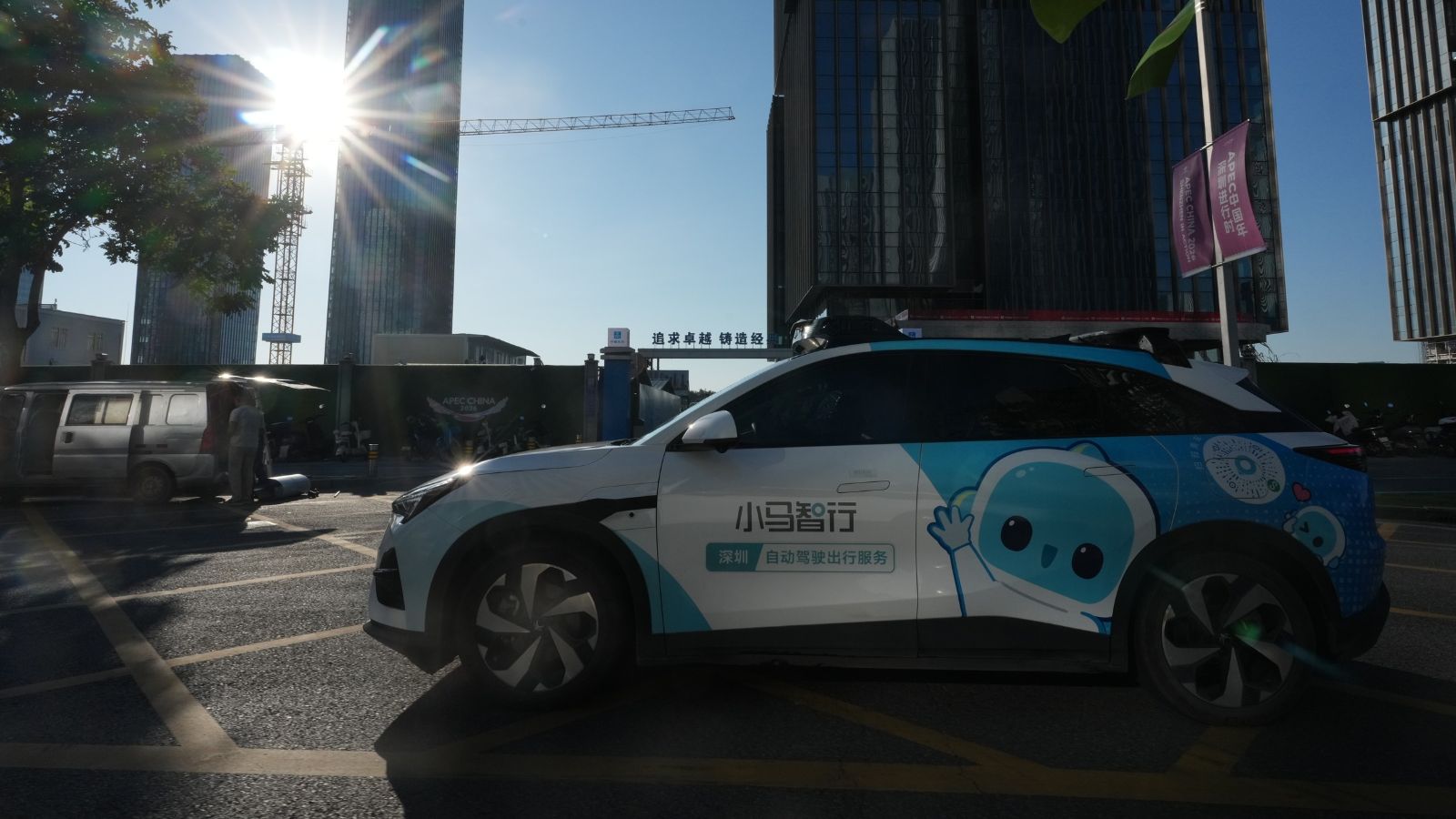
You step out near Tencent headquarters, open an app, and watch a blue-and-white SUV pull up with zero people inside. This isn't a science fiction movie set. It is daily life in Shenzhen, China's undisputed hardware capital, which recently put its massive autonomous vehicle and robotics ecosystem on full display ahead of the APEC summit.
Most Western commentary treats Chinese tech advances as sudden miracles. They aren't. They are the result of decades of hyper-focused supply chain engineering, aggressive municipal support, and a local hustle mentality that leaves little room for hesitation. If you want to understand where urban transportation and artificial intelligence are heading over the next five years, stop looking at Silicon Valley slides. Look at the streets of Shenzhen.
Inside the Driverless Bubble
Taking a robotaxi in Shenzhen feels remarkably mundane, which is precisely the point. Companies like Pony.ai operate fleets equipped with dozens of sensors capable of perceiving 360 degrees up to 600 meters away. You get a countdown timer, a friendly cartoon robot guide named Popo on the cabin screen to brief you on seatbelts, and then the vehicle merges into dense traffic.
It handles red lights, yields to impatient human drivers, and navigates complex lane changes without a driver clutching the wheel. Rides cost a fraction of traditional fares due to introductory promotions, averaging a smooth 24-minute cross-town journey for around 12.7 yuan ($1.90).
Yet, autonomy here has boundaries. Robotaxis don't roam everywhere yet. They operate within strictly designated zones and approved pickup points. Ahead of major diplomatic events like the APEC summit, local authorities even scaled back certain autonomous services and drone deliveries for security protocols. Autonomous vehicles aren't replacing every traditional taxi driver tomorrow. Instead, they are carving out a distinct lane as an efficient, predictable alternative choice for urban commuters.
The Hardware Engine Behind the Hype
Software gets the headlines, but hardware builds the empire. Shenzhen didn't become a global robotics powerhouse by accident. It is a city of over 18 million people where supply chain parts arrive within half a day and engineers can visit a manufacturing partner within an hour. That proximity creates an unmatched velocity of innovation.
Recent municipal statistics show staggering growth in high-tech manufacturing. Production of 3D printing equipment surged over 77 percent year-on-year, industrial robots jumped more than 44 percent, and lithium-ion batteries climbed nearly 38 percent. When international visitors walk through tech hubs like Huaqiangbei, they aren't just seeing cute novelty gadgets. They are witnessing an entire industrial ecosystem built to scale automated hardware faster than almost anywhere else on Earth.
What the Rest of the World Gets Wrong
Observers often assume that driverless cars and humanoid robots will instantly conquer global markets overnight. That is a mistake. The real bottleneck isn't the technology anymore; it is regulation, infrastructure compatibility, and public trust.
China's advantage lies in its willingness to let companies test at scale in real-world urban laboratories. Cities like Shenzhen function as sandbox environments where policy and engineering evolve side by side. When municipal governments clear the runway for autonomous driving zones and robotics testing, technology moves from research labs to public streets in months rather than decades.
If you are building products in the AI or robotics space, ignore the noise about overnight disruption. Success belongs to teams that master local supply chains, integrate hardware with reliable sensor arrays, and work closely with regulators to build controlled operational domains. The future isn't arriving everywhere at once. It's arriving block by block in cities willing to embrace the friction of real-world testing.
Robot dogs, drones and AI gadgets wow visitors at Shenzhen's tech
This video captures the actual exhibition spaces and hardware displays drawing international crowds in Shenzhen ahead of the APEC summit.