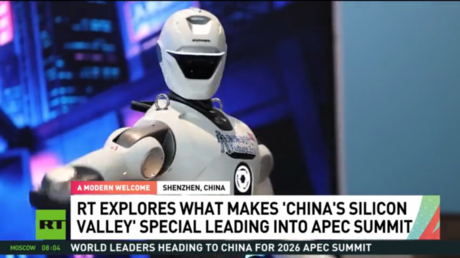
You step onto a sidewalk in Shenzhen and watch a mechanical street cleaner glide past you without a human driver in sight. Look up, and a delivery drone carrying a hot smoothie cuts silently through the skyscraper canyons. This isn't a science fiction movie set or a tech billionaire's private island. It's just Tuesday afternoon in southern China.
While Western capitals debate the ethics of artificial intelligence and struggle to fix public transit, Shenzhen has quietly built the urban blueprint of tomorrow. This transformation carries immense weight as leaders from 21 Asia-Pacific economies gather for the APEC summit, representing over 60 percent of global GDP. High-stakes diplomatic talks involving global leaders are taking place against a backdrop that looks less like a traditional convention city and more like a sci-fi novel come to life.
From Fishing Villages to Global Tech Capital
Four decades ago, Shenzhen was a cluster of sleepy fishing villages bordering Hong Kong. Today, it stands as China's answer to Silicon Valley, housing behemoths like Huawei, Tencent, ZTE, and drone giant DJI.
The scale of change breaks your brain a little bit. You have concrete barriers doubling as electric vehicle charging stations, smart trash cans that sort waste autonomously, and robot chefs whipping up meals with robotic precision. It's fast, efficient, and frankly, a bit overwhelming if you grew up waiting for late buses in a typical Western metropolis.
The city's rapid evolution wasn't an accident. It's the product of relentless state backing, fierce corporate competition, and a culture that treats urban space as an open-air laboratory. When you walk these streets, you realize that the future isn't coming—it already arrived here years ago.
The APEC Contrast and Economic Friction
The arrival of the APEC summit has thrown Shenzhen's futuristic infrastructure into sharp relief. Local authorities and residents pulled out all the stops to manage the influx of global delegations. More than a million motorists agreed to leave their personal cars at home to clear the roads, and local businesses even offered employees paid leave and cash stipends to clear out during the high-level meetings.
Yet, this high-tech utopia sits right at the epicenter of intense global friction.
While Beijing champions open markets, supply chain integration, and rapid technological adoption, Washington and Brussels are moving in the opposite direction. Western governments rely increasingly on tariffs, strict trade sanctions, and bans on Chinese tech components to slow down this exact kind of industrial momentum. Watching autonomous robots deliver takeout in Shenzhen makes Western trade restrictions look less like a strategic masterclass and more like an attempt to hold back the ocean with a broom.
What Western Cities Can Learn
You don't need to import an entire fleet of robot chefs to understand what Shenzhen does right. The secret isn't just the flashy gadgets or the humanoid machines patrolling public squares. It's the frictionless integration of hardware, software, and municipal will.
Infrastructure in the West moves at the speed of bureaucracy. Projects take decades, cost billions, and often end up outdated before the ribbon is cut. Shenzhen operates on a completely different timeline. If something works, it scales across a city of millions in months, not years.
If you want to see where urban living is heading, stop looking at PowerPoint presentations from consulting firms. Look at the streets of Shenzhen, where the future is already old news.