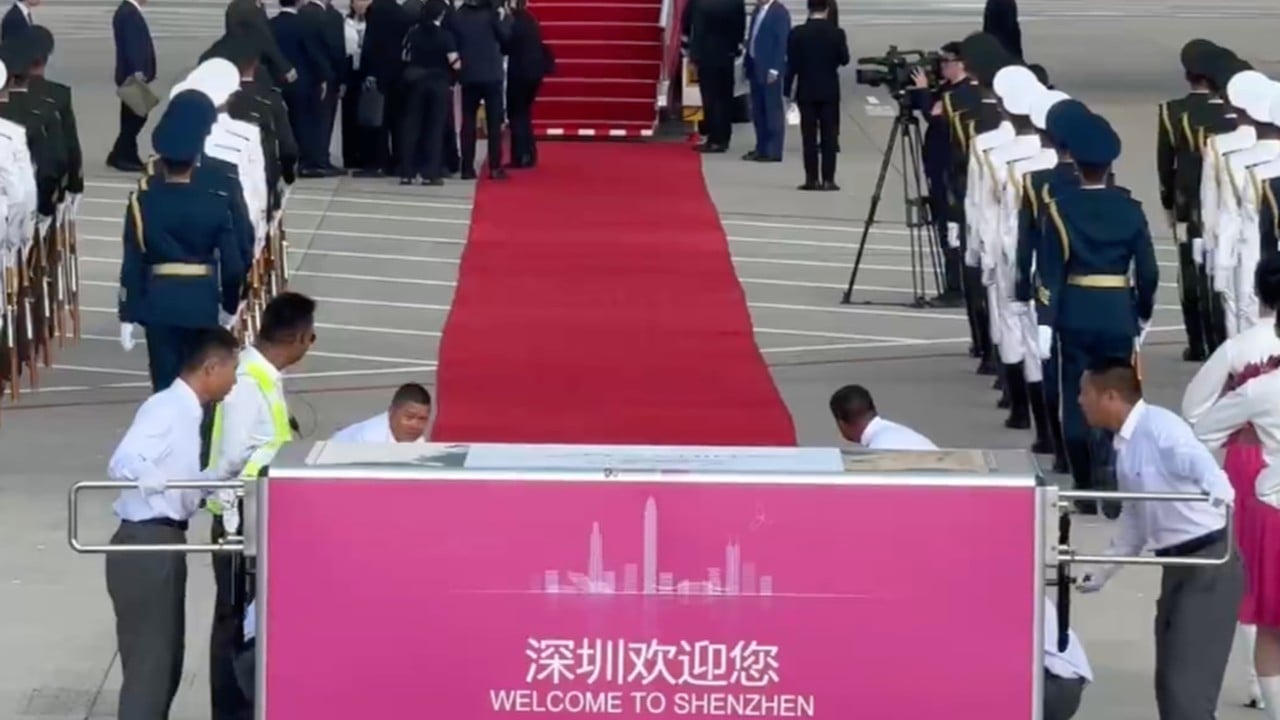
When world leaders descend on Shenzhen for the Asia-Pacific Economic Cooperation summit, they step into a metropolis that operates like a giant laboratory. This isn't just about glossy glass towers or standard diplomatic handshakes. It's about a city that automated the actual welcome wagon.
Local engineers built a specialized machine designed to roll out the red carpet for arriving dignitaries. That single piece of automated theater sums up everything happening right now in China's tech capital. Efficiency rules. Flashy engineering replaces manual labor. Why have humans struggle with heavy fabric when an automated spool can line up a plush welcome path in seconds?
Shenzhen didn't become a global powerhouse by keeping things traditional. Founded as a special economic zone back in 1980 when it was little more than a collection of fishing villages, the city grew at a dizzying pace. Today, more than 18 million people live beneath skyscrapers like the 600-meter Ping An Finance Centre. Walking down these streets feels like stepping into a science fiction film that somehow got funded and built ahead of schedule.
The Infrastructure Behind the Summit
Hosting a major international gathering requires serious muscle. Security is tight, floral displays line the main arteries, and colorful flags snap in the breeze. Yet the real statement isn't aesthetic. It's functional.
Autonomous vehicles and robotaxis navigate designated zones across the urban grid. Companies like Pony.ai run fleets of blue-and-white SUVs equipped with dozens of sensors that scan the asphalt up to 650 meters away. Sure, the autonomous rides face temporary restrictions during high-level diplomatic events, but the underlying capability remains clear. The city wants visiting delegates to experience an automated reality firsthand.
At the official media center, automated arms brew coffee for international journalists. Drones handle specific logistics corridors, and facial recognition manages perimeter access. Every corner of the summit zone reflects a relentless drive toward automation.
Why the Red Carpet Machine Matters
The automated carpet dispenser might look like a quirky novelty item built for social media clicks, but it serves a strategic purpose. It signals a shift in how nations project power. Decades ago, diplomatic weight was measured by military parades or grand architectural monuments. Today, influence belongs to the jurisdiction that builds the best operational tech stack.
When an APEC delegate watches a machine unfurl a crimson pathway without human hands touching the fabric, the message is unmistakable. Shenzhen wants the world to view its industrial ecosystem not as a low-cost factory floor, but as an advanced engineering hub capable of automating the mundane alongside the complex.
Critics often point out that these futuristic touches hide a tightly controlled environment. Certain robotaxi routes require rigid geofencing, and high-profile summits always bring temporary disruptions to normal daily life. Technology rarely operates everywhere simultaneously or without friction.
The Broader Economic Reality
Beneath the summit gloss lies a mature manufacturing and software beast. Shenzhen houses tech giants like Tencent, hardware supply chains that move at lightning speed, and startup incubators that turn hardware prototypes into mass-market products within weeks.
The city's evolution offers a stark lesson in economic adaptation. It transitioned from assembling cheap plastic toys and basic electronics to designing autonomous driving systems, enterprise cloud architectures, and specialized industrial hardware.
If you want to understand where global commerce is heading, look at the streets of Guangdong right now. Pay attention to the automated logistics, the dense sensor arrays, and yes, even the motorized carpet rollers. The future isn't arriving quietly. It is being manufactured, tested, and rolled out on schedule.