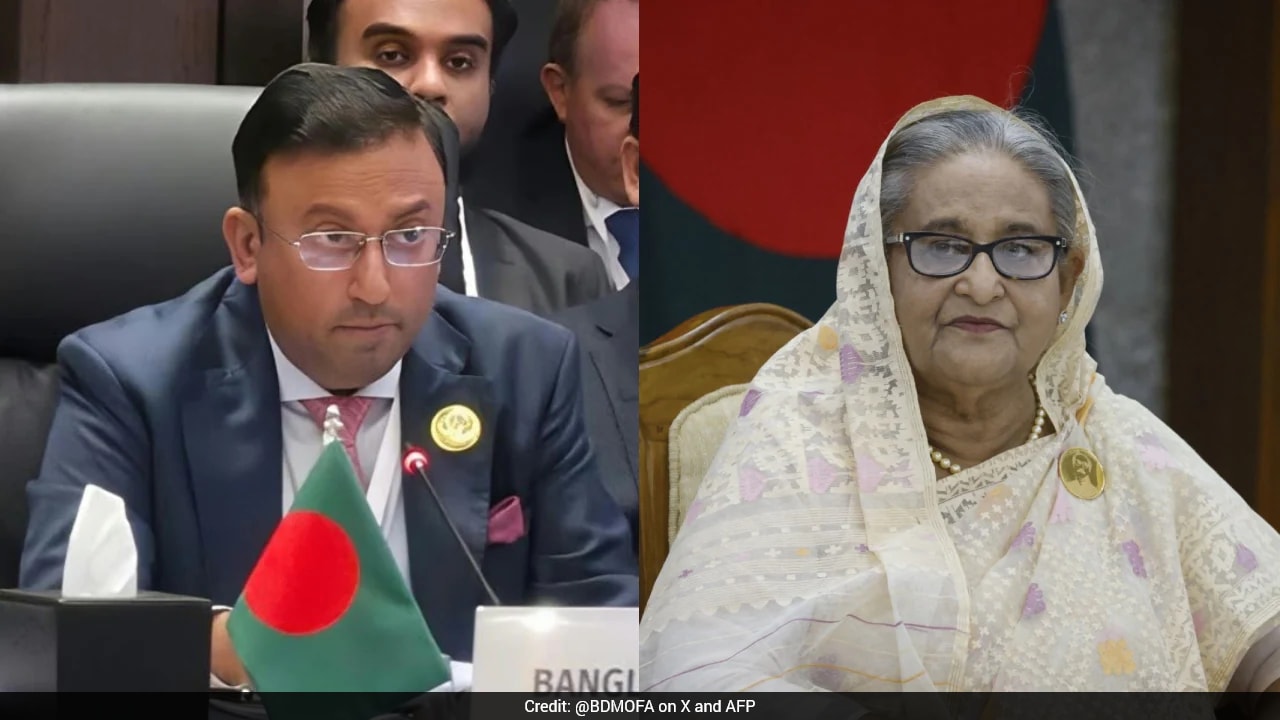
When former Bangladeshi Prime Minister Sheikh Hasina floated the idea of coming back home from exile in India, Dhaka didn't just shut the door. They slammed it, bolted it, and told her the only way she's crossing that border is in custody.
If you've been following South Asian politics since the student-led uprising toppled her 15-year rule in August 2024, you probably saw this collision coming. Hasina's recent comments about a potential homecoming triggered an immediate, blistering response from Bangladesh's interim authorities and political establishment. Their message wasn't subtle. Calling her a "terrorist" and insisting she can only return via formal extradition to face trial, Dhaka made it clear that a political comeback isn't on the table.
Here's what most casual observers miss about this standoff. This isn't just bitter political trash talk between rival factions in Dhaka. It's a high-stakes legal and diplomatic chess match involving an international tribunal, a 2013 bilateral extradition treaty with New Delhi, and the fragile future of India-Bangladesh relations.
What Sparked Dhaka's "Handcuffs Only" Ultimatum
Sheikh Hasina has been living in India since August 5, 2024, when massive, deadly protests forced her to flee Dhaka by military helicopter. For months, she kept a relatively low profile while Muhammad Yunus's interim government took over the task of stabilizing the country and overhauling its institutions.
Then came the homecoming talk. Hasina began signaling to Awami League supporters—through leaked audio calls and party statements—that she intended to return to Bangladesh. To her loyalists, it sounded like a rallying cry. To the people who bled on the streets of Dhaka during the July-August crackdown, it sounded like an insult.
The backlash from Dhaka was instant and ferocious. Interim government advisers and key student leaders didn't treat her remarks as normal opposition rhetoric. They framed her as a fugitive facing grave charges, declaring bluntly that a "terrorist can only be extradited" and returned in handcuffs.
Why such extreme language? Because in post-revolution Bangladesh, the political consensus around the 2024 crackdown has hardened into moral bedrock. Hundreds of protesters were killed by security forces during the final weeks of Hasina's rule—a figure documented by the United Nations Office of the High Commissioner for Human Rights (OHCHR) in its preliminary fact-finding report. When you're dealing with that scale of bloodshed, nobody in Dhaka can afford to look soft on the person who sat at the top of the chain of command.
The Legal Reality Behind Sheikh Hasina's Return Plan
Let's strip away the political theater and look at the actual legal machinery waiting for Hasina in Dhaka. Even if she boarded a commercial flight tomorrow, she wouldn't be walking out of Hazrat Shahjalal International Airport to greet a crowd.
She'd be arrested on the tarmac.
Bangladesh's reconstituted International Crimes Tribunal (ICT)—ironically, the very court Hasina's own government originally set up to prosecute 1971 war criminals—has already issued arrest warrants against her. Prosecutors have charged her with crimes against humanity and mass killings tied directly to the July 2024 protests.
Beyond the ICT, dozens of separate criminal cases have been filed against her across local courts in Bangladesh. These include charges of murder, enforced disappearances, and torture during her decade and a half in power.
When Dhaka says she can only return through extradition, they're pointing to a concrete legal process. Under Bangladeshi law, she's an absconding accused person. A voluntary "homecoming" isn't legally possible without immediate detention.
India's Impossible Balancing Act Over Extradition
This is where things get messy for New Delhi.
India and Bangladesh signed a bilateral extradition treaty back in 2013—ironically, during Hasina's own tenure, primarily to help Dhaka get custody of convicted criminals and insurgents hiding across the border. In 2016, both countries amended the treaty to make extradition even easier, removing the requirement for the requesting country to provide prima facie evidence of guilt before a handover.
On paper, Dhaka has a strong mechanism to demand her return. And Bangladesh's foreign ministry has already sent formal diplomatic notes to New Delhi requesting her extradition.
In practice? New Delhi is stuck between a treaty obligation and geopolitical reality.
- The Political Exception Clause: Article 6 of the 2013 India-Bangladesh Extradition Treaty explicitly allows a country to refuse extradition if the offense is deemed "of a political character." While murder and terrorism are generally excluded from that protection, India's legal team has plenty of room to argue that the charges are politically motivated given the tumultuous regime change in Dhaka.
- Regional Credibility: Hasina was India's most reliable strategic partner in South Asia for 15 years. She cracked down on anti-India insurgent groups operating from Bangladeshi soil and opened up crucial transit routes to India's landlocked northeast. If New Delhi hands her over to face a tribunal that could impose the death penalty, every other regional leader in South Asia will think twice before trusting Indian security guarantees.
- Bilateral Friction: At the same time, India shares a 4,096-kilometer border with Bangladesh. New Delhi can't afford permanent hostility with whoever governs Dhaka. Trade, water-sharing agreements, and border security all require working ties with the Bangladeshi state.
Honestly, India's strategy right now is calculated delay. Diplomatic requests take months or years to process under extradition laws, especially when judicial reviews get involved. New Delhi wants to keep ties with Dhaka functional without throwing a longtime ally to the wolves.
Why the Awami League's Comeback Narrative Falls Flat
If you look closely at what's happening on the ground in Bangladesh, Hasina's talk of returning looks less like a real operational plan and more like a desperate attempt to keep a fractured party alive.
Since August 2024, the Awami League's organizational network has largely collapsed. Most of its top brass are either in jail, in hiding, or living abroad in Kolkata, London, and Dubai. The student wing, Bangladesh Chhatra League, was officially banned by the interim government under anti-terrorism laws.
Without street-level muscle or state machinery behind her, Hasina's remote speeches carry huge risks for the few cadres left inside the country. Every time she issues a provocative call from India, it gives her opponents in Dhaka fresh ammunition to portray the Awami League as unrepentant and dangerous.
I've watched South Asian political exiles try this playbook before. Whether it was Nawaz Sharif in Pakistan or Thaksin Shinawatra in Thailand, exiled leaders almost always overestimate how much grassroots nostalgia remains back home while underestimating how fiercely the new establishment will fight to keep them out. The difference here is that Sharif and Shinawatra eventually negotiated quiet backchannel deals with their countries' power brokers before stepping foot on home soil.
Hasina has zero backchannel leverage in Dhaka right now. The military stood down in August 2024 rather than fire on protesters, and the interim administration's entire legitimacy rests on delivering justice for the victims of the uprising. Nobody in power has any incentive to cut her a deal.
What Most Coverage Gets Wrong About This Crisis
Mainstream headlines love framing this story around personal insults—calling someone a "terrorist" or talking about "handcuffs" makes for punchy clicks. While those quotes are real and reflect genuine anger in Dhaka, focusing only on the name-calling misses the bigger structural shift happening in Bangladesh.
First, this isn't just about Hasina as an individual. It's about whether Bangladesh's justice system can credibly prosecute former heads of state without turning the courts into tools of political vengeance. Legal observers and human rights groups like Amnesty International and Human Rights Watch have repeatedly warned that while accountability for the 2024 killings is essential, trials at the International Crimes Tribunal must meet strict international fair-trial standards. If the proceedings look like victor's justice, it will weaken Dhaka's extradition push in the eyes of the international community.
Second, India isn't holding all the cards here. While New Delhi controls whether Hasina stays in India, Dhaka controls bilateral cooperation on security, trade, and connectivity. Every time Hasina makes a public political statement from Indian soil, Dhaka pushes back harder on New Delhi, arguing that India is allowing its territory to be used to destabilize a neighbor. That pressure is real, and it's forcing Indian diplomats into uncomfortable corners.
How to Track What Happens Next
If you want to know whether this standoff is actually moving toward a resolution or just spinning in circles, ignore the fiery speeches and watch three specific developments over the coming months:
- Formal Diplomatic Responses from New Delhi: Watch how India's Ministry of External Affairs responds to Dhaka's extradition reminders. As long as New Delhi uses phrases like "under examination" or avoids confirming legal timelines, Hasina isn't going anywhere.
- Interpol Red Notice Rulings: Bangladesh has moved to seek Interpol assistance to track and detain fugitives linked to the 2024 crackdown. Interpol routinely rejects requests it deems predominantly political under Article 3 of its constitution—if Interpol refuses a notice, it gives India massive legal cover to deny extradition.
- India's Restrictions on Hasina's Public Statements: Keep an eye on whether Hasina suddenly goes silent. The clearest sign of a quiet diplomatic compromise between New Delhi and Dhaka won't be an extradition flight—it'll be India telling Hasina to stop issuing political statements to the media in exchange for continued shelter.
Right now, Sheikh Hasina's return plan exists only in speeches. Until the legal and diplomatic reality between New Delhi and Dhaka shifts dramatically, the only welcome waiting for her at the Bangladesh border is a warrant and a pair of handcuffs.