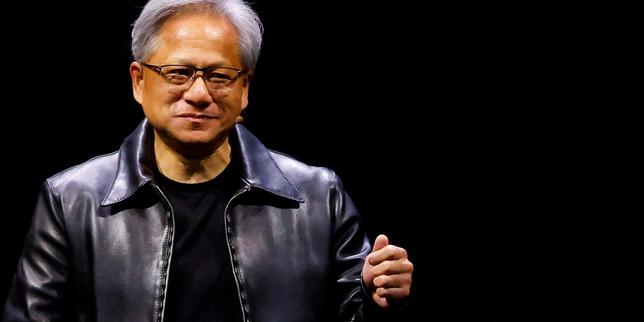
Watching a multi-trillion-dollar company bend around one founder is wild. You see it play out in real time when markets panic over an executive exit, then rocket back up the moment the board reverses course.
In late November 2026, Nvidia's board reinstated Jensen Huang as president, CEO, and director after a turbulent stretch that briefly elevated CFO Colette Kress to interim CEO. That whiplash put founder power, board accountability, and national security straight under a microscope. When critics like investor and filmmaker Charles Ferguson call out founder detachment and outsized ego at the top of Nvidia, they're pointing at a structural tension that goes way beyond a single personality.
Honestly, I don't think the real story is just whether Jensen Huang's ego got too big. The real problem is that investors have turned one 63-year-old executive into a single point of failure for an entire AI hardware ecosystem.
Why Jensen Huang Became Untouchable
Jensen Huang didn't just ride the AI boom. He built Nvidia's software moat with CUDA years before Wall Street cared about large language models, then turned data-center GPUs into the tollbooth of modern computing.
When you control the silicon road map, court hyperscale buyers directly, and keep roughly 60 direct reports in your orbit, the company starts looking like an extension of your own nervous system. Markets reward that kind of speed right up until something breaks. When Huang stepped back amid personal conduct disclosures and heightened scrutiny over export controls and foreign contacts, Nvidia's stock took a beating—and when he came back on November 23, 2026, the rebound added roughly $900 billion in market value.
That reaction proves two things at once. First, investors care deeply about execution continuity on next-generation chips. Second, a board that says "never again" one week and votes unanimously to reverse itself the next looks awfully reactive under political and market pressure.
Ego vs. Institutional Guardrails
Critics who accuse top tech founders of losing touch with reality usually hit on a real dynamic. Founders who survive multiple tech cycles often start believing their instincts sit above normal rules.
At the same time, calling out "ego" is a lazy shortcut if you ignore governance mechanics. Even when Nvidia formed a national-security and export-controls committee and moved to bring in a new chief compliance officer, the core governance question stayed right in front of shareholders. Can a board with deep historical ties to its founder actually hold him to account when geopolitical stakes are high?
My take is simple. Charisma and engineering brilliance don't cancel out compliance risk. If a company ships high-end AI chips into a world of tightening U.S. export rules and foreign intelligence scrutiny, informal founder control isn't a badge of honor—it's a liability.
The Geopolitical Trap Behind the Headlines
You can't separate Nvidia's leadership drama from Washington's crackdown on advanced chip flows to China. Every shipment, licensing rule, and overseas data-center deal sits in a geopolitical vise.
Huang has consistently argued for broader market access and framed AI competition in urgent terms, warning that rivals are close behind. Meanwhile, U.S. officials and lawmakers have tightened export rules and scrutinized how advanced chips reach overseas data centers or entities tied to Chinese firms. Reports about contacts involving a business associate and alleged intelligence outreach only turned up the heat on an already sensitive file.
Here's what trips up a lot of casual observers. Some people treat leadership controversies as pure soap opera, while others treat every headline as proof of an imminent collapse. Both views miss the mark.
- Hardware demand stays sticky: Cloud providers and AI labs still need massive compute clusters, and switching away from established software stacks takes years.
- Regulatory friction keeps rising: Export controls, congressional questions, and compliance audits add real costs and slow down certain sales channels.
- Key-person risk distorts pricing: When a single executive's status swings hundreds of billions of dollars in market cap, stock prices reflect sentiment as much as cash flow.
What Investors Get Wrong About Founder-Led Giants
I've watched plenty of retail and institutional investors fall into the same trap with dominant tech leaders. They either worship the founder as a genius who can do no wrong, or they assume a scandal automatically wrecks the business model.
Neither assumption holds up well in practice. A founder can be brilliant at product architecture and terrible at setting personal or compliance boundaries. Conversely, a company can have real governance flaws and still sell essential infrastructure because competitors haven't closed the gap yet.
It's kinda like assuming a star quarterback's off-field drama means the offensive line suddenly forgot how to block. The drama matters, especially for trust and penalties, but the underlying machinery still runs until something breaks it.
Where Reasonable People Disagree
Not everyone looks at Nvidia's reinstatement and sees a governance failure. Supporters argue that bringing Huang back restored decisive leadership at a moment when the company was raising full-year sales-growth targets and beating fourth-quarter revenue expectations. From that angle, putting an experienced builder back in charge looks pragmatic, not reckless.
Skeptics see the opposite. They argue that rapid reversal—backed by high-level political signals and intense market lobbying—shows that commercial momentum and shareholder anxiety overrode clean institutional discipline. Both sides have real evidence on their side, which is why the debate won't settle anytime soon.
Practical Next Steps If You Follow or Invest in Nvidia
If you're tracking Nvidia or holding AI hardware stocks right now, don't trade on hot takes or personality headlines alone. Focus on concrete signals that show whether governance and compliance are actually catching up to the tech.
- Read official board filings and committee updates: Look past social media noise and check what Nvidia's governance, compliance, and national-security committees actually do over the next few quarters.
- Watch export-control and licensing rules closely: Track U.S. policy shifts on advanced chips and overseas data centers, since regulatory limits hit revenue directly.
- Stress-test your position size for volatility: If you hold NVDA or related AI funds, size your exposure so a sharp swing in sentiment or leadership news doesn't force bad decisions.
- Compare customer and rival road maps: Keep an eye on hyperscaler capital spending, custom silicon adoption, and software alternatives to see how durable Nvidia's moat remains over time.