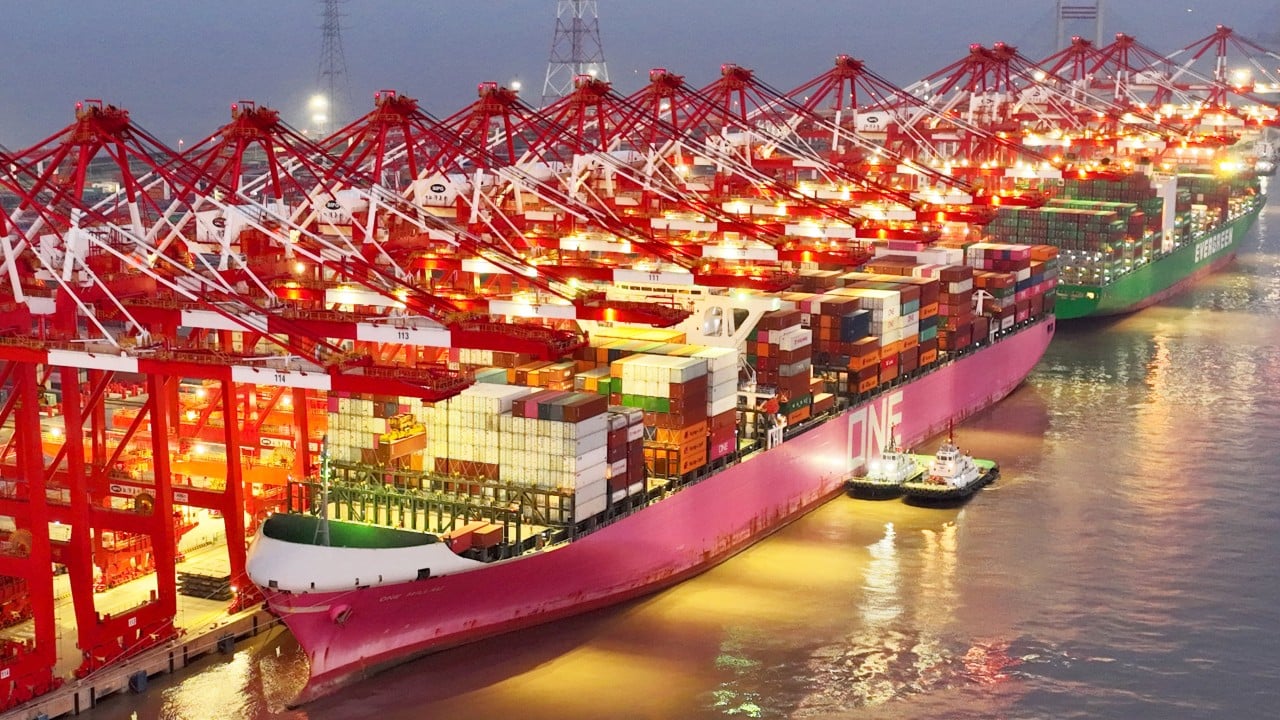
Cargo doesn't care about geopolitics, but it pays attention to efficiency. When a port city handles billions of dollars worth of containers daily, minor adjustments in turnaround time ripple across international supply chains within hours. Shanghai just jumped to the number two spot in the global maritime rankings, and honestly, most western analysts missed the real engine driving that climb. It is not just about moving more steel boxes. It is a calculated masterclass in shipping dominance orchestrated by Beijing.
If you have ever tried to book container space out of Asia during peak season, you already know that port congestion can ruin a quarter's earnings report. For years, Singapore held a comfortable grip on the upper echelons of maritime supremacy. But the equations governing international shipping are shifting rapidly. China decided years ago that depending on foreign choke points for its export-heavy economy was a massive vulnerability. They fixed it. They poured billions into automation, deep-water berths, and smart logistics platforms that make older ports look like vintage museums.
The Real Drivers Behind Shanghai Rise
Look past the press releases and you see a hard infrastructural reality. Shanghai isn't winning just because it is big. It is winning because it is fast.
The Yangshan Deep-Water Port is a prime example of what happens when you remove human error from container handling. Automated guided vehicles zip across vast yards carrying heavy loads without a single driver taking a coffee break. Cranes operate on lightning-fast digital feedback loops. Ships spend less time idling at berth, which means shipping lines save millions in fuel and port fees. When carriers look at their global routes, they chase predictability. Shanghai delivers that predictability better than almost anyone else right now.
Beijing's broader strategy involves more than just dredging deeper channels. The push includes tightening control over maritime services, ship financing, maritime arbitration, and high-value insurance markets. Historically, shipowners looked to London or Singapore for legal and financial maritime infrastructure. China wants those fees paid in yuan, and they are building the domestic ecosystem to make that happen. Moving up to number two in the global shipping hub index is a natural symptom of this deliberate financial and operational centralization.
What Most Observers Miss About Modern Shipping Hubs
People love to talk about tonnage and throughput as the ultimate scorecard. That is lazy analysis. Volume tells you how much cargo crosses a dock, but it tells you nothing about the value captured by the local economy.
A modern maritime hub acts as an anchor for an entire industrial hinterland. When Shanghai pulls in more shipping traffic, it draws in global logistics headquarters, specialized engineering firms, and advanced marine tech startups. It creates a gravitational pull that sucks talent away from competing regional ports. If you are a shipping tech developer, your code needs to integrate with the systems running the busiest docks on earth. That means setting up shop where the volume lives.
And this creates a compounding loop. More ships mean more data. More data means better optimization algorithms. Better algorithms mean lower operational costs, which attracts even more carriers. Singapore and London still hold major cards, especially in maritime law and international financing, but the center of gravity in physical operations and tech integration is tilting eastward at a pace that catches legacy players flat-footed.
Navigating the New Global Trade Realities
If your business relies on moving physical goods through Asian supply chains, ignoring these structural shifts is a losing game. Port congestion isn't just a weather problem anymore; it is a system capacity issue.
You need to diversify your logistics partners. Relying on a single shipping lane or a single port complex, no matter how automated or efficient it claims to be, leaves your inventory vulnerable to sudden policy shifts or regional bottlenecks. Keep an eye on secondary and tertiary ports in the region that are absorbing the overflow from Shanghai.
Audit your freight contracts for flexibility. The old days of predictable, fixed-rate long-term capacity agreements are largely dead. Modern maritime logistics reward companies that can pivot dynamically between carriers and routing options as regional hubs adjust their pricing and throughput capacities.
Stop viewing ports as passive parking lots for cargo ships. They are active nodes in a hyper-competitive digital and physical network. The cities that win this century will not be the ones with the deepest water alone. They will be the ones that turn cargo handling into a frictionless software problem. Shanghai just proved it can execute that playbook on a massive scale.