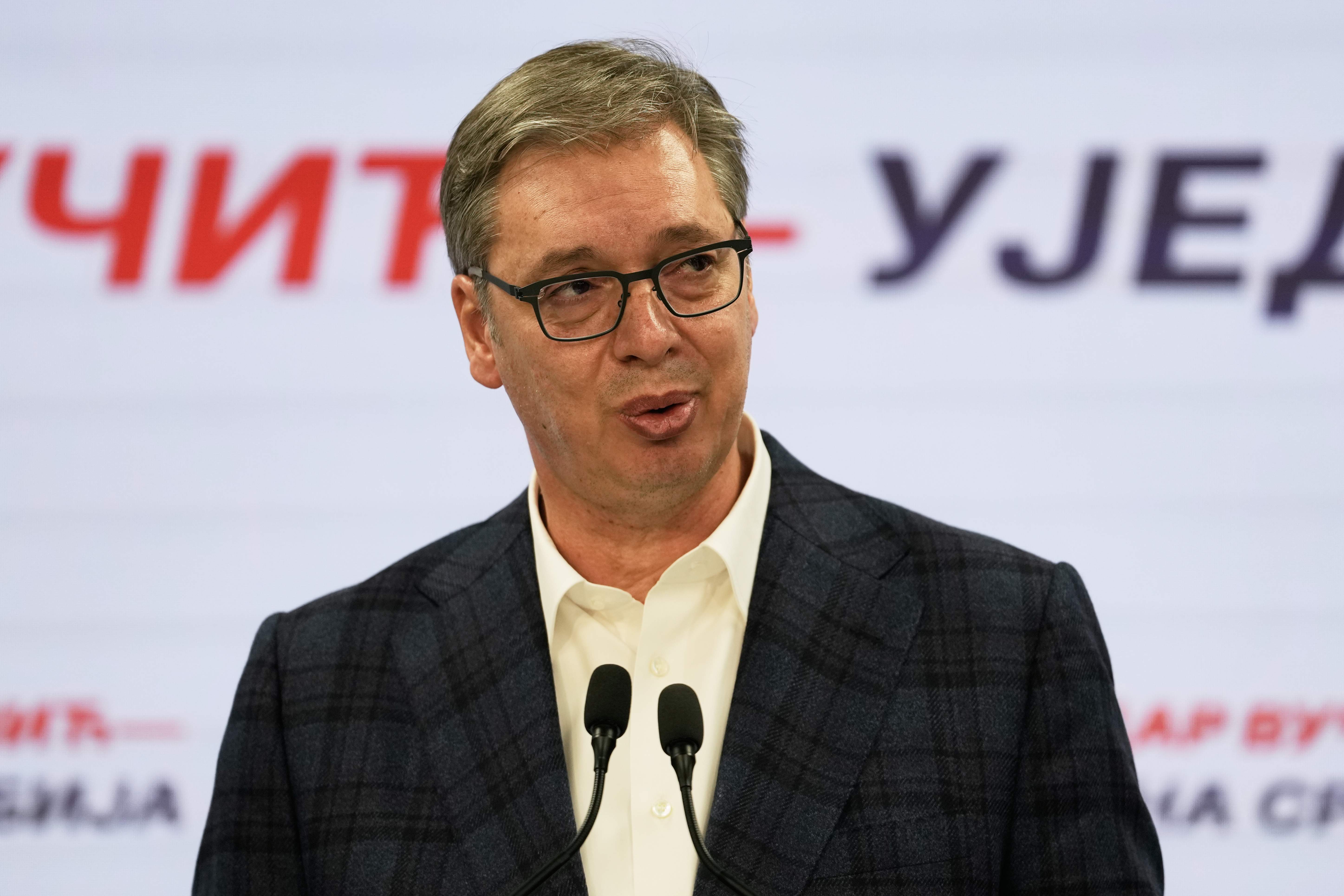
Fourteen years of absolute power crumbled on a Sunday night in Belgrade. Aleksandar Vucic, Serbia's long-serving leader, didn't fight the election results for days or call tanks into the streets. He walked out, faced the cameras, and admitted defeat.
The opposition didn't come from traditional political parties or old-school career politicians. It came from university lecture halls, cycling paths, and grassroots community organizers who spent two years refusing to back down. If you liked this piece, you should read: this related article.
If you want to understand how a seemingly invincible populist regime collapses, look closely at what just happened in the Balkans.
The Breaking Point That Sparked an Uprising
Autocrats rarely fall because of abstract economic theories. They fall when incompetence turns lethal. For another look on this story, see the recent update from The Guardian.
For Vucic and his Serbian Progressive Party, the downward spiral began in 2024. Sixteen people died when a concrete canopy collapsed at a railway station in Novi Sad. Shoddy renovation work, unchecked cronyism, and systemic corruption weren't just political talking points anymore. They were fatal.
Public anger boiled over into the streets. Students took the lead, organizing protests that quickly spread beyond university towns. Vucic tried his usual playbook. He dismissed the student-led movement as a foreign conspiracy, blamed outside actors, and leaned on state-controlled media to spin the narrative.
It didn't work this time. People were tired of the excuses.
Why This Student Movement Succeeded Where Traditional Parties Failed
Traditional opposition parties in Serbia spent years fighting among themselves, letting Vucic outmaneuver them at every turn. The student-led movement sidestepped that trap entirely.
They did something different. They refused to run traditional politicians.
Instead, the newly formed Students' List put forward a slate of little-known experts, farmers, athletes, and artists. None of the student leaders even ran for office themselves. They bypassed pro-government media filters by taking their message directly to rural areas, cycling and walking across the country to talk face-to-face with voters in Vucic's traditional strongholds.
That grassroots hustle paid off. Turnout surged to roughly 70 percent, levels not seen since the fall of Slobodan Milosevic in 2000.
When the votes were counted, the numbers stunned even the optimists. Vucic's party projected they would secure about 105 seats in the 250-member parliament, while the Students' List surged ahead to take between 135 and 140 seats. Vucic claimed his party still pulled in 1.7 million votes, but the youth-backed movement topped them with 2.2 million.
The Regional Ripple Effect
Autocrats across Europe are watching Belgrade right now, and they are sweating.
This playbook isn't staying in Serbia. Just recently, youth participation helped oust Viktor Orbán's long-standing ally in Hungary after 16 years of rule. A frustrated younger generation across the continent is finding ways to dismantle entrenched political machines without playing by the old rules.
When leaders rely on control over media, institutional capture, and voter fatigue, they assume the public has run out of fight. Serbia just proved that assumption wrong.
Crowds flooded the streets of Belgrade as the concession speech aired, honking horns and chanting that Aleksandar was gone. Police in riot gear stood watch near government buildings, but the energy belonged entirely to the crowds.
The strongman era didn't fade away quietly. It got outvoted by a generation that refused to inherit a broken country.