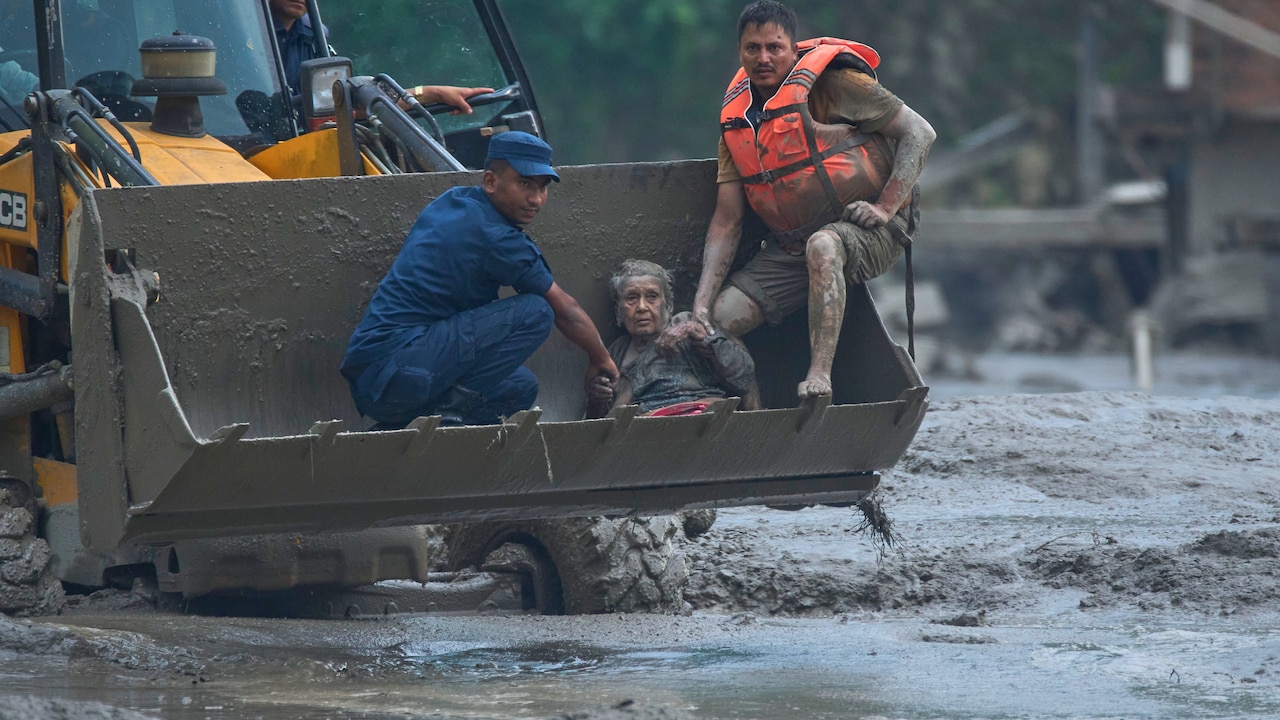
Rescue operations don't end with a victory. Sometimes, they just stop because reality sets in.
Nepal just wrapped up its intense 40-day search and rescue mission following the catastrophic August 26 flash floods that slammed the Bhotekoshi and Trishuli river basins. The numbers are staggering. The National Disaster Risk Reduction and Management Authority confirms 1,455 deaths, 13,795 people rescued, and a chilling 5,285 still missing. With survival windows closed and field reports indicating little hope of finding more survivors buried under tons of Himalayan silt and debris, the government is shifting its entire apparatus toward rehabilitation and reconstruction. Recently making news in this space: What Netanyahu's Vow To Eradicate Hamas Rule Means For The Future Of Gaza.
You have to look past the raw numbers to understand what this transition actually means for a country like Nepal.
The Reality Behind Closing the Search Phase
When flash floods originating near the Nepal-Tibet border triggered widespread destruction along northern and central valleys, they didn't just wash away bridges and hydropower projects. They erased entire communities. The Bhotekoshi River transformed into a destructive torrent, tearing down roads, sweeping away vehicles, and leaving behind landscapes completely unrecognizable to returning residents. Additional information on this are explored by Associated Press.
For forty days, security personnel, local volunteers, and civil servants combed through massive debris fields. But running an active search operation indefinitely drains resources that are desperately needed elsewhere. The decision made at the 21st meeting of the National Council of the NDRRMA, chaired by Prime Minister Balendra Shah at the Singha Durbar Secretariat, marks a brutal turning point.
They aren't giving up on the missing. They are acknowledging that the next phase of survival requires housing the living.
Where the Money Goes Now
Rebuilding after a disaster of this magnitude takes staggering capital. Officials recommended a massive budget of NPR 559.17 billion to fund over 504 distinct plans and programs targeting infrastructure, housing, and livelihood recovery.
Managing billions of rupees isn't straightforward. The Ministry of Finance faces the heavy task of channeling these resources through strict financial regulations while coordinating efforts across federal, provincial, and local governments. Bagmati, Gandaki, Madhes, and Koshi provinces bore the brunt of the monsoon fury, and aligning their localized needs with central government funding is a logistical nightmare.
Right now, temporary shelters at various holding centers are housing 1,226 displaced individuals. That number sounds small compared to the tens of thousands affected, highlighting the massive shelter deficit authorities must fix before winter sets in across the mountains.
The Long Road to True Recovery
Infrastructure repair is only half the battle. When homes vanish and local economies dissolve overnight, communities face psychological and financial ruin that lingers for years. Hydropower plants damaged along the northern corridors left regional power grids unstable, compounding the economic misery.
If you're tracking how South Asian nations handle extreme weather fueled by changing climate patterns, Nepal's current crisis serves as a harsh warning. Himalayan ecosystems are fragile. River systems fed by melting glaciers and sudden cloudbursts routinely overwhelm outdated infrastructure.
Reconstruction can't just mean rebuilding what was there before. It means designing smarter barriers, relocating vulnerable settlements away from high-risk river banks, and upgrading early warning systems that give families precious minutes to evacuate before the next wall of water hits.
The search teams are packing up their gear. The real work begins now.
/i.s3.glbimg.com/v1/AUTH_e7c91519bbbb4fadb4e509085746275d/internal_photos/bs/2023/y/T/1p3niVTgaRArTzh6nHnA/snapinsta.app-1080-326161460-2411880255644703-6884858907585465780-n.jpg)