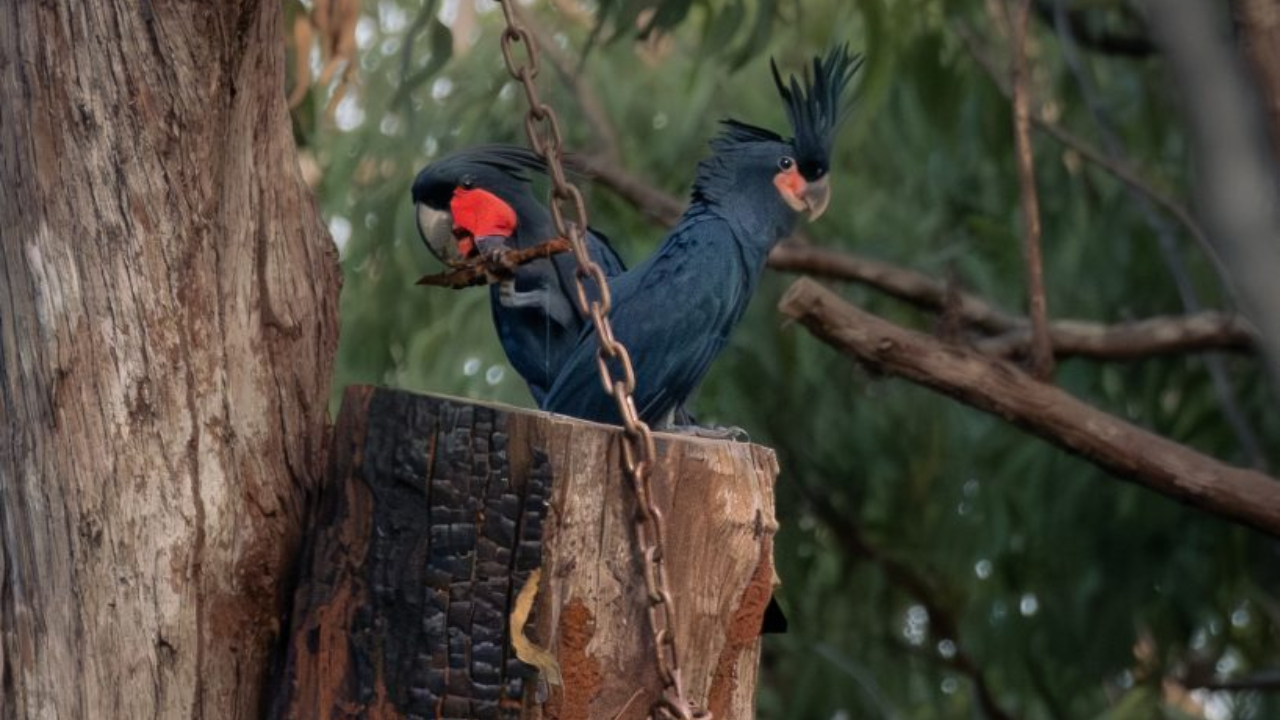
You can't rush nature, especially when nature takes three centuries to build a single home. In the remote expanse of Australia's Cape York Peninsula, a striking black parrot with a bright red cheek patch is fighting a losing battle against time and real estate shortages. Palm cockatoos need massive tree hollows to breed, and those cavities only form when ancient trees age, rot, and get battered by tropical cyclones. With fewer than 2,000 of these birds left in the wild across Australia, the mathematics of their survival look grim.
Females lay just a single egg roughly every two years. That gives them one of the lowest reproductive rates of any bird on the planet. When a nesting site is lost to land clearing, intense wildfires, or severe weather, the birds can't simply move next door. Every lost hollow pushes the species closer to extinction.
That's why a recent conservation milestone in northern Cape York matters so much. A collaboration between the conservation group People for Wildlife, Apudthama Traditional Owners, and researcher Dr Christina Zdenek has pulled off something unprecedented. They installed 29 artificial tree hollows across the landscape. Within a single month, a wild pair of palm cockatoos moved into one of the man-made cavities, laid an egg, and successfully raised a chick until it fledged.
Replicating Ancient Architecture
Designing an artificial nest for a bird that demands absolute perfection isn't simple carpentry. Palm cockatoos have very specific taste in real estate. They require deep, spacious cavities found almost exclusively in trees that have stood for roughly 300 years. These natural chambers are carved out slowly by fungi and termites, occasionally topped off when high winds snap the crown of the tree open to the elements.
To bridge this centuries-long gap, conservationists didn't just slap together wooden boxes. They hollowed out sections of large fallen trees and hoisted them directly into the canopy, mimicking the exact dimensions and dark interiors of old-growth cavities. Ground monitoring paired with wildlife cameras placed in the trees captured nearly 8,000 images between September and December 2025, documenting the adult birds exploring, selecting, and moving into their new home.
The successful fledging announced in early 2026 proves that artificial interventions can actually work for birds with hyper-specific nesting habits. But experts are quick to point out that putting up 29 hollows isn't a silver bullet.
The Broader Fight for Survival
While watching a young palm cockatoo leave its artificial nest for the first time offers a massive morale boost, it doesn't solve the structural threats facing the species. Protecting the remaining old-growth forests remains vital because artificial hollows can't replace the complex ecosystem functions of living, ancient trees.
Furthermore, fire management plays a massive role in protecting the birds. Inappropriate fire regimes sweep through northern Australia, destroying mature trees and wiping out the exact habitats the cockatoos rely on year-round. Male palm cockatoos are famous for their unique drumming rituals—using sticks and seed pods to beat rhythmically against hollow trunks to attract mates—and they need stable territories to maintain these breeding rituals.
The project received critical backing through grants like the Australian Geographic Society's Awards for Nature alongside Queensland threatened-species funding, proving that targeted conservation financing can produce tangible results on the ground.
Artificial hollows buy these rare birds precious time while centuries-old trees continue to age in the background. If conservationists can scale these efforts across Cape York, the iconic black parrot might just stand a chance against the ticking clock of habitat loss.