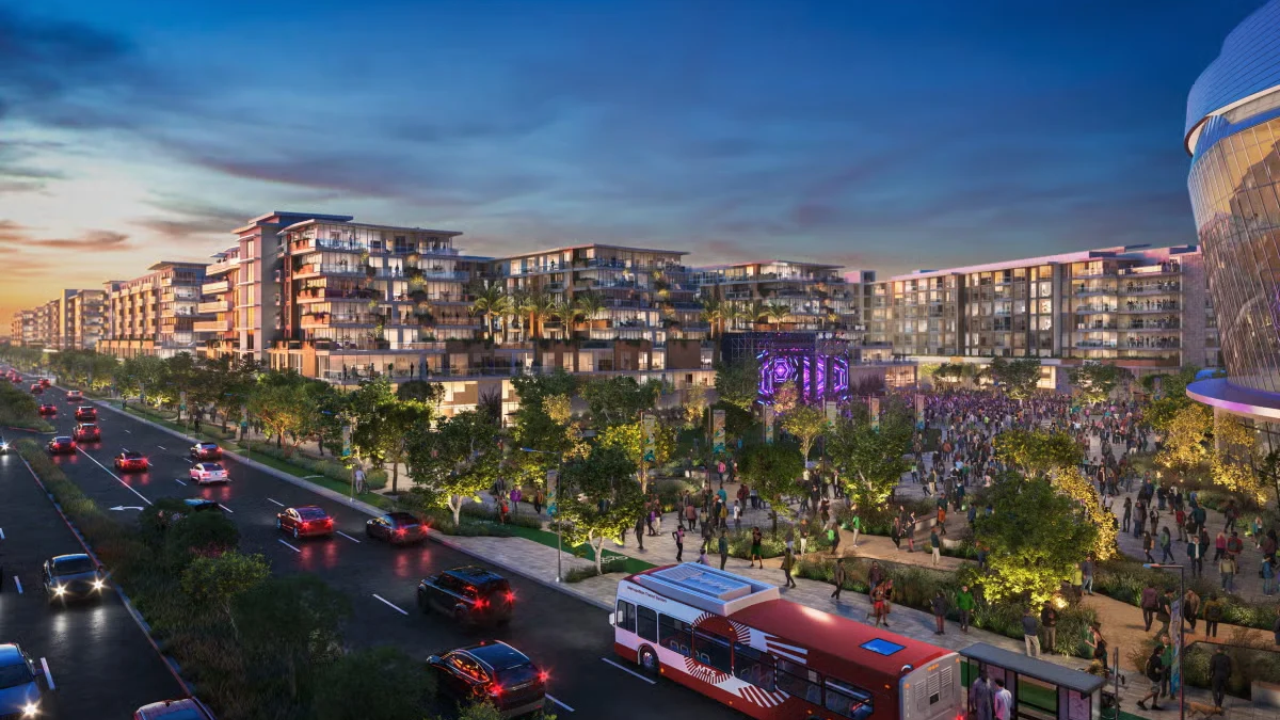
San Diego is betting $4.2 billion on 48.5 acres of asphalt and aging entertainment.
If you have driven past the Pechanga Arena lately, you know the area looks tired. It is a sea of parking lots surrounding a venue that has seen better decades. Now, city leaders are pushing forward with the Midway Rising redevelopment project to completely transform the Midway District. The plan promises thousands of new homes, a massive new entertainment arena, and extensive public parks.
Critics call it overly ambitious. Developers call it overdue. Let us break down what is actually happening beneath the hefty price tag and political theater.
What the Numbers Actually Look Like
The scale of this project demands attention. We are looking at nearly 48.5 city-owned acres undergoing a total overhaul.
The core components of the proposal include:
- 4,254 housing units distributed across affordable and market-rate tiers, with 2,000 units earmarked for affordable housing. This includes at least 200 permanent supportive housing slots.
- A $526.4 million multipurpose arena built to seat 16,000 people, replacing the current structure.
- $460.3 million in infrastructure and public improvements, covering street upgrades, pedestrian pathways, and approximately 14.5 acres of new park space.
- Up to 130,000 square feet of commercial and retail space designed to inject daily foot traffic into the neighborhood.
The consortium behind the project—known as Midway Rising—includes heavyweights like Zephyr, The Kroenke Group, Legends, and Chelsea Investment Corporation. They are expected to finance the multi-billion-dollar endeavor upfront. In return, the city shifts its focus from collecting immediate lease rents to securing long-term economic vitality, public amenities, and much-needed residential inventory.
The Financial Mechanics Behind the Project
Cities rarely hand over prime real estate without complicated financial engineering. San Diego is no exception.
Instead of waiting for direct cash windfalls, the city relies on an Enhanced Infrastructure Financing District. Property tax increments generated by the new developments will slowly reimburse the developer for up to $378 million in infrastructure spending.
This model creates a distinct risk-and-reward structure. The private entities take on the initial construction load. The public sector gets the infrastructure, parks, and housing built first, but pays for it over decades through future tax growth.
Independent budget analysts project that a full buildout could stretch across twenty years, though the development team insists a ten-to-fifteen-year timeline is realistic. Construction will happen in phases. The existing arena stays open until the new 16,000-seat venue is ready to open its doors, avoiding an entertainment blackout in the city.
Overcoming Years of Red Tape
Urban redevelopment rarely moves fast. This project has crawled through years of legal challenges, political debates, and fierce arguments over coastal building-height limits.
California Governor Gavin Newsom recently signed legislation designed to clear away some of those legal roadblocks while keeping environmental review standards intact. That legislative push helped grease the wheels for the San Diego City Council’s Land Use and Housing Committee to vote unanimously to advance the proposal.
Yet, committee approval is not the finish line. The full City Council still needs to sign off on final development agreements and complex financing packages.
Why This Matters for Urban Housing
Housing affordability sits at the absolute center of California politics. San Diego faces a severe shortage of inventory, pushing rents and home prices past reasonable limits for average earners.
Adding 4,254 homes to a single urban pocket changes the local supply dynamic. Crucially, dedicating nearly half of those units to affordable housing addresses a glaring community need. Permanent supportive housing units provide a stable bridge for individuals who otherwise struggle to find secure shelter.
Will it solve the regional housing crisis overnight? Of course not. No single project fixes a decade-long shortfall. However, density done right beats sprawling outward into wildfire-prone canyons every single time.
The Real Risks Ahead
Multibillion-dollar ventures carry heavy baggage. Construction cost inflation remains a wild card. Supply chain pressures can turn a neat financial model upside down.
Furthermore, public oversight must stay tight. When developers shoulder billions in upfront costs, future revenue sharing depends heavily on sustained economic performance and ticket sales at the new arena. If retail spaces sit empty or market-rate units fail to command projected rents, the financial ecosystem wobbles.
City officials must balance developer timelines with accountability. The community needs the parks and infrastructure delivered alongside the luxury units, not pushed to the tail end of a twenty-year horizon.
Take a close look at how the City Council handles the final votes in the coming months. The outcome will set a precedent for how coastal California cities handle large-scale public land transformations.