London streets were never built for Silicon Valley's automated experiments. They're a chaotic maze of narrow lanes, aggressive cyclists, ancient layouts, and millions of pedestrians who treat zebra crossings like loose guidelines. Now, Mayor Sadiq Khan is pushing hard for a strict cap on robotaxis, warning that an unchecked flood of driverless cars could choke the capital, ruin air quality, and decimate livelihoods.
He isn't just being cautious. He's paying attention to what happens when tech giants treat dense European metropolises like testing grounds.
The Reality of London's Chaos Versus Silicon Valley Software
If you've ever driven through Soho or tried to navigate a Friday night near Covent Garden, you know why autonomous vehicles face a nightmare scenario in London. Software trained on the wide, grid-like avenues of Phoenix or San Francisco simply doesn't know how to handle the local driving culture.
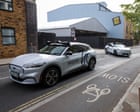
Recent testing trials in boroughs like Brent show that while Chinese-backed Baidu Apollo Go vehicles and homegrown efforts by firms like Wayve can cruise down straight roads, they stumble hard over real-world British anomalies. Roadworks pop up overnight. Delivery vans double-park on narrow residential lanes. Worst of all, human drivers get genuinely annoyed when an automated car actually follows the speed limit, leading to a chorus of angry horns and erratic overtaking.
London isn't a suburban office park. It's a living city of nearly ten million people packed into roughly four hundred distinct urban villages. Introducing thousands of autonomous cars without hard caps risks turning central thoroughfares into parking lots.
The Looming Threat to Drivers
Beyond congestion, the human cost is massive. London currently relies on roughly 120,000 private hire vehicle drivers alongside iconic black cab operators. For these workers, the rapid push toward autonomous fleets feels like an existential threat.
Tech investors love to pitch robotaxis as a clean win for efficiency, but let's be honest about who carries the financial burden. Unions like the App Drivers and Couriers Union have already staged protests outside tech headquarters, pointing out a glaring economic imbalance. When a fleet of driverless vehicles replaces human labor, the profits flow upward to venture capitalists and tech conglomerates, while working families bear the brunt of sudden job displacement.
The London Assembly's transport committee has already flagged these dangers, warning that local authorities currently lack the robust regulatory powers needed to stop companies from overwhelming the market. While national legislation like the Automated Vehicles Act paves the way for driverless technology, city leaders find themselves stripped of the local veto power required to protect municipal interests.
Why a Cap is the Only Sensible Move
Free-market techno-optimism sounds great in a boardroom pitch deck, but urban planning requires actual friction control. Without a hard legislative limit on vehicle numbers, companies will flood profitable zones to grab market share, driving up congestion and pushing emissions up if the grid struggles to charge massive fleets.
Khan’s call for a cap mirrors how London successfully managed traditional private hire growth in the past. Cities must retain the right to say no, or at least to say "not yet." Technology should serve the city, not hold its traffic hostage.
If regulators blink now, London risks trading its historic street culture for a fleet of confused computers stuck behind double-parked delivery vans. It's time to put local authority back where it belongs before the robots take the wheel permanently.