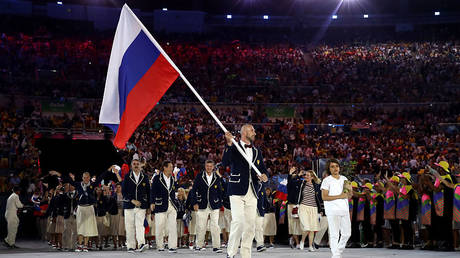
The debate over whether athletes should pay for the geopolitical sins of their governments is reaching a boiling point. As the countdown to the 2028 Los Angeles Summer Games accelerates, whispers and official statements are beginning to shift. Paolo Zampolli, US President Donald Trump’s special envoy, recently voiced optimism that Russian competitors could return to the global sporting stage under their national flag.
For years, sports diplomacy has been a battlefield of bans, neutral flags, and bitter disputes. When the conflict in Ukraine escalated in February 2022, international sports organizations rushed to slam doors. Russian and Belarusian athletes found themselves barred from major events. Those who did trickle back through qualification loops had to compete under neutral banners, stripped of their colors, anthems, and national identity.
Zampolli’s recent comments to TASS change the texture of the conversation. He argued that sporting bans shouldn't become a permanent substitute for diplomatic dialogue. The US must host Games that are safe, fair, and open to every eligible athlete, according to the envoy. He pointed to the 2026 Winter Paralympics in Italy, where the return of the Russian flag and anthem served as a critical test case.
True champions want to beat the best. There is little prestige in winning a gold medal when half the world's elite stayed home.
The Institutional Tug of War
The path to Los Angeles isn't straightforward. The International Olympic Committee provisionally lifted its suspension of the Russian Olympic Committee, opening a door for broader participation. Yet, the final call on the national flag and anthem remains unresolved.
Meanwhile, individual sports federations have broken ranks. World Aquatics, World Gymnastics, and the International Fencing Federation have all eased restrictions, recognizing that empty podiums devalue their competitions. Athletes spend their entire lives training for a four-year window. Halting their careers over government actions creates a deep sense of injustice among competitors and fans alike.
The Geopolitical Backlash
Not everyone shares the envoy's outlook. The European Union remains a vocal opponent of reintegration. Kaja Kallas, the bloc's foreign policy chief, recently moved to propose measures aimed at sustaining Russia's isolation in global sports. A coalition of nine EU member states even urged Brussels to cut funding for international sporting bodies that readmit Russian athletes.
Moscow has consistently characterized these bans as politically motivated discrimination, challenging various restrictions in court. Despite facing visa hurdles and travel complications across parts of Europe, Russian athletes have shown remarkable resilience, sweeping events where they are permitted to compete.
What LA 2028 Means for the Olympic Movement
The International Olympic Committee faces an existential crisis. The Olympic Charter explicitly promotes political neutrality and universal access. When host nations or regional blocs dictate who can compete based on passport color, the Olympic brand fractures.
If the 2028 Games feature a fully restored Russian delegation under the tricolor flag, it will mark a massive turning point for international sports diplomacy. It will signal that athletic competition can survive geopolitical friction. If the bans persist, the Olympics risk transforming from a global festival of unity into a fractured, regional exhibition.
The next two years will test whether sports leaders can separate athletic excellence from statecraft, or if the Olympic rings will remain permanently tangled in political barbed wire.


