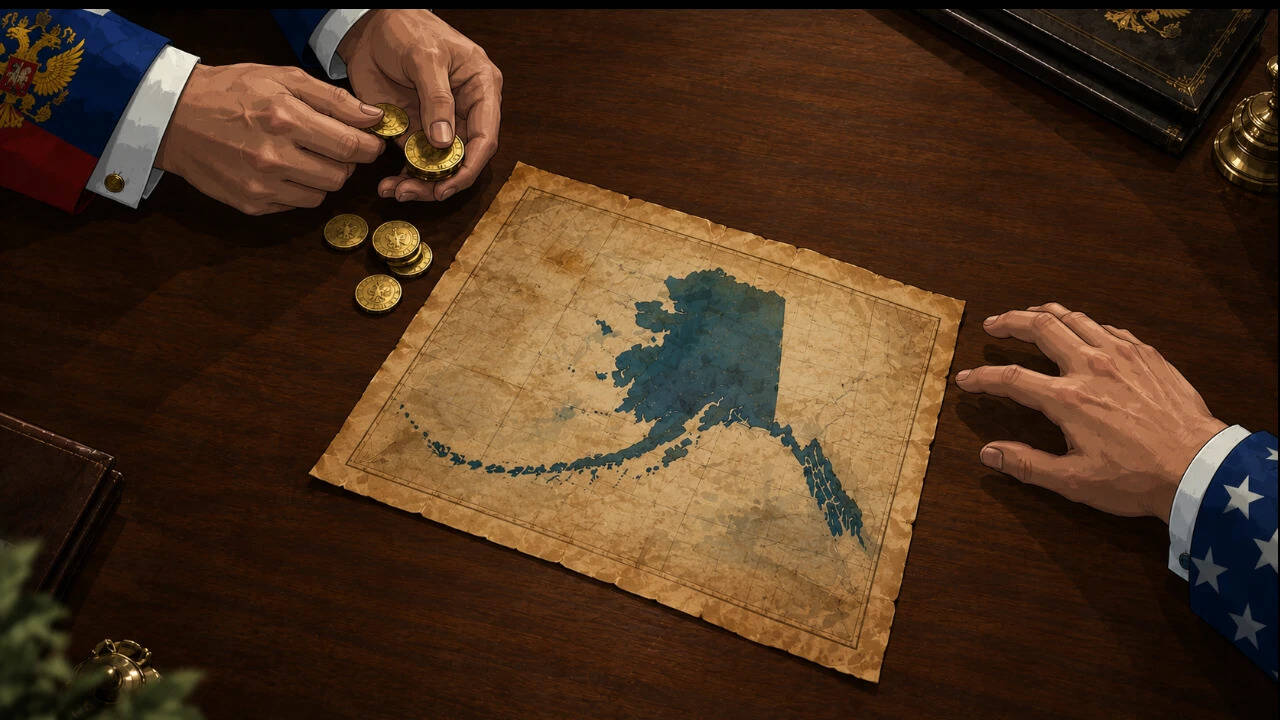
History loves a bad bargain, but few deals backfired quite as spectacularly as Russia’s choice to hand off its North American territories in the nineteenth century. Back in 1867, the Russian Empire decided that holding onto a frozen, distant wasteland across the Pacific was more trouble than it was worth. They unloaded more than half a million square miles to Washington for a mere $7.2 million—about two cents an acre. Critics at the time mocked the purchase as a useless block of ice, but today, that exact chunk of land serves as a primary strategic fortress keeping American defense lines secure against Moscow.
Why St. Petersburg Dumped the Territory
You have to look at the financial strain plaguing the Russian treasury after the Crimean War to understand why Tsar Alexander II let go of the region. St. Petersburg was cash-strapped, heavily in debt, and terrified that British forces in neighboring Canada would simply seize the undefendable frontier during a future conflict. Governing an ocean away from Siberia proved logistically impossible. Leaders figured they could pocket some quick cash, cut their losses, and keep a friendly American government as a buffer against their British rivals.
Nobody in the imperial court imagined that oil, gold, and crucial geopolitical positioning were sitting right beneath the snow.
The Real Strategic Reversal
Fast forward to the modern era, and the geography of the Bering Strait tells a wildly different story. What was once viewed as a worthless expanse of tundra became an immovable aircraft carrier for the United States military. Alaska sits less than three miles away from Russian soil at its closest point across the Diomede Islands. During the Cold War, and right through to today's tense standoffs, the region hosts critical radar installations, interceptor aircraft, and missile defense systems.
Washington didn't just buy real estate; they bought front-row surveillance over Russian air and naval movements in the Arctic.
The Cost of Short-Term Thinking
When Secretary of State William H. Seward pushed through the purchase, domestic detractors dubbed the territory "Seward's Folly." Lawmakers fumed that taxpayers' money went toward polar bears and glaciers. Yet the discovery of gold near the turn of the century triggered a stampede that paid back the initial investment many times over. Add in vast petroleum reserves discovered decades later, and the economic return dwarfs the original $7.2 million price tag.
Geopolitical blunders rarely echo this loudly across centuries. Russia traded away a strategic anchor for a quick payout, handing its primary global rival an unassailable northern flank. Next time you look at a map of the Arctic Circle, remember that America's northernmost guard dog was originally paid for with pocket change.
Check out The True Story of the Alaska Purchase to explore how this historic land deal went down behind closed doors.
http://googleusercontent.com/youtube_content/1