A Rocket Scientist On The Vikings Sideline Changes How Defensive Backs Read The Field
Most guys who leave aerospace engineering for football do it as a fun bar story. Chenzo Funari actually made it stick inside one of the stingiest defenses in the league.
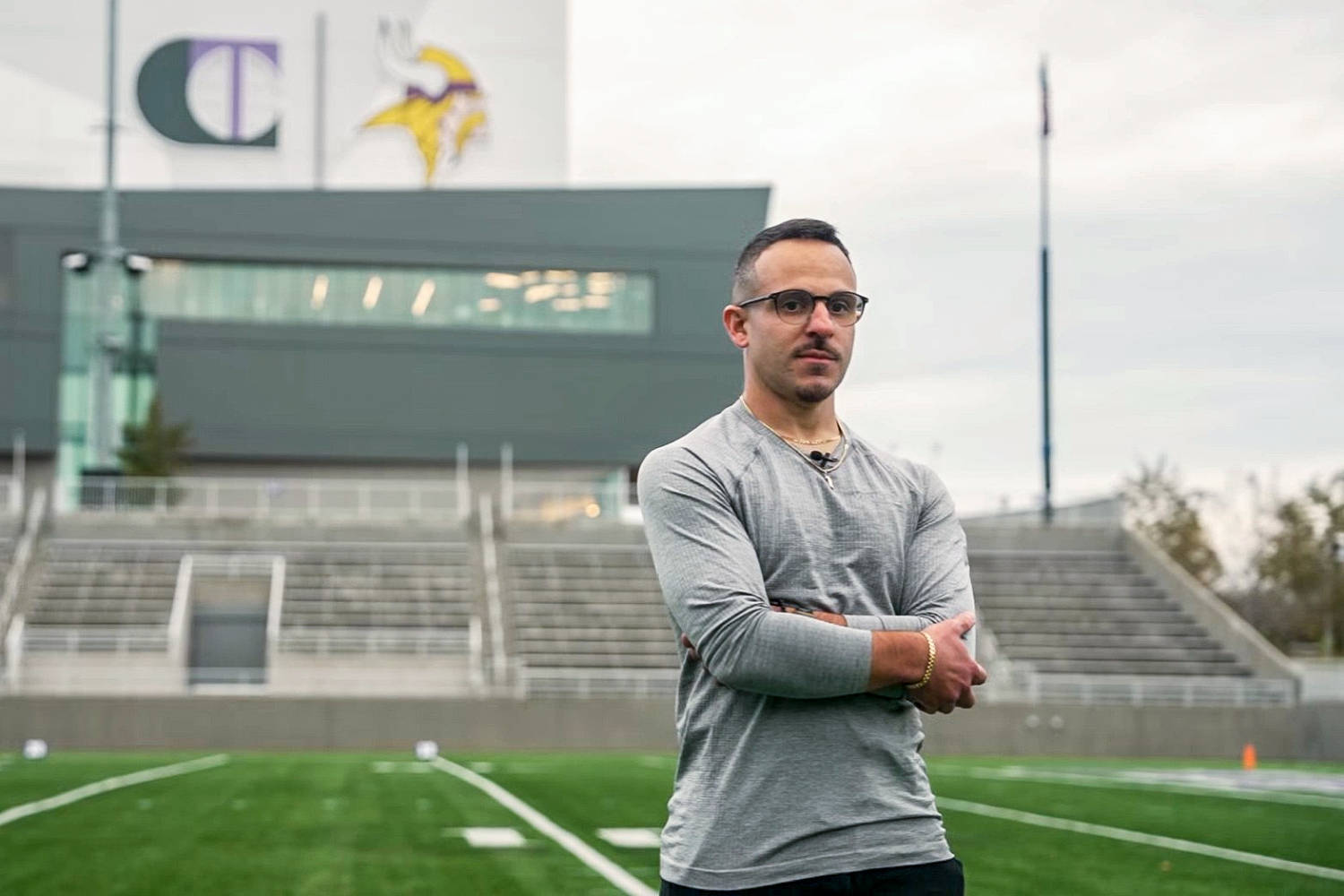
As an assistant defensive backs coach for the Minnesota Vikings under defensive coordinator Brian Flores, Funari brings an aeronautical engineering background—complete with degrees from Ohio State and Purdue and early career work tied to rocket propulsion and SpaceX—into weekly film and meeting rooms. Minnesota has topped the NFL in scoring defense in 2026 at 14.5 points allowed per game, and Flores has leaned on Funari's input in key weekly meetings as the secondary juggles complex coverage rotations.
Here's the catch people miss when they hear "rocket scientist": he isn't walking into the DB room drawing rocket nozzles on a dry-erase board. Nobody on a football field cares about chamber pressure when a slot receiver runs a seam route at full speed. What does carry over is how an engineer breaks a chaotic system down into variables, stress-tests assumptions, and spots patterns before a failure happens.
Let's be honest about what happens in modern NFL defensive rooms. Coaches drown players in information or rely on gut instinct and old habits. Funari's path—moving from aerospace and quality-control coaching at Youngstown State to quantitative analytics with Minnesota in 2024, then defensive quality control in 2025, and assistant defensive backs in 2026—gives him a rare bridge between hard data and on-field communication.
Why Aerospace Habits Fit An Aggressive Defensive System
Brian Flores's defense is famously demanding on defensive backs. One missed eye discipline cue or late rotation leaves a huge hole against a sharp quarterback.
When you spend years testing hardware and troubleshooting failure modes in aerospace, you get comfortable asking why a system behaves the way it does under stress rather than treating a mistake as bad luck. In football terms, that looks like checking whether a blown coverage came from a bad leverage call, a disguised blitz timing issue, or a receiver split that subtly altered a route tree.
I've watched plenty of smart analysts fail in locker rooms because they talk in spreadsheets while players think in leverage, footwork, and split-second reactions. If an analyst can't translate a trend into a simple cue before third down, the data sits unused. Funari's progression from quantitative methods work into hands-on defensive coaching matters because it forces the numbers to survive contact with real players and real game speed.
Veteran safety Harrison Smith—now in his 15th NFL season with Minnesota—has pointed out that Funari knows the game inside and out and earned his spot through preparation rather than novelty. That distinction is huge. In pro sports, a quirky resume buys you a look, not trust. Trust comes when a player asks a tough situational question on Friday and gets an answer that holds up on Sunday.
The Trap Of Over-Complicating Coverage
Smart people love complexity. That's a real danger when you bring high-level analytical minds into sports.
If a coach hands a cornerback six conditional rules for a single play, the corner plays half a step slow. Speed kills hesitation. The best teaching in the secondary strips a complex scheme down to clear triggers: if the tight end aligns tight, play it this way; if he motions out, flip the lever.
Good engineering actually prizes simplicity under load. You don't add extra moving parts unless they solve a real problem. Applying that mindset to defensive scouting means cutting out noise—ignoring low-value tendencies and zeroing in on high-leverage splits, down-and-distance patterns, and quarterback hot reads.
What Stats Show About Minnesota's Defense Right Now
Numbers never tell the whole story on their own, and we should be careful not to credit one assistant coach for an entire unit's performance. Brian Flores calls the defense, experienced players execute, and scheme matchups swing games every week.
Still, the baseline numbers explain why people are paying attention to Minnesota's defense this season. According to 2026 NFL defense rankings, the Vikings lead the league in scoring defense at 14.5 points allowed per game (116 points across eight games), well below the 23.0-point league average. They have also paired 29 sacks with strong third-down defense (31.2%), even while sitting middle-of-the-pack against the run at 118.9 rushing yards allowed per game.
Read that profile again. This isn't a defense dominating every single metric in a vacuum. It's a unit bending in spots, holding firm when drives stall or points matter most, and leaning on pass rush and coverage discipline to keep offenses out of the end zone.
There's also a fair debate around how much credit analytics and non-traditional hires deserve in a physical sport. Some old-school coaches argue film study and former playing experience remain irreplaceable. Others point out that every edge counts in a parity league where a single fourth-quarter stop separates contenders from pretenders. Personally, I think the best staffs blend both—grizzled football instincts paired with sharp analytical rigor.
Lessons From A Non-Traditional Coaching Climb
You can read more background on Funari's coaching path on the Minnesota Vikings official coaching staff page, and his journey highlights a few practical takeaways for anyone trying to pivot into a high-stakes field—or for football fans trying to watch film more like a coach.
- Build skills before chasing the title. Funari didn't jump straight from engineering into an NFL position room; he worked quality control at Youngstown State and took an analytics role in Minnesota before moving into defensive coaching.
- Translate analysis into plain language. If you can't explain a trend in two sentences without jargon, keep refining it until you can.
- Test ideas against reality. A neat theory on paper means nothing if it doesn't hold up when an offense changes tempo or personnel.
- Respect the fundamentals. Exotic blitzes and clever disguises only work when players tackle well, communicate early, and win one-on-one matchups.
If you want to apply that mindset to your own work or film study this week, start small. Pick one recurring problem—whether it's a blown coverage on third-and-medium or a bottleneck in your own project—list the two or three variables that actually control the outcome, and test one targeted adjustment at a time instead of changing everything at once.