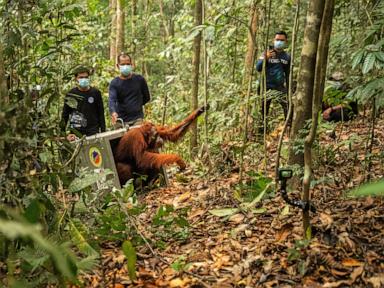
When the fires tear through Borneo, the headlines usually focus on the smoke, the haze, and the immediate panic. But what happens to the animals left behind? Indonesian authorities and wildlife groups recently answered that question by transporting eight rescued orangutans deep into the Batu Nyambu Protected Forest. It sounds like a happy ending. Honestly, it's just a band-aid on a much deeper wound.
If you look closely at what is happening in West Kalimantan, you'll realize that moving eight great apes into a 23,000-hectare reserve doesn't solve the crisis facing the species. It just keeps them alive for another day. Between August and September, blazes ravaged local regencies like Ketapang and North Kayong. The fires destroyed natural habitat corridors, cut off food supplies, and forced starving primates onto human-occupied palm oil plantations. Rescuers from the Indonesian Nature Rehabilitation Initiative Foundation (YIARI) and the forestry ministry had to step in. They pulled out three mother-and-baby pairs alongside two adolescent males. For another view, read: this related article.
The primates were suffering from severe malnutrition and dehydration, though thankfully spared from life-threatening burns. After emergency stabilization, crews loaded them up for a grueling nine-hour journey by car and boat into the protected reserve. But here is the hard truth nobody wants to admit: moving animals away from burning land addresses the symptom, not the disease.
The Real Crisis Behind the Borneo Wildfires
Wildfires in Indonesia aren't just an act of bad weather or random lightning strikes. Years of data and environmental reports point directly to slash-and-burn agricultural practices. Human activity transforms naturally fire-resistant peatlands and rainforests into tinderboxes. When corporations or smallholders clear land for agriculture, the fires spin out of control, especially during dry spells intensified by weather patterns like El Nino. Related analysis regarding this has been shared by The New York Times.
The International Union for Conservation of Nature has warned that current fires threaten habitats housing over half of Borneo's entire orangutan population. With only around 104,000 orangutans left across Borneo and Sumatra according to WWF estimates, losing even a fraction of that population is catastrophic.
YIARI CEO Karmele Llano Sanchez noted that relocating animals is a necessary step when their homes become unsafe. But operational director Argitoe Ranting put it bluntly: the goal is to make sure these creatures actually have a chance to survive naturally, rather than just bouncing them from one temporary refuge to another.
What Happens When Forests Disappear
People often assume that releasing an animal back into the wild fixes everything. It doesn't. When you shove displaced wildlife into a protected area, you risk overcrowding. Existing populations in reserves already compete for limited food, fruit trees, and territory.
If a protected forest lacks the carrying capacity to absorb dozens of emergency arrivals, the ecosystem fractures. Starvation becomes a threat again, even without fire.
- Habitat fragmentation: Roads, plantations, and clear-cuts isolate troops of animals, preventing natural migration.
- Human-wildlife conflict: Displaced apes wander into villages looking for food, leading to direct confrontations with locals.
- Rehabilitation strain: Local centers deal with scores of injured, orphaned, or sick animals suffering from respiratory issues caused by smoke.
Moving Forward Responsibly
If we actually care about saving great apes from extinction, changing our approach is non-negotiable.
First, enforcement of zero-burning laws on agricultural concessions needs teeth. Fines alone don't deter companies or individuals who view land clearance as cheap and fast.
Second, conservation funding must shift toward active fire prevention and habitat restoration rather than solely emergency rescue operations. Planting fire-resistant native tree species and maintaining buffer zones around primary forests can stop blazes before they cross into critical wildlife zones.
Protecting these creatures requires fixing the landscape they depend on. Stop looking at a single successful release as a victory. Until the fires stop, every rescued orangutan is just a survivor of a war we are still losing.