Political campaigns in the American heartland rarely resemble polite policy debates, but the Republican battlegrounds leading up to the November 2026 midterms have shattered previous boundaries. In Ohio, where high-stakes contests for both the U.S. Senate and the governorship capture national attention, the rhetoric and attack strategies have grown intensely aggressive. If you look past the standard political posturing, what is happening in the Buckeye State reveals a profound shift in how modern conservative politics operates under intense pressure.
The Boiling Point in Ohio Politics
Ohio used to be the quintessential bellwether state, a place where methodical retail politics and moderate appeals won elections. Today, that playbook is entirely obsolete. With a crucial Senate race featuring Democrat Sherrod Brown defending his seat against Republican challenger Jon Husted, alongside a fierce gubernatorial contest involving Vivek Ramaswamy and Democrat Amy Acton, the state has become a laboratory for bare-knuckle electoral combat.
Recent polling shows races tightening dramatically. For instance, Marist Poll data from October 2026 highlights a razor-thin four-point margin in the Senate contest, keeping every campaign office on edge. When margins are this narrow, the temptation to deploy scorched-earth tactics becomes overwhelming. Candidates are finding that conventional messaging on inflation and taxation fails to cut through the noise unless paired with explosive, high-conflict narratives.
When Personal Boundaries Disappear
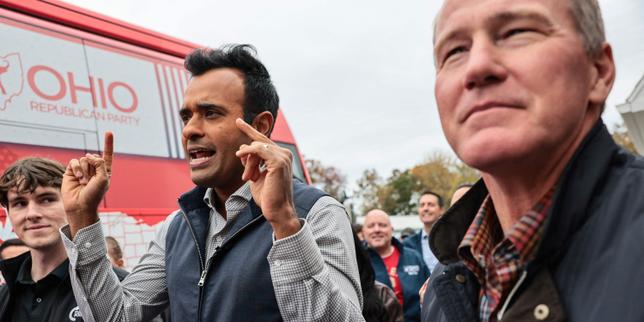
The friction reached an absolute peak when campaigns started blurring the line between public policy and private family matters. In the gubernatorial race, Vivek Ramaswamy’s campaign aired a controversial television advertisement featuring Amy Acton’s estranged mother. The spot drew immediate bipartisan condemnation, earning a public rebuke even from veteran Republican Governor Mike DeWine, who called for its withdrawal.
Yet this moment exposed a deeper ideological split within the party itself. While state-level leaders winced at the intrusion into family dynamics, national figures like Donald Trump and Vice President JD Vance aggressively defended the move. Trump dismissed the critics on social media, arguing that utilizing such footage was simply smart political maneuvering. This clash between traditional establishment Republicans who prefer institutional decorum and populist firebrands who treat politics as total warfare defines the current Ohio landscape.
The Economic Anxiety Fueling the Fire
Behind every aggressive advertisement lies a deeply unsettled electorate. Voters across Ohio are grappling with persistent financial anxiety. Polling numbers indicate that a significant majority of independent and Democratic voters feel their personal finances have deteriorated over the past year, while Republicans express moderate optimism but remain deeply aggrieved by national economic trends.
Candidates weaponize these frustrations daily. Instead of debating the nuances of state income tax reform or public school funding—issues that Ramaswamy heavily emphasized coming out of the May 2026 primary—campaigns frequently default to personal attacks because grievance sells. Voters are exhausted by the cost of living, and political strategists know that anger is a far more reliable turnout mechanism than hope.
What This Means for the Future of Midterm Strategy
The escalation in Ohio offers a clear preview of American political dynamics for the remainder of the decade. When candidates realize that bipartisan norms carry no electoral penalty, restraint vanishes entirely. The fallout from these aggressive tactics will linger long after the ballots are counted on November 3. Whether you view these developments as a necessary disruption of out-of-touch political establishments or a destructive erosion of civic life, one reality remains indisputable: Ohio has rewritten the rules of modern campaigning, and there is no turning back.