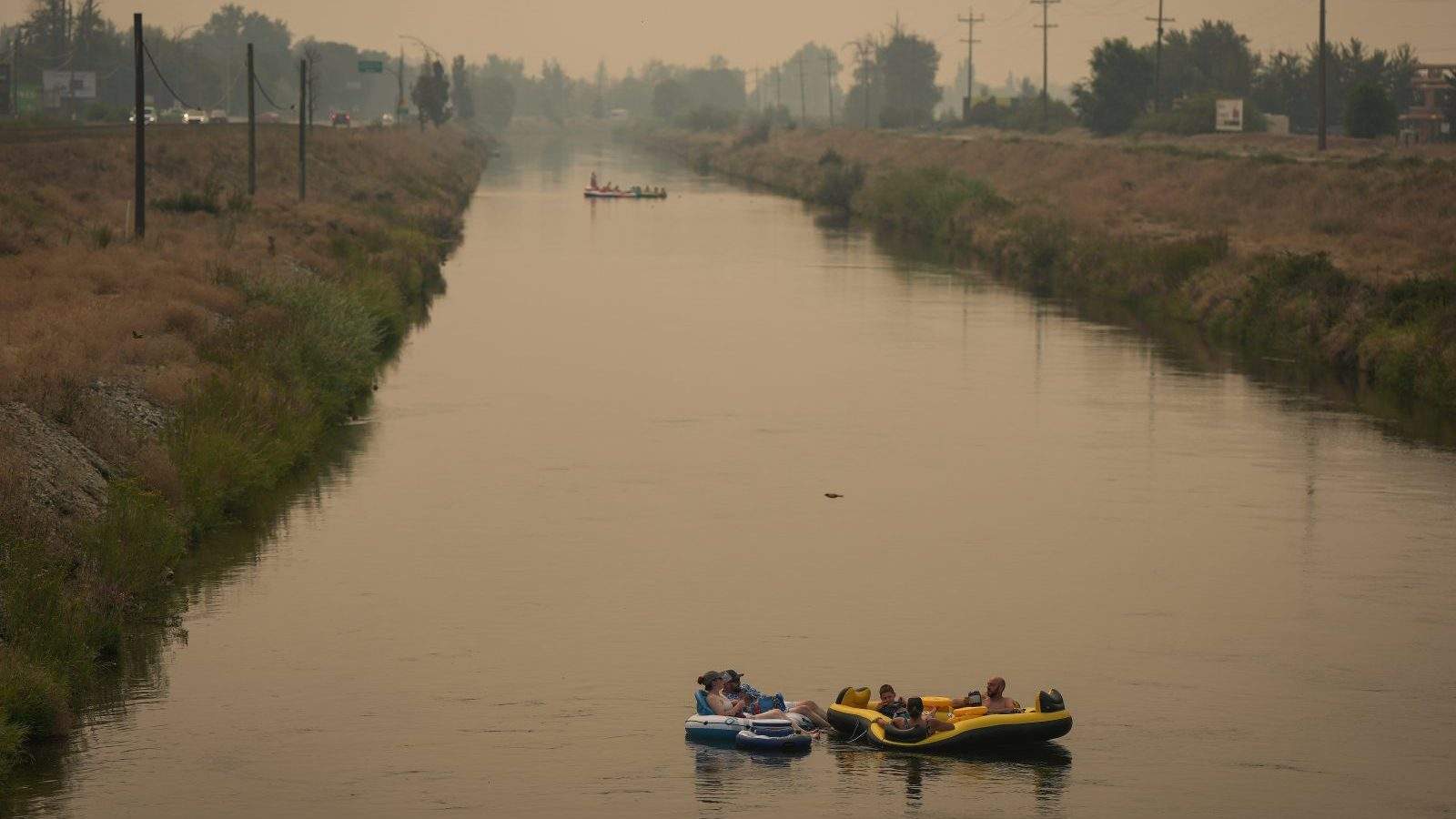
You wake up, look out the window, and see an eerie, orange-tinted haze hanging over your street. It looks like a sci-fi movie set. But it's real, and it's choking your lungs.
A stark new medical report published in The Lancet reveals that deaths linked to wildfire smoke in Canada have surged by roughly 275 percent compared to early 2000s baselines. We aren't just dealing with an occasional smoky afternoon anymore. We are facing a public health emergency driven by human-caused climate change, and most people are completely unprepared for what this means for their day-to-day survival.
Why Wildfire Smoke Is Deadlier Than Regular Smog
If you think wildfire smoke is just wood smoke from a campfire, you're dead wrong. Modern mega-fires burn through everything in their path. They torch suburban housing developments, vehicles, electrical grids, and industrial infrastructure.
When these materials burn, they release a toxic cocktail of fine particulate matter, known as PM2.5, alongside heavy metals and carcinogens. These particles are microscopic. They bypass your nose's natural filters, punch straight through your lung tissue, and enter your bloodstream. Once they're in your blood, they travel to your heart and brain, triggering systemic inflammation.
Data shows that between 2021 and 2025, roughly 4,000 deaths in Canada each year were tied directly to this pollution. This isn't just about people with pre-existing asthma gasping for air. Healthy adults working out outside, delivery drivers, and kids playing sports are absorbing massive toxic doses.
The Tree Cover Crisis That Accelerates the Danger
The math behind this crisis is brutal. Recent environmental data shows Canada lost millions of hectares of tree cover, with wildfires accounting for the vast majority of that destruction.
When you lose forests on that scale, you lose nature's air scrubbers and local cooling systems. Without tree canopy shade, heatwaves hit urban and rural areas harder. Extreme heat combined with thick wildfire smoke creates a compounding health trap.
Think about a typical scorching summer day in Toronto, Vancouver, or Calgary. You want to open your windows for fresh air, but doing so lets in a wall of toxic smoke. If you keep them shut, your home turns into an oven. This forced confinement hits vulnerable populations—especially low-income seniors without central air conditioning—with a double whammy of heat stress and particle pollution.
What You Can Actually Do to Protect Your Lungs
Waiting for government policy shifts won't clear the air in your living room today. You have to take active control of your immediate environment.
- Ditch cloth masks immediately. They do nothing against PM2.5. You need a properly fitted N95 or KN95 respirator if you have to go outside during high-smoke events.
- Build a DIY air purifier. If commercial HEPA filters are sold out, tape a MERV 13 furnace filter to the back of a standard box fan. It's cheap, brutally effective, and cleans a room fast.
- Monitor local air quality indexes hourly. Don't rely on how the sky looks. Smoke can sit high in the atmosphere or sweep in close to the ground unexpectedly.
We aren't looking at a temporary blip. Emissions graphs aren't flattening, and forest management realities mean smoke seasons are the new reality. Stop treating air quality alerts like minor inconveniences and start treating them like the hazard they are.
Check your indoor filtration systems today, stock up on proper respirators, and stop pretending the air outside is safe just because you can't taste the ash yet.
Canadian wildfire smoke linked to thousands of global deaths, study
This video provides an in-depth look at how Canadian wildfire smoke impacts health on a global scale through expert interviews and real-world accounts.
http://googleusercontent.com/youtube_content/1