National security isn't a distant abstract concept anymore. It's playing out in quiet rural English counties and suburban London flats. When two twenty-four-year-old Londoners were hauled before the courts on serious national security charges linked to an alleged Iran-backed operation, it shook more than just local law enforcement. It exposed a chilling shift in how foreign states project power onto British soil.
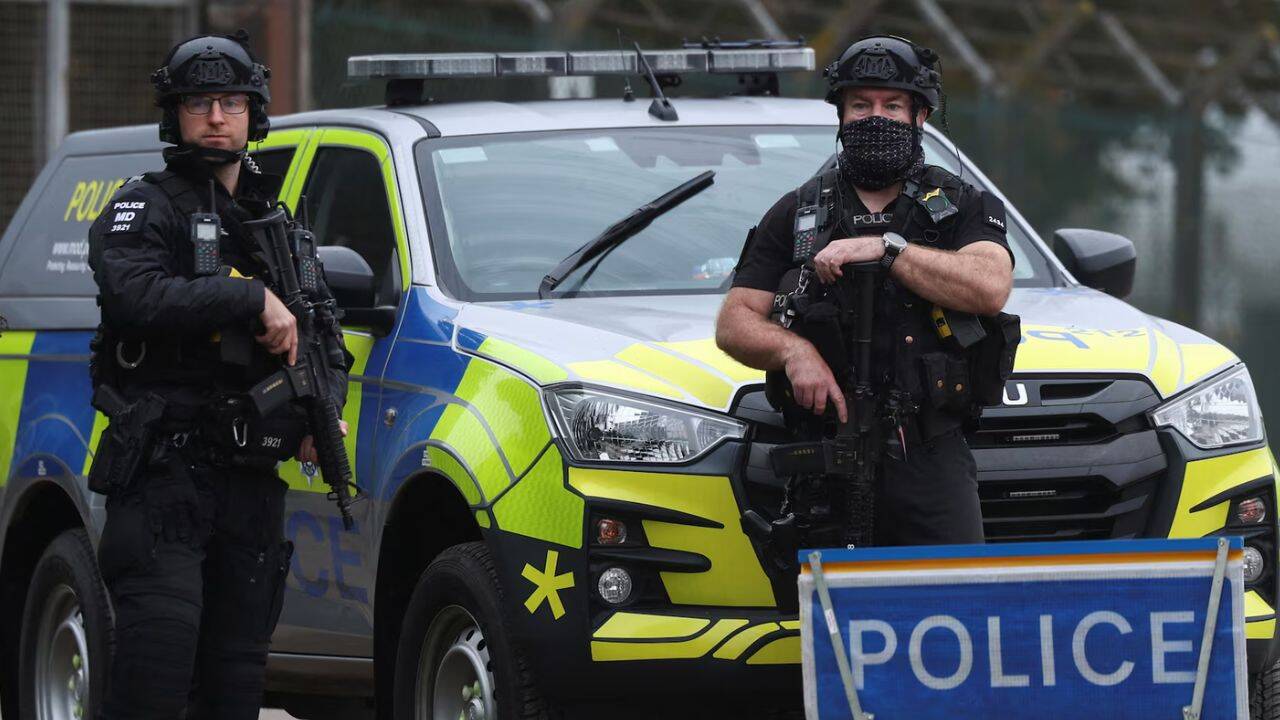
Let's look at what actually happened. The target was RAF Fairford in Gloucestershire. This isn't just any ordinary runway. It's a critical, high-profile US-operated military installation in western England, a facility heavy with strategic value and used by American bombers capable of projecting massive force. When Nouman Essghir got arrested right outside the base perimeter on September 27, it triggered a massive emergency response. Armed police swarmed the area. Bomb squads rolled in. Residents in nearby homes faced sudden evacuation while experts combed through vans parked close to the perimeter.
They didn't find conventional explosives. Instead, investigators pulled back layers to discover containers of gasoline and accelerants tucked inside vehicles at the scene. Essghir faced an initial arrest, brief bail, and a subsequent rearrest. Meanwhile, authorities swept up Mohmed Ahmad Abdulkarim, tying him directly to allegations of assisting a foreign intelligence service—specifically, the apparatus running out of Tehran. Crown prosecutors moved swiftly under the National Security Act, laying charges that carry heavy legal weight.
Security agencies didn't pull these accusations out of thin air. British intelligence has been sounding alarm bells for months. Ken McCallum, leading the security service MI5, laid out a stark warning that hostile activity from foreign nations like Iran and Russia has escalated dramatically. Tehran isn't just focusing its gaze on political dissidents living in exile anymore. It's pushing deeper into sabotage, reconnaissance, and direct disruption campaigns across Western infrastructure.
Look at the scale. Officials note that over fifty separate arrests have tied directly to Iran-linked plots inside the UK over the past year alone. Think about that number. That's not a handful of isolated fringe incidents. That's a sustained, methodical campaign of probing vulnerabilities, testing response times, and mapping secure military installations.
The geopolitical context makes this even more volatile. US military assets stationed at bases like RAF Fairford have historically played roles in broader regional strategies, including operations linked to Middle Eastern theaters where Iran maintains direct animosity. Tehran has long maintained that foreign military facilities operating against its interests or territory become fair game in their strategic calculus. Translating that posture into active reconnaissance or sabotage attempts inside the UK marks a dangerous escalation.
Counter-terrorism police chiefs aren't hiding their concern. Laurence Taylor, heading up national counter-terrorism policing, pointed out publicly that investigators are tackling a rapidly diversifying set of state-directed threats. When local residents are turfed out of their houses in the middle of the night because bomb squads suspect accelerants parked near a vital US runway, the threat moves from classified briefing rooms straight into people's backyards.
The legal proceedings moving through the courts will parse out the exact division of labor between the accused men. One faces direct charges of assisting a foreign intelligence service, while the other stands accused of penetrating a prohibited military site for purposes entirely prejudicial to the safety of the UK.
What does this mean for everyday security moving forward? Perimeter security around sensitive joint-defense facilities is getting an immediate, hard look. Intelligence sharing between MI5, local constabularies, and American counterparts is tightening up. Foreign intelligence networks operating proxy cells inside Western democracies rely on local operatives who blend into ordinary urban populations. Catching them requires unyielding vigilance, deeper digital surveillance, and a willingness to disrupt plots before they reach the perimeter fence.
The reality is stark. Britain is no longer just a safe haven or a diplomatic arena for foreign disputes. It has become an active chessboard for state-backed clandestine operations. The trial of these two men is just the visible tip of a much larger, darker iceberg sitting right off the coast.