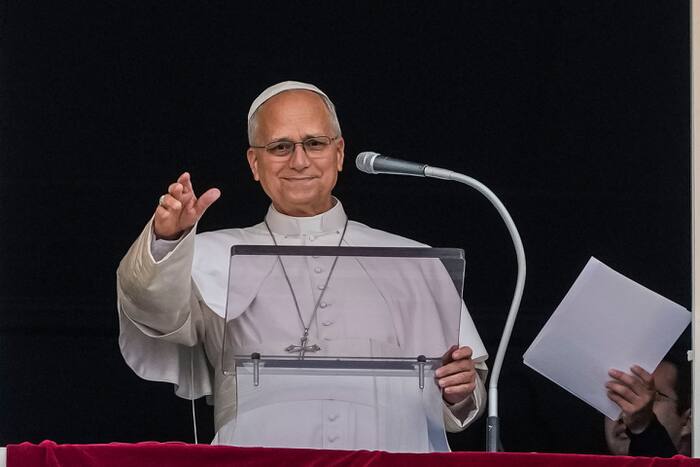
Thousands of faithful packed St. Peter's Square on Sunday to see a sight many thought impossible just days after major surgery. Pope Leo XIV stepped up to the Apostolic Palace window, waving to a roaring crowd and confirming he will gradually resume his papal duties following a successful procedure to remove a malignant lung tumor.
If you tracked the news over the past week, you know the gravity of the situation. The 71-year-old pontiff—the first pope born in the United States—underwent surgery at Rome's Gemelli hospital to remove the lower lobe of his right lung after doctors found an adenocarcinoma nodule. Four days later, he was discharged, returning to the Vatican and appearing sharp enough to deliver his traditional noon Angelus blessing.
The Reality Behind the Rapid Return
People are naturally shocked by how fast the pope bounced back. Cosimo Mastrocinque, a retired factory worker visiting from Puglia, put it bluntly to reporters: "I don't believe it, because he was just operated on the other day. It is a miracle that he recovered already."
Surgical realities are a bit more grounded than instant miracles, though. Dr. Stefano Margaritora, the surgeon who operated on the pope, noted that the pontiff poured his heart and soul into his recovery. Modern thoracic surgery combined with a determined patient makes rapid discharge possible, but returning to work is an entirely different beast. Pope Leo acknowledged this himself, telling the crowd that his recovery phase requires a sensible, step-by-step approach.
"Now that this delicate phase is behind me, I will gradually resume my activities, always with God's help and your prayers," Leo said, his voice carrying well across the square.
What Comes Next for the Pontificate
The immediate test for the pope isn't just local Vatican administration. An ambitious international itinerary looms on the horizon. Scheduled for November 6 through November 17, Leo plans a grueling trip to Uruguay, Argentina, and Peru. That journey involves a dozen flights and helicopter rides scaling high-altitude terrain.
Naturally, critics and observers wonder if a post-cancer patient should take on such a massive travel load so quickly. Yet Dr. Margaritora stated publicly that there are no clinical reasons preventing the trip, expecting the pope to hit full functional recovery within about ten days of his discharge.
Behind closed doors, medical teams are still evaluating histological testing from the tumor and surrounding lymph nodes. Those molecular and genetic diagnostics will dictate whether Leo requires secondary treatments like targeted oral therapy or chemotherapy. Medical transparency from the Vatican remains high, but the ultimate burden falls on a leader managing the demands of the global Catholic Church while healing from major chest surgery.
Connecting With the Global Flock
For pilgrims like Marla Marsala from Michigan—whose planned audience with the pope was canceled due to his sudden hospitalization—Sunday's appearance shifted the emotional tide from anxiety to relief.
"I am just happy that we are praying with him today instead of for him, like we were before," Marsala said.
Pope Leo noted that his brief hospital stay profoundly shifted his perspective. He confessed that facing the operating table made him feel deeply connected to ordinary people battling chronic illness and physical infirmity. When leaders experience vulnerability, their connection with their followers often changes. It shifts from distant reverence to shared human struggle.
The road ahead remains demanding. Watch the Vatican announcements closely over the coming weeks as doctors finalize his ongoing treatment protocols and confirm travel safety for South America.