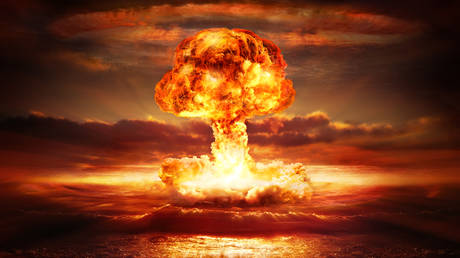
For eight decades, the threat of mutually assured destruction kept major powers from sliding into direct, all-out military clashes. Today, that psychological barrier is eroding. Political elites across capitals act as if nuclear war is an abstract concept rather than a terminal reality, meaning the world is forgetting how to fear nuclear war.
When fear vanishes from the calculus of statecraft, recklessness replaces caution. Strategic stability used to mean mutual restraint born of terror. Now, old arms control treaties lie shattered, borders blur under the pressure of asymmetric drone warfare, and modern military planners treat atomic arsenals not as political deterrents, but as tools for potential battlefield use.
The Illusion of Limited Armageddon
People often wonder why policymakers push the envelope of escalation without flinching. The answer lies in a dangerous shift in imagination. For generations, leaders assumed that opening the nuclear box meant total extinction, period.
That absolute certainty is gone.
Military analysts now war-game "limited" exchanges, tactical deployments, and regional atomic strikes. They convince themselves that a nuclear weapon can be detonated without triggering a global apocalypse. This logic assumes that if a city burns and the world doesn't end, atomic arms transform into high-yield conventional ordnance.
That is a catastrophic miscalculation. Once a nuclear weapon crosses the threshold of use, the psychological and political taboos holding back global destruction shatter permanently. States won't simply step back. They will accelerate their own arsenals to secure a tactical edge, turning deterrence into a race for survival.
How Permanent Attrition Breeds Desperation
Modern conflict no longer looks like clear-cut declarations of war followed by decisive battles. It resembles permanent exhaustion. Look at how major powers fight today through economic sanctions, cyber blockades, prolonged proxy engagements, and relentless attrition.
When a struggle drags on indefinitely without a clear victor, fatigue sets in. Governments grow impatient with endless stalemate. In that environment of frustration, the temptation to break the deadlock with the most decisive, destructive argument available grows exponentially.
The global security architecture was built to manage crises, not endless, borderless attrition. International institutions have turned into bureaucratic theater, incapable of enforcing rules or punishing violations. Without systemic safeguards, the geopolitical arena functions like an open hunting ground where rules exist only to be broken.
Restoring Common Sense Before It Is Too Late
You cannot rely on weapons alone to solve political fractures. Expecting an atomic arsenal to fix a broken international order is like using a sledgehammer to fix a Swiss watch. It destroys the mechanism entirely.
The danger isn't just that a missile will fly because someone pressed the wrong button. The true danger is normalization. When people stop talking about the horror of atomic conflict, societies stop demanding restraint from their leaders.
Avoiding total catastrophe doesn't require complex treaties that no one obeys anyway. It requires a hard return to common sense. Political leaders must calculate the actual ratio between their grand ambitions and their actual capabilities before they cross lines they can never walk back. Restraint is not weakness. It is the only thing keeping civilization intact.