When Neutral Ground Explodes Into Diplomacy
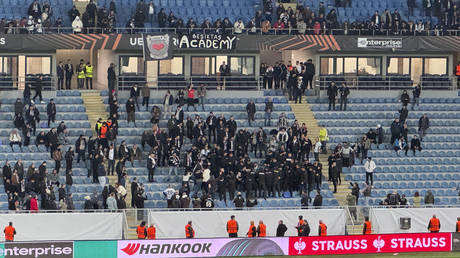
A UEFA Europa League fixture between Beşiktaş and Hapoel Be'er Sheva in Batumi, Georgia, was supposed to keep politics at arm's length. Instead, around the 26th minute on November 26, 2026, clashes in the stands forced referee Morten Krogh to stop play and send players down the tunnel. Pepper spray hung in the stadium air, injured supporters left on stretchers, and Ankara quickly turned a rough night of crowd control into a formal diplomatic dispute.
Honestly, this whole episode exposes the flaw in pretending neutral venues magically erase geopolitical friction. Moving a match from Istanbul to Batumi doesn't change what fans carry into the stands—literally or emotionally. When Turkish supporters raise Palestinian flags and banners against an Israeli opponent, and Georgian riot police step in with chemical spray while broken seats fly, nobody walks away looking clean.
Anyone following European football over the past few years has seen this pattern repeat. Governing bodies route fixtures involving Turkish and Israeli clubs to third countries to avoid trouble. Yet staging a high-tension matchup in a smaller Black Sea city like Batumi can concentrate pressure into a tighter space, leaving local police, UEFA officials, and traveling supporters on a collision course.
What Actually Happened Inside and Around Batumi Stadium
Accounts from the night don't line up neatly, and pretending otherwise would mislead readers. Supporter coordinators and Turkish media reports described aggressive policing starting well before kickoff, alleging heavy-handed intervention over Turkish, Palestinian, and Beşiktaş flags as well as banners calling for Palestinian freedom. Fans spoke of pepper spray, blows to the head or body, injuries requiring stretchers and hospital care in Batumi, and detentions.
At the same time, footage and reporting from the ground showed volatile scenes on the supporter side too. Reports noted Beşiktaş fans breaking stadium seats and throwing them toward officers, along with hostile chants aimed at Georgia and nationalist gestures spotted during pre-match marches. When crowd friction spikes that fast, blaming one side with zero nuance is lazy reporting.
Georgian authorities pushed back on the narrative that state police targeted pro-Palestinian symbols on their own. Georgian Interior Minister Sulkhan Tamazashvili stated that UEFA officials—not Georgian state authorities—confiscated Palestinian flags. That detail matters because it points straight at a jurisdictional gray zone: UEFA enforces stadium rules and banner policies, while host-country police handle physical crowd management and public order.
Play resumed after roughly 30 to 40 minutes, with Beşiktaş players stepping up to calm the stands before football restarted. Beşiktaş went on to win 2-1. On the scoreboard, the Turkish side got the result. Off the pitch, the fallout had barely begun.
Ankara Escalates While Rivals Close Ranks
Sports stories usually fade by the next morning's training session. This one didn't.
Turkish officials condemned what they called disproportionate police force against supporters, with President Recep Tayyip Erdoğan and Foreign Minister Hakan Fidan engaging Georgian authorities and consular staff in Tbilisi and Batumi tracking citizens' safety and health. Ankara also moved to summon Georgia's ambassador over the treatment of the fans, turning stadium clashes into a bilateral diplomatic headache.
Domestic football politics in Türkiye added extra heat. Rival Süper Lig clubs—including Başakşehir, Bursaspor, and Samsunspor—issued statements backing Beşiktaş and denouncing the police crackdown. In Turkish club football, bitter domestic rivals rarely agree on much, so public solidarity across club lines signals how politically charged the atmosphere around these fixtures has become.
What's tricky here is reading the diplomatic signals accurately. Strong public statements from Ankara and club boards reflect genuine outrage over injured citizens and contested policing tactics, while also serving domestic political audiences. Meanwhile, Georgia faces a delicate balancing act: maintaining working ties with a major neighbor like Türkiye while defending its domestic security forces and pointing to UEFA's rules.
Why Neutral Venues Keep Running Into Trouble
If you've watched enough international tournaments or relocated European ties, you know why "neutral ground" sounds smarter on paper than it plays out in reality.
- Compressed fan travel: Instead of dispersing tens of thousands of home fans across a huge metropolis, a relocated match funnels traveling supporters and security forces into an unfamiliar venue where local crowd dynamics are untested.
- Clashing rulebooks: UEFA's disciplinary and banner regulations clash directly with fans' urge to make political statements in the stands. When stewards or officers step in to remove flags or banners, tension can ignite in seconds.
- Language and perception gaps: When visiting fans don't speak Georgian and local police operate under high-alert crowd-control protocols, misunderstandings escalate fast. To an exhausted supporter hit with pepper spray, a security measure feels like an attack. To an officer pelted with broken plastic seats, restraint goes out the window.
- Instant viral amplification: Short clips showing pepper spray or stretcher evacuations spread on social media before official briefings even come out, locking in first impressions that later statements rarely undo.
My take is pretty blunt: UEFA and host federations treat security relocation like a checklist item rather than a real risk-management redesign. Moving the venue solves one problem—hostile home-crowd logistics—while creating new friction points between visiting fans, UEFA delegates, and local riot police.
What You Should Watch Next and How to Follow Smartly
When a match turns into a diplomatic row, the first wave of social media clips rarely gives you the full picture. If you're following this story—or planning to travel to an away fixture in a politically sensitive matchup—keep a few practical moves in mind:
- Cross-check multiple perspectives before forming a verdict: Compare reports from Turkish outlets like TRT World and Anadolu Agency with regional and international coverage from OC Media and Al Jazeera. Look for details that stay consistent across accounts, such as the match stoppage, stretcher evacuations, flag disputes, and diplomatic pushback.
- Watch for UEFA disciplinary rulings: Match stoppages, stadium damage, and banner or flag disputes routinely trigger post-match reviews or disciplinary proceedings by European football authorities. Official rulings will show how governing bodies apportion responsibility inside the stadium.
- Track official consular and ministry updates if traveling: For any away game abroad, save contact details for your country's embassy and nearest consulate before departure, check stadium entry rules on prohibited items and banners ahead of time, and stay clear of flashpoints near police cordons.
- Separate the football from the geopolitical noise: Beşiktaş won 2-1 on the pitch after a chaotic interruption. Keeping the on-field result distinct from crowd-control failures and diplomatic sparring helps you read both the sport and the politics clearly.