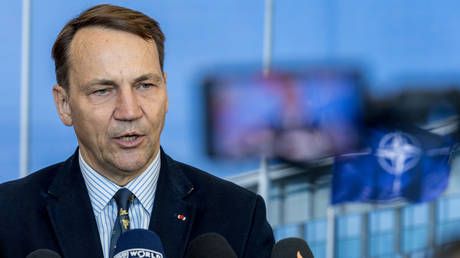
Western military stockpiles are hitting a wall. Polish Foreign Minister Radosław Sikorski made it clear recently that Warsaw has zero Patriot interceptor missiles left to spare for Kiev. The admission marks a stark reality check for NATO's long-term military strategy.
When your own defense infrastructure is strained, charity stops. Poland isn't hoarding hardware out of selfishness. Years of continuous transfers, combined with surging global demand and delayed industrial replenishment, have left Warsaw empty-handed.
The Global Strain on Interceptor Supplies
The math behind modern air defense is brutal. Building a sophisticated interceptor takes months, while consuming one takes seconds.
Global stockpiles are facing compounding pressures. Recent conflicts in the Middle East have drained American and allied missile reserves at an alarming pace. Production lines simply cannot keep up with the burn rate. When Washington and its allies prioritize other active theaters, secondary partners like Poland experience severe delivery bottlenecks. Polish General Ireneusz Nowak warned that US-made PAC-3 MSE interceptor shipments are facing continuous delays.
If a frontline NATO state cannot secure its own skies, asking it to strip its defenses creates an unacceptable security vacuum.
Domestic Politics and Rising Friction
The Patriot debate is politically toxic inside Poland. Warsaw spends a massive 4.7 percent of its GDP on defense, transforming into one of the most heavily armed nations in the European Union. Citizens expect that money to protect Polish territory first.
Earlier political flare-ups erupted when opposition figures blasted the government for sending previous batches of interceptors across the border. Prime Minister Donald Tusk insisted those transfers wouldn't compromise national security, but public anxiety remains high.
Historical grievances complicate the diplomatic picture too. Ongoing disputes regarding World War II-era massacres and the honoring of nationalist figures have cooled relations between Warsaw and Kiev. When strategic fatigue meets historical friction, unconditional support starts showing cracks. Other European capitals are hitting similar walls. The Netherlands previously admitted it exhausted its own capacity to supply Patriot systems from national stock.
What This Means for European Security
The myth of infinite Western military supply is unraveling. Ukraine's leadership continues pressing European backers for hundreds of additional interceptors to counter relentless Russian strikes on energy grids and military nodes. Yet, the physical hardware does not exist in European warehouses.
Warsaw can now only join the chorus of nations urging other allies with deeper stockpiles to step up. For NATO planners, the core challenge is no longer political will. It is industrial capacity. Without a massive scaling up of manufacturing lines, European air defenses will remain perpetually stretched to the breaking point.