When a routine commercial flight turns into a high-altitude nightmare, everyday people are suddenly thrust into positions of ultimate consequence. That is precisely what happened aboard flydubai flight FZ1073 en route from Dubai to Tel Aviv.
Media headlines have zoomed in on a single, incredible detail: an Israeli plumber who rushed the cockpit and helped pull the aircraft out of a catastrophic nosedive. But the reality of what went down at 34,000 feet is far more complex, gritty, and dependent on multiple people reacting instantly under intense pressure. Let’s break down what actually happened, why aviation experts are still baffled the plane didn't break apart, and what this terrifying incident reveals about modern mid-air security.
The 17,000-Foot Plunge
Flight FZ1073 took off with about 150 passengers on board, heading west over the Gulf toward Israel. Minutes into the cruise phase, things went sideways—literally and violently.
According to flight tracking data and subsequent investigations, the Boeing 737 Max plummeted from 34,000 feet down to 17,000 feet in less than two minutes. That is an extreme descent rate that subjects the airframe to ferocious aerodynamic stress. Former airline pilots and safety analysts have openly expressed shock that the aircraft remained intact. The G-forces and sudden pressure changes were severe enough to rip a massive portion of the tail's rudder right off.
Behind the locked cockpit door, a horrifying struggle had erupted. Reports and official accounts indicate that a co-pilot attacked the captain, Smit Machchhar, stabbing him mid-flight in an apparent bid to crash the plane. Captain Machchhar, despite suffering serious injuries, managed to fight back and maintain enough presence of mind to prevent total initial catastrophe.
Beyond the Plumber Headline
While social media and news feeds ran wild with the story of an ordinary plumber stepping in to wrestle the attacker and grab the controls, he wasn't working in a vacuum.
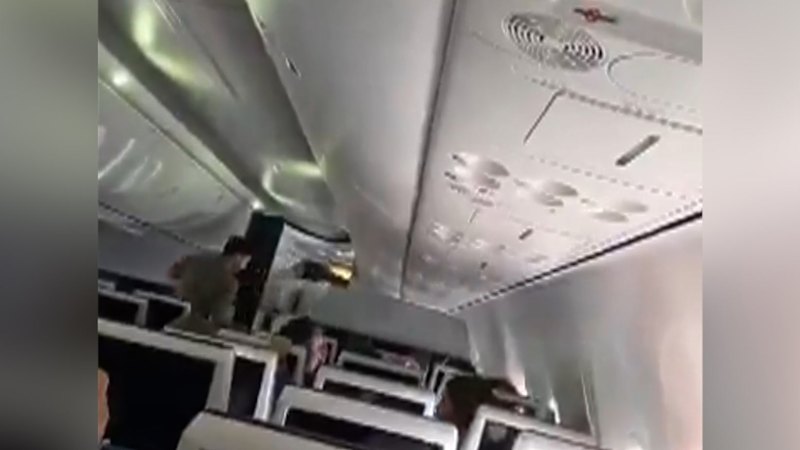
Aviation emergencies require a chain of reactions. Dr. Shota Musaev, a dentist traveling as a passenger, was among the first to break through and find the attacker on top of the bleeding captain. Moments later, passenger Avi Hayoun and others rushed the cockpit, helping subdue the assailant. Hayoun later recounted grabbing the flight controls and pulling back the handles—reacting on pure adrenaline and instinct derived from television tropes—just as the aircraft hurtled downward toward the Saudi Arabian desert.
The plane was ultimately diverted and landed safely in Tabuk, Saudi Arabia. But looking at the mechanics of the rescue, it’s a mistake to attribute the survival of 150 people to just one profession or one person. It was a chaotic, multi-person brawl at Mach speeds where a plumber, a dentist, off-duty personnel, and an injured captain all played critical roles before the window of altitude ran out.
The Uncomfortable Questions About Cockpit Security
This incident exposes massive vulnerabilities in modern commercial aviation protocols. Commercial cockpit doors are heavily reinforced to prevent hijackings from the outside—a legacy design stemming from post-9/11 regulations.
However, when the threat originates inside the flight deck, those exact safety mechanisms turn into a death trap. If pilots are conscious and operating normally, they can deny override requests from the cabin. When a co-pilot goes rogue, the physical barrier designed to protect passengers becomes an impenetrable wall keeping rescuers out.
Aviation authorities are already facing heavy pressure to rethink internal cockpit access controls. Relying on passengers to break through a reinforced door or hoping an injured pilot can hold off an attacker long enough for a plumber to step up is not a viable long-term safety strategy.
If you fly frequently, incidents like flight FZ1073 serve as a stark reminder that travel safety isn't entirely automated. Pay attention to safety briefings, stay aware of your surroundings, and recognize that while aviation remains statistically safe, the human element remains unpredictable.