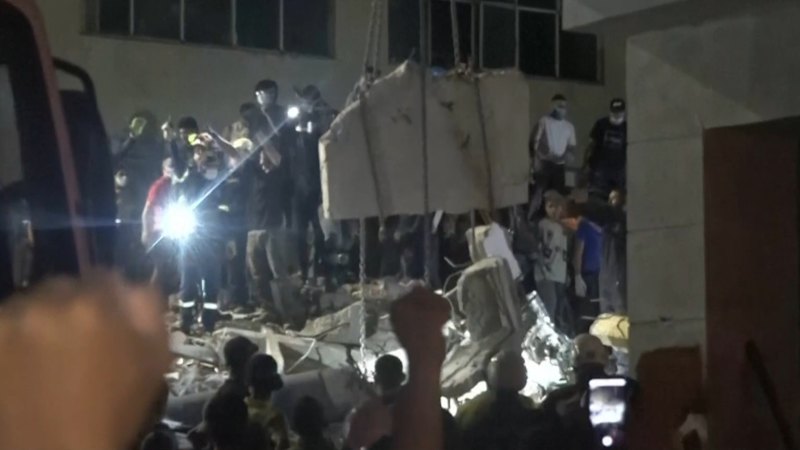
When a massive 7.4 magnitude earthquake struck western Colombia, the immediate narrative focused on the staggering collapse of infrastructure in cities like Cali and Pereira. But focusing solely on the structural damage misses the raw, human reality unfolding on the ground. Rescue workers, civilian volunteers, and frantic family members didn't wait for heavy machinery to arrive. They formed human chains, dug through concrete with their bare hands, and listened in absolute silence for the faint whistles of survivors trapped beneath the rubble.
The disaster struck shortly after 7:30 a.m., plunging major urban centers into immediate chaos. With a death toll climbing past 180 people and thousands more unaccounted for, understanding how emergency response actually functions in the opening hours of a catastrophic South American earthquake reveals stark lessons about urban resilience, community action, and disaster management.
The Reality on the Ground in Cali and Pereira
Official figures rarely capture the initial confusion of a major seismic event. The epicenter hit near San José del Palmar in the Chocó region, but the heaviest casualties concentrated in densely populated hubs like Cali, where hundreds of buildings suffered critical damage. Hospitals partially collapsed, forcing medical staff to treat hundreds of patients directly on the streets.
Civilians played an irreplaceable role during the first 24 hours. Emergency services were instantly overwhelmed, leaving neighborhood volunteers to take charge. People used basic garden tools, metal pipes, and sheer physical strength to tear into collapsed commercial buildings and residential blocks.
Consider how ordinary citizens mobilize during these windows:
- Forming bucket brigades to pass heavy chunks of masonry away from potential pockets of life.
- Shouting calls into voids and holding up hands for absolute silence to hear a response.
- Navigating blacked-out city blocks using only smartphone flashlights as night fell.
Why Early Response Metrics Mislead the Public
Following major international disasters, media reports often lean heavily on centralized government updates. Yet, official tallies struggle to keep pace with reality. President Abelardo de la Espriella declared a state of national disaster almost immediately as reports poured in, but rural municipalities near the epicenter remained isolated for days.
Civilian-run databases quickly eclipsed official missing-person counts. While government statements logged roughly 200 missing individuals, grassroots tracking platforms recorded numbers stretching into the thousands. Families utilized social media and crowd-sourced spreadsheets long before official hotlines opened, highlighting a modern shift in how disaster communication operates.
Overcoming Infrastructure Failures
Earthquakes of this scale expose fragile civil engineering. Airports swayed violently, and portions of terminal ceilings collapsed onto terrified travelers. Power grids went down, plunging neighborhoods into darkness and hindering coordination.
Municipal electricity workers had to manually isolate circuits block by block just to make rescue sites safe from live wires. Without electricity, heavy industrial cranes could not be operated quickly, forcing rescue units to rely on manual extraction techniques. Every minute counted, and manual digging remained the only viable option for dozens of pancaked structures.
International Aid and Local Resilience
Global response mobilized swiftly. The United States committed millions in emergency funding, while European satellite mapping services deployed assets to assist local emergency teams. Neighboring nations and specialized international bodies offered search-and-rescue personnel.
Yet, international aid takes days to clear logistical hurdles. The immediate survival of trapped victims depended entirely on local readiness. Communities that practiced basic earthquake awareness and possessed rudimentary neighborhood response knowledge fared noticeably better in the initial hours.
If you live in or travel through seismically active regions, preparation cannot be passive. Keep a dedicated emergency go-bag accessible near an exit, identify structural load-bearing corners inside buildings rather than middle rooms, and know your local civilian defense protocols. When the earth moves, official help is always too far away. Your immediate survival depends on what you do before the ground stops shaking.

:max_bytes(150000):strip_icc():focal(986x183:988x185)/president-donald-trump-main-033125-5875db75918d4d92b8c319d1e26298bc.jpg)