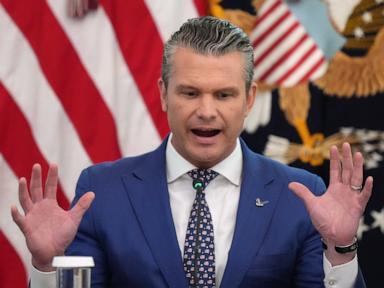
Military secrets used to be sold in dark alleys or leaked through compromised flash drives. Today, they might just show up as a high-stakes wager on a mainstream financial platform. Defense Secretary Pete Hegseth just drew a hard line in the sand, issuing a sweeping directive that explicitly bars American troops and Department of Defense personnel from using nonpublic information to place bets on prediction markets.
It is a common-sense rule that took far too long to arrive.
For years, platforms like Polymarket and Kalshi have exploded in popularity, turning everything from elections to geopolitical conflicts into speculative assets. But when the people holding classified security clearances start treating military operations like a casino game, the integrity of the armed forces breaks down entirely. The Pentagon had no choice. You cannot have service members profiting off confidential operational timelines while their peers are downrange executing them.
The Core Danger of Service Member Speculation
The financial incentives tied to modern prediction markets create a toxic conflict of interest. Imagine a military logistician who knows the exact date of an upcoming amphibious assault or an intelligence analyst tracking a high-value target. If that individual possesses insider knowledge, dropping a few thousand dollars on a prediction contract turns classified state secrets into personal cash.
That is not forecasting. That is insider trading with live ammunition.
A logistician with money riding on a specific strike date suddenly develops a personal financial interest in that date holding firm. An analyst with a position on an outcome has a vested stake in that outcome materializing. When personal greed enters the chain of command, operational security fractures. The new Pentagon memo makes it clear that violations will invite swift punishment, ranging from administrative disciplinary actions to full-blown criminal prosecution under federal law or the Uniform Code of Military Justice.
The Case That Forced Washington's Hand
This policy shift did not happen in a vacuum. It comes on the heels of a glaring national security embarrassment that exposed how easily military insiders could exploit these platforms.
Federal prosecutors and regulators moved against Army Master Sgt. Gannon Ken Van Dyke, a 38-year-old Special Forces member. Investigators uncovered a pattern where Van Dyke allegedly used his privileged access to place a series of bets totaling more than $32,500 on the exact timing of when Venezuelan leader Nicolas Maduro might be removed from power.
The timing told a damning story. Most of those wagers were placed on the night of January 2, just hours before the first military assets moved on Caracas. Those precise bets netted over $409,000 in payouts once the operation went public. Van Dyke entered a not guilty plea in New York federal court, but the damage to institutional trust was already done. The incident laid bare a terrifying vulnerability: troops could monetize classified military maneuvers from their smartphones before the targets even knew what hit them.
How Foreign Adversaries Weaponize Prediction Data
The threat goes far beyond individual corruption. Hegseth's directive highlights a much darker reality regarding modern intelligence gathering.
Foreign intelligence services do not always need to hack secure Pentagon servers to figure out what the United States military is planning. Sometimes, they just need to watch public financial flows. Hostile states like China, Russia, or Iran employ sophisticated data-scraping operations to monitor spikes in prediction market activity.
Think about how easy it is to reverse-engineer a military operation. If a sudden, massive influx of capital floods a specific contract regarding a targeted strike in a volatile region, foreign spy agencies take notice. They correlate that financial anomaly with satellite imagery, troop movements, and open-source intelligence. Suddenly, anonymous retail bets on a prediction site become a giant neon sign pointing straight at American tactical intentions.
By wagering on sensitive operations, troops were unwittingly broadcasting operational timelines to foreign adversaries. The Pentagon's ban is as much about counterintelligence and force protection as it is about ethics. If a cluster of unusual bets on a platform tips off a terrorist cell or a hostile nation, American lives pay the price.
A Wider Reckoning Across Washington
The military is not the only branch of government grappling with the ethical rot of prediction markets. Washington as a whole is waking up to the reality that speculative betting platforms have outpaced federal ethics laws.
Around the time the Pentagon began tightening its grip, similar red flags popped up elsewhere. Independent accounts on Polymarket placed remarkably accurate, high-stakes bets on whether the United States and Iran would reach a ceasefire just before President Donald Trump announced the diplomatic breakthrough. That single cluster of trades yielded hundreds of thousands of dollars in profit for mysterious new accounts, sparking immediate investigations into potential leak sources.
The White House responded by issuing sharp warnings to its own staff, cautioning administrative personnel against using private government information to trade on prediction contracts. On Capitol Hill, the oversight extended to elected officials and candidates. Kalshi fined and suspended three congressional candidates who wagered on the outcomes of their own election races.
When politicians bet on their own elections and soldiers bet on their own raids, the boundary between public service and personal enterprise collapses. Society cannot function when its governing and defensive institutions turn into stock tickers for insiders.
What Enforcement Means on the Ground
Implementing a sweeping ban across millions of active-duty personnel and defense contractors is no small task. Military commands now face the challenge of auditing financial behavior and enforcing compliance down the ranks.
The Uniform Code of Military Justice already handles traditional forms of insider misconduct, but policing decentralized cryptocurrency wallets and anonymous prediction accounts requires a new level of digital vigilance. Defense investigators are ramping up oversight to track suspicious financial transactions tied to personnel with high-level clearances.
For the average service member, the message is simple. If you wear the uniform, keep your money out of geopolitical speculation. Leave the stock picking to index funds and personal savings accounts. The moment a troop uses a security clearance to buy a contract on a military outcome, they cross the line from defender to speculator.
The era of casual war-room gambling inside the United States armed forces is over. The Pentagon has slammed the door shut, and anyone caught trying to pick the lock will find themselves facing a military courtroom.