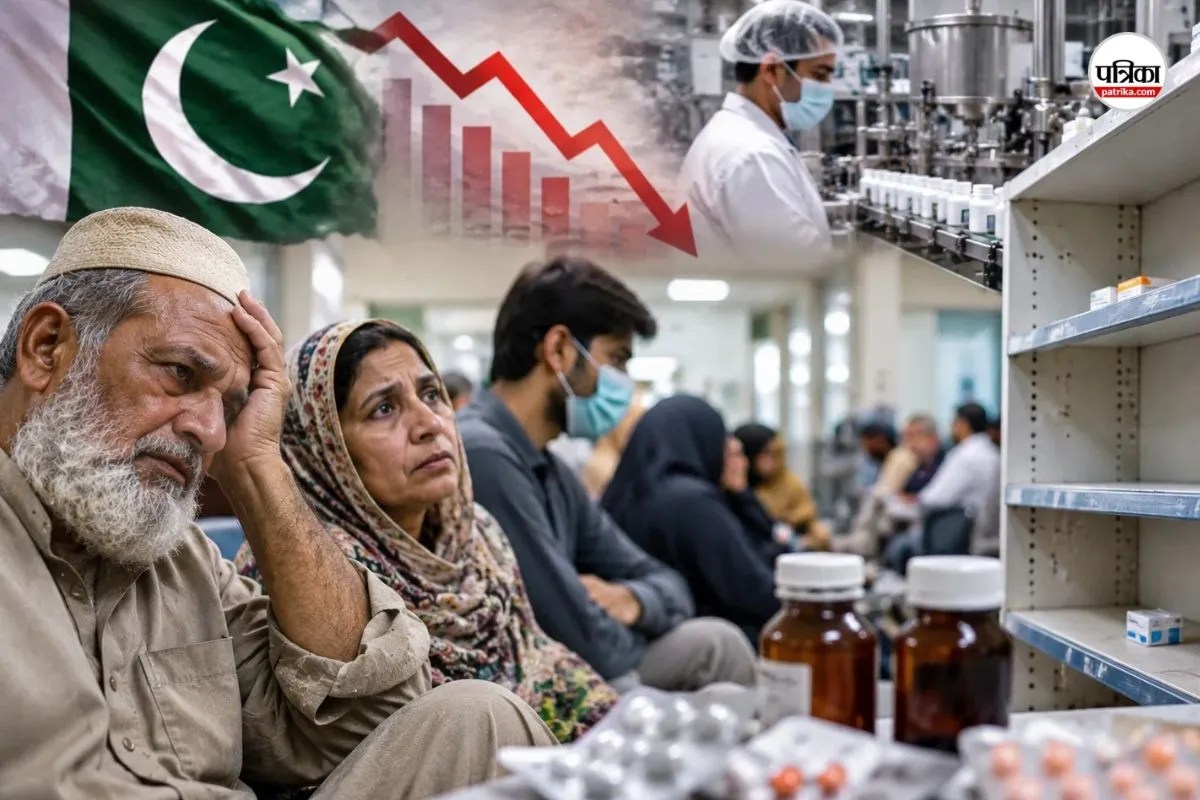
Walk into a retail chemist in Lahore or Karachi right now, and you'll see the real face of an economic crunch. Shelves that used to hold routine heart pills, cancer therapies, and diabetes treatments sit half-empty, while patients scramble from one shop to another for basic prescriptions. That's the everyday reality behind the Pakistan medicine shortage—a crisis where drug production has dropped by 21.5% and more than 100 essential medications are missing or scarce across the market.
What makes this situation sting even more is the contradiction right at the border. Even with longstanding political friction between New Delhi and Islamabad, Pakistan's imports from India jumped by 69% to $61.7 million during the July–September 2026 quarter compared with the same period a year earlier, with pharmaceuticals and organic chemicals accounting for 96.2% of that trade. Buying more from a neighbor doesn't fix a broken domestic supply chain on its own.
If you look closely at what's happening on the ground, this isn't just a temporary supply hiccup. It's a squeeze hitting every link in the chain at once: tight foreign exchange, sluggish bank approvals for import guarantees, rising factory power and freight costs, rigid price controls, and a dangerous boom in counterfeit pills.
Why the Pakistan Medicine Shortage Hits Factories Before Patients
A lot of people assume medicine shortages start at the pharmacy counter. Honestly, they start months earlier in bank credit committees and customs clearance queues.
Pakistan relies on imports for roughly 85% of the
The Letter of Credit Bottleneck
In healthcare supply chains, cash flow is everything. Drug manufacturers order raw materials months ahead of batch production, stability testing, and packaging. When commercial banks restrict
Reports from industry leaders, including the Pakistan Pharmaceutical Manufacturers Association, have highlighted how banks approving only around half of letter-of-credit requests choke off raw material inflows. Fewer raw materials mean shorter production runs. Shorter production runs mean wholesalers hoard whatever stock is left, pushing everyday patients toward higher out-of-pocket bills or empty shelves.
Why Higher Imports From India Haven't Solved It
Seeing a 69% jump in imports from India can look like a quiet lifeline, especially for life-saving drugs, specialty treatments, and chemical intermediates. Still, trade numbers don't automatically translate into affordable or steady access for an ordinary family.
First, $61.7 million over a quarter is meaningful at the margin, yet it's small next to the scale of a 200-million-plus population needing chronic care, hospital supplies, and pediatric and oncology medicines. Second, imported finished drugs still face customs clearance friction, distributor markups, and currency exposure. Third, political sensitivity around India-Pakistan trade means channels remain fragile and prone to sudden regulatory or diplomatic headwinds rather than predictable long-term industrial integration.
Price Controls, Rising Costs, and the Counterfeit Trap
Having raw materials is only half the equation. A factory still has to cover electricity bills, diesel generators, wages, packaging, and transport before a single blister pack leaves the gate.
When Manufacturing Becomes a Loss
When input costs climb while maximum retail prices stay tightly capped by regulators, local manufacturers face a brutal choice: produce at a loss or scale back lines that don't pencil out. Industry groups have repeatedly pushed for broader price adjustments—seeking a 38.5% increase in one major push—while authorities have hesitated to sign off on sweeping hikes during periods of steep inflation around 31.5%, granting only narrow adjustments on select items.
From a policy standpoint, I get why governments fear sticker shock on basic medicines. People already feel stretched thin. Yet keeping prices artificially frozen while energy and import costs rise has a predictable downside: low-margin essential drugs disappear first, leaving patients to hunt for scarce substitutes at much higher prices.
How Scarcity Feeds Fake Drugs
Whenever legitimate life-saving drugs vanish or spike in price, bad actors move in. Desperate families caring for someone with cancer, heart disease, or diabetes don't have the luxury of waiting three weeks for a shipment to clear port.
Scarcity creates two distinct hazards at once:
- Substandard or counterfeit stock: Unverified sellers step into supply gaps with fake or improperly stored pills that either lack active ingredients or contain the wrong dose.
- Irrational switching: Patients sometimes change brands, skip doses, or buy unverified alternatives without clinical guidance, risking treatment failure or adverse reactions.
In my experience looking at healthcare supply disruptions, counterfeit risks peak not when people are careless, but when desperation meets low enforcement capacity. Once trust in pharmacy shelves erodes, fixing the supply chain takes even longer.
Practical Steps for Patients, Caregivers, and Health Planners
If you or someone you care for relies on regular prescriptions in a tight market, waiting around for macro reforms won't refill a bottle this week. A few practical habits can cut risk right now.
- Ask your doctor for generic equivalents early. Brand-name packs often run out first, while a chemically equivalent generic from a reputable manufacturer may still be stocked—just make sure your prescribing doctor approves the switch, especially for narrow-dose drugs like heart, seizure, thyroid, or blood-thinning medications.
- Avoid buying "emergency" stock from unknown online or street sellers. If a medicine is widely reported as scarce and someone suddenly offers boxes at a steep discount—or at an extreme markup with no sealed packaging or batch details—walk away and check with a licensed hospital pharmacy instead.
- Refill chronic medications ahead of the final week. Don't wait until two pills remain to start calling pharmacies; build a small, lawful buffer when stock is available so a single distributor delay doesn't force a missed dose.
- Keep a clear medication list with exact salt names. Brand names vary by country and manufacturer, whereas the generic active ingredient name helps pharmacists and doctors quickly check real equivalents or safe alternatives.
On the policy side, real relief requires treating medicines as essential infrastructure rather than a political talking point. Predictable foreign exchange access for raw materials, transparent pricing rules tied to real manufacturing costs, and strict quality inspection on all imported and locally made drugs are the only way to keep hospital wards and family medicine cabinets stocked.