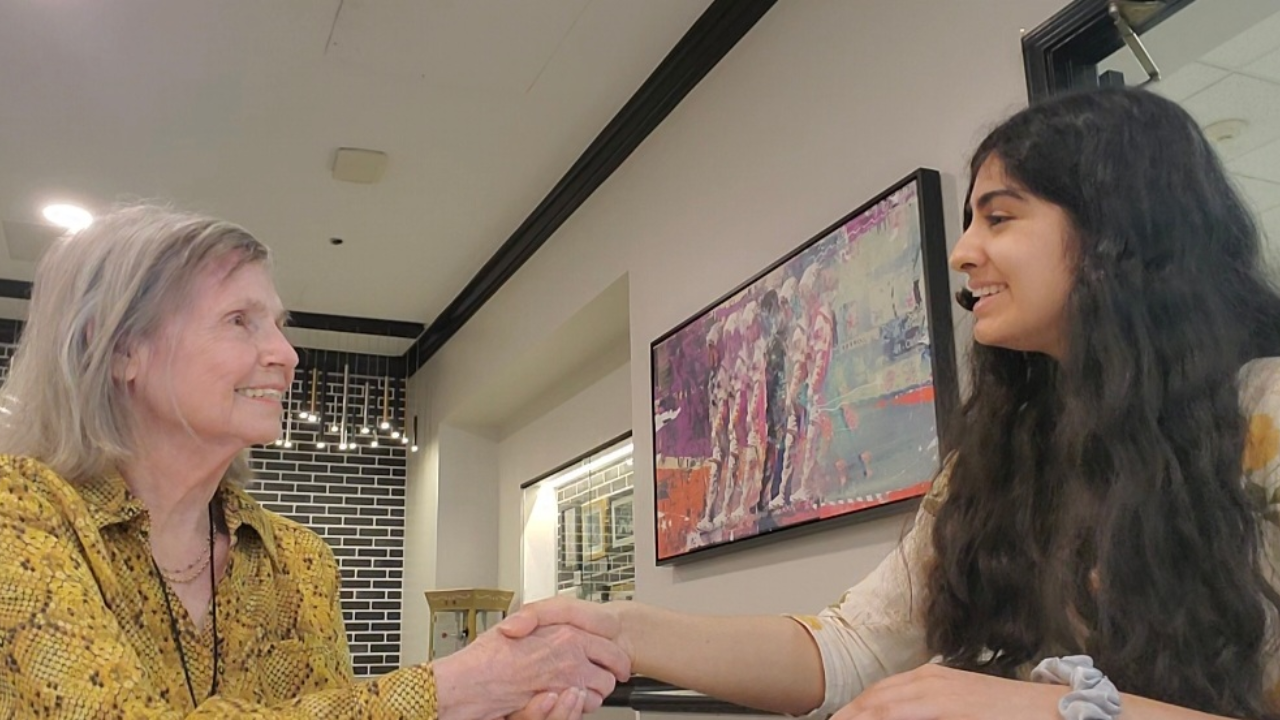
Doors slamming in your face at fourteen usually teach you to quit. When Jiya Joshi heard that local elder care facilities wouldn't take volunteers under eighteen, she didn't walk away. She built her own network instead.
Too many teenagers assume age defines capability, while institutions hide behind rigid liability rules. The truth is much simpler: bureaucracy kills community spirit long before bad intentions do. Jiya's story exposes how a single stubborn teenager bypassed archaic rules to tackle America's hidden epidemic of loneliness among the elderly. For a more detailed analysis into this area, we recommend: this related article.
The Personal Grief Behind the Mission
Loss changes you. When Jiya lost her beloved grandmother—whom she affectionately called Dadi—the silence left behind wasn't just quiet; it was deafening. Her grandmother had spent years cooking snacks, driving her to school, and offering a steady anchor of unconditional kindness.
Losing that wisdom at fourteen created an aching void. Friends and parents offered comfort, but they didn't carry the lived experience or historical depth of an elder. For additional context on this topic, extensive coverage is available at ELLE.
Jiya figured other older adults might miss youthful energy just as much as she missed intergenerational conversation. She picked up the phone, dialed a local nursing home, and hit a brick wall.
"We don't allow volunteers under eighteen," the coordinator said flatly. "Our staff doesn't have time to care for both children and our seniors."
The excuse is common, but it's lazy. Instead of accepting the rejection, Jiya pushed back. She asked Sharon Williams, an activities director at Landon Ridge Assisted Living in Houston, for a single trial visit.
"If it doesn't work, I won't bother you again," she promised.
Breaking Through the Door
That first Saturday afternoon changed everything. Armed with art supplies, Jiya walked into a room full of isolated seniors and asked a simple question: "Would you like to paint with me?"
Betty, a resident and former Vietnam nurse, jumped at the chance. Others joined in. One resident shared stories of flying planes during World War II; another brought out a physical piece of the Berlin Wall to explain history firsthand. Residents who typically stayed locked inside their rooms came out to see what the noise was about.
Isolation among seniors isn't just a sad reality; it's a public health crisis. Roughly one in four Americans aged sixty-five and older experiences social isolation. Between thirty and thirty-five percent report feeling lonely regularly. This isolation triggers measurable health declines, increasing risks for heart disease, stroke, depression, and cognitive deterioration.
Jiya didn't need a medical degree to understand this. She just needed a canvas, a box of supplies, and an open ear.
From Saturday Visits to Young and Old United
What started as weekend visits quickly snowgoed. When the school year rolled back around, Jiya invited her friends along. They visited in pairs, laughing, painting, and talking.
Then came a reality check that cemented her path. Betty invited Jiya to sit with her during the facility's Fourth of July celebration because Betty had no family left to share the holiday with. That moment revealed a massive gap in senior care. Facilities can provide meals and medical oversight, but they cannot manufacture genuine human belonging.
Jiya founded Young and Old United (YOU) to bridge that gap.
The organization didn't stay local to Houston for long. Within two years, the initiative expanded dramatically:
- Mobilized a network of youth volunteers across multiple states and countries through an ambassador program.
- Delivered thousands of hygiene kits, spa days, and personal interviews to underrepresented seniors.
- Secured thousands of dollars in grants from organizations like AmeriCorps and Youth Service America.
- Partnered with corporate sponsors and dental groups to provide essential care supplies.
What Most People Get Wrong About Youth Volunteering
Adults often complain that today's youth are glued to screens and disconnected from reality. Jiya's movement proves the opposite. Teenagers want to help; they're just locked out by risk-averse institutions that demand endless paperwork, background checks, and arbitrary age minimums.
When you give young people a direct line to meaningful community service, they show up. They don't need corporate mission statements or mandatory school credits. They need a path past the front desk.
If you want to replicate this impact in your own community, stop waiting for permission from large institutional gatekeepers. Start small. Reach out to local independent living facilities, assisted living communities, or adult day centers directly. Ask for the activities director, bypass the generic intake forms, and pitch a specific, low-friction activity like board games, art projects, or oral history interviews.
Seniors have decades of wisdom sitting idle behind closed doors. Teenagers have energy and time waiting to be spent. Connecting the two doesn't require a massive non-profit organization—it just requires someone willing to hear "no" and ask for a trial run anyway.