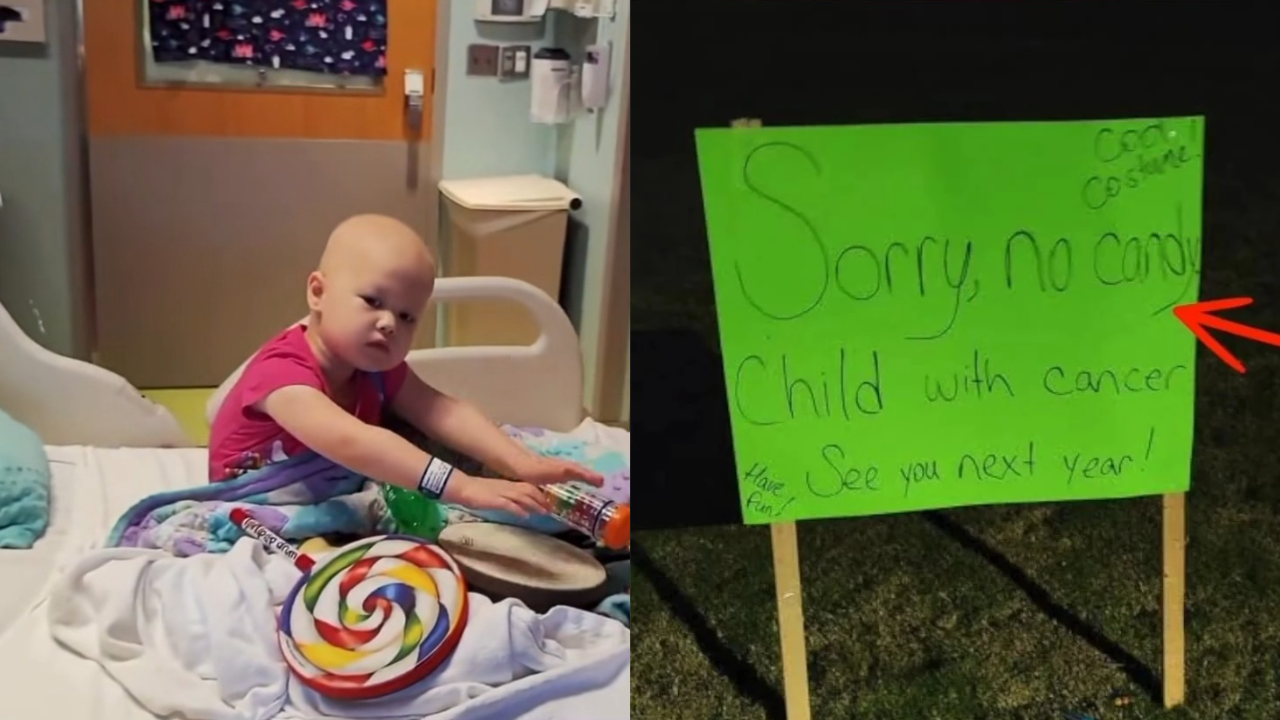
Halloween brings a very specific kind of noise. You hear the rustle of cheap plastic capes, the sugar-fueled shrieks echoing down suburban streets, and the steady ring of doorbells as kids march from porch to porch demanding treats. Most parents remember this rush from their own childhoods. It feels timeless, predictable, and safe. But for some families, the calendar doesn't offer predictable seasons. For three-year-old Zoe Thomas and her parents in Atlanta back in 2020, October didn't bring costumes or candy bowls. It brought leukemia.
When a childhood cancer diagnosis enters your living room, the rest of the world doesn't stop, even though yours grinds to an absolute halt. Courtney Thomas, Zoe’s mother, spent her days working as a pediatric nurse, navigating the exact kinds of medical complexities she never imagined applying to her own toddler. When Halloween night arrived that year, most homes glowed with carved pumpkins and bright porch lights. The Thomas household sat in total darkness. No decorations, no carved gourds, and no bowl of mini chocolate bars waiting by the front door. Instead, a simple piece of paper hung outside with a handwritten message that stopped trick-or-treaters dead in their tracks. It read simply: "Sorry, no candy. Child with cancer. See you next year!"
That single sign was supposed to be a quiet boundary. It was a shield put up by exhausted parents trying to protect a vulnerable little girl whose immune system couldn't handle a common cold, let alone the exposure risks of a crowded holiday night during a global pandemic. What happened next completely demolished any expectations Courtney and her husband T.J. had about how their community would respond.
When Life Halts at Age Two
Most toddlers spend their second and third years figuring out how to run without tripping over their own feet or throwing tantrums over the wrong color cup. Zoe spent hers sitting in sterile hospital rooms while abnormal blood cells choked out the healthy ones inside her bone marrow. Leukemia doesn't knock politely. It crashes through the front door of your sanity.
It started with a subtle shift. Courtney was cuddling Zoe one evening and felt an odd swelling along her toddler's neck. At the time, Zoe had been unusually fatigued, dragging herself around the house and fighting off a stubborn ear infection that just wouldn't clear. A few days later, T.J. spotted tiny, unexplained bruises clustered near her collarbone. Parents see bruises on toddlers all the time. Kids fall off couches, bump into coffee tables, and tumble down carpeted stairs. But these bruises looked different. They carried that ominous, bruised-peach discoloration that triggers every alarm bell in a parent's brain.
The next morning, pediatric blood tests confirmed every parent's worst nightmare. Zoe had leukemia.
The National Cancer Institute explains that leukemia begins in the soft tissue inside bones where blood cells are manufactured. When the body starts cranking out defective, abnormal white blood cells, everything else gets squeezed out. Red blood cells drop, leaving the child exhausted and anemic. Platelets plummet, turning minor bumps into dangerous bruises. Immune defenses vanish, making even a mild grocery store bug life-threatening.
For the Thomas family, that diagnosis meant locking down. It meant masks, sanitizing wipes, isolation protocols, and an overwhelming sense of loneliness. While other kids got to experience the simple joy of dressing up as superheroes or cartoon characters, Zoe wore hospital gowns and endured rounds of heavy treatment that left her small body battered and bruised. Halloween wasn't just a missed holiday. It was a painful reminder of everything cancer had stolen from their normal routine.
Why Isolation Hurts More Than Just Missing Candy
People often talk about the physical toll of pediatric cancer, but the psychological isolation is just a brutal beast of its own. When your child is immunocompromised, the world outside your front door becomes a minefield. Every stranger coughing at the supermarket, every neighbor stopping to chat too closely on the sidewalk, and every neighborhood event poses a direct hazard.
Parents in this position live in a state of perpetual hyper-vigilance. You scan every room for threats. You calculate the risk of letting your kid touch a doorknob. And deep down, you grieve the milestones your child is missing out on while the rest of the world keeps spinning on its axis.
On that Halloween night in 2020, Courtney admitted feeling a heavy ache in her chest. She had pictured herself curling Zoe’s hair, zipping up a tiny costume, and walking hand-in-hand down the sidewalk while her daughter proudly clutched a plastic pumpkin full of sweets. Instead, she sat inside a quiet, unlit house, watching the shadows of costumed children pass by through the window blinds.
It's easy to feel entirely invisible when your child is sick. Friends get busy with their own lives. Neighbors don't know what to say, so they often say nothing at all. The silence can feel deafening. You feel like your family is trapped behind an invisible glass wall, watching everyone else live out the vibrant, messy, joyful reality of everyday life while you fight for your child's very survival.
That is precisely why putting up that sign felt so vulnerable. It was an admission of defeat. It was an acknowledgment that they couldn't participate, couldn't celebrate, and couldn't even offer the basic hospitality expected of neighbors on Halloween. They expected people to read it, feel a momentary twinge of sympathy, and walk away.
They were entirely wrong.
What the Neighborhood Children Did Next
Ring doorbell cameras capture a lot of mundane footage. They record package deliveries, stray cats creeping across the lawn, and neighbors jogging past at dawn. But the footage captured on the Thomas family's porch that night belongs in an entirely different category of human experience.
Groups of children—costumed as ghosts, goblins, and tiny witches—walked up the driveway expecting to score full-size candy bars. Instead, they found the handwritten sign.
If you've ever spent time around children, you know how much weight they place on Halloween candy. Months of anticipation lead up to that one night of socially sanctioned looting. Finding out a house is empty is usually met with a groan or a quick sprint to the next driveway. But these kids stopped.
They read the words: "Child with cancer."
What happened next left Courtney overwhelmed to the point of tears. Instead of turning away, the children began reaching into their own hard-earned loot bags. One by one, kids stepped up to the porch and pulled out chocolate bars, lollipops, and sour gummies, carefully placing them right on the doorstep beneath the sign.
They didn't leave token amounts, either. Children emptied handfuls of their favorite treats onto the concrete. Some kids even grabbed scraps of paper or candy wrappers and scribbled hurried messages of encouragement for a little girl they had never met.
Think about that for a second. At an age where human selfishness is practically a default setting—where sharing a single piece of candy can spark a full-scale sibling war—these neighborhood kids chose radical generosity. They looked at a stranger's hardship and decided that sharing their own joy was more important than hoarding extra sweets.
When Courtney checked the security footage later that night, the sight of those small hands placing candy on her porch completely broke her composure. It wasn't just about the sweets. It was the profound realization that her family wasn't isolated. They weren't invisible. The community saw them, cared for them, and showed up for them in the most innocent, beautiful way imaginable.
The Ripple Effect of Community Compassion
We live in a culture that loves to complain about how disconnected we've become. We scroll past endless feeds of outrage, read about neighbor disputes, and assume that modern neighborhoods are cold, solitary places where nobody knows the name of the person living next door.
Stories like this prove that cynicism wrong.
When people face genuine hardship, the human instinct to help often rises to the surface in surprising ways. You don't need a grand charity gala or a million-dollar non-profit to make a devastating situation feel a little bit lighter. Sometimes, all it takes is a group of kids leaving leftover Skittles on a concrete
When a Child With Cancer Had to Stop Trick or Treating This Neighborhood Did Something Incredible
lifestyle
Holidays can be brutally isolating when you are sick. While other kids plan elaborate costumes and map out the candy-heavy routes through the neighborhood, a child undergoing cancer treatment often watches from behind a windowpane. The energy required to walk block after block just doesn't exist when chemotherapy has drained your reserves.
That isolation is exactly what one family faced on Halloween night. Instead of hiding away, they decided to set up a small station right on their driveway. They wanted their child to feel a tiny slice of the normal seasonal fun without risking exhaustion or infection. But what happened next completely shattered any sense of loneliness and left the mother utterly overwhelmed.
Communities usually operate on autopilot. People buy their candy, turn on their porch lights, hand out fun-size bars to strangers they will never see again, and lock up by nine. We rarely pause to notice the silent battles happening behind closed front doors. But kids notice things adults miss. They possess an unfiltered empathy that often puts older generations to shame.
When the neighborhood children realized their friend with cancer had to stop trick-or-treating and sit out the rest of the night on the driveway, the energy of the entire block shifted.
The Pivot That Changed the Night
Instead of marching past to collect more loot, the local kids stopped. Word spread up and down the street faster than any group text could manage. The mission changed organically from gathering candy to sharing it.
Kids walked up to the driveway station, not to demand chocolate, but to dump portions of their own hard-earned hauls into their friend's bucket. They brought back extra treats. They stayed to chat. Some even offered their favorite candies right out of their plastic pumpkins.
Parents standing at the edge of the sidewalk watched in silence. Many wiped away tears. It was a raw display of human connection that reminded everyone watching why tight-knit neighborhoods matter.
Why Small Acts Matter More Than Grand Gestures
We live in a culture obsessed with scale. We think help has to look like a massive fundraising gala, a viral GoFundMe campaign, or a coordinated city-wide event to mean anything. It doesn't.
Real community happens in the driveway. It happens when a seven-year-old decides that sharing half their Snickers bars with a sick friend is more important than winning a candy-weight contest.
When a family is deep in the trenches of pediatric cancer, daily life becomes a blur of sterile hospital rooms, endless nausea, and terrifying scans. The psychological toll on both the patient and the parents is heavy. A normal holiday feels miles away. By turning the sidewalk into a communal sharing ground, those neighborhood kids didn't just hand over candy—they handed back a sense of normalcy. They reminded the family that they weren't fighting alone.
Supporting Families Facing Pediatric Illness
If you live near a family dealing with a long-term medical crisis, don't wait for a holiday to show up. Most people make the mistake of saying, "Let me know if you need anything," which puts the burden of asking on an already exhausted parent.
Instead, take concrete action. Drop off a meal that doesn't need to be thawed. Offer to mow the lawn or pick up siblings from school. Send a text that doesn't require a reply.
The mother who stood on that driveway watching neighborhood children rally around her child didn't need grand speeches. She needed to know her community saw her child, loved them, and refused to let them feel forgotten.
Kindness isn't complicated. Sometimes it just looks like stopping your trick-or-treating route, walking up a driveway, and sharing your candy.