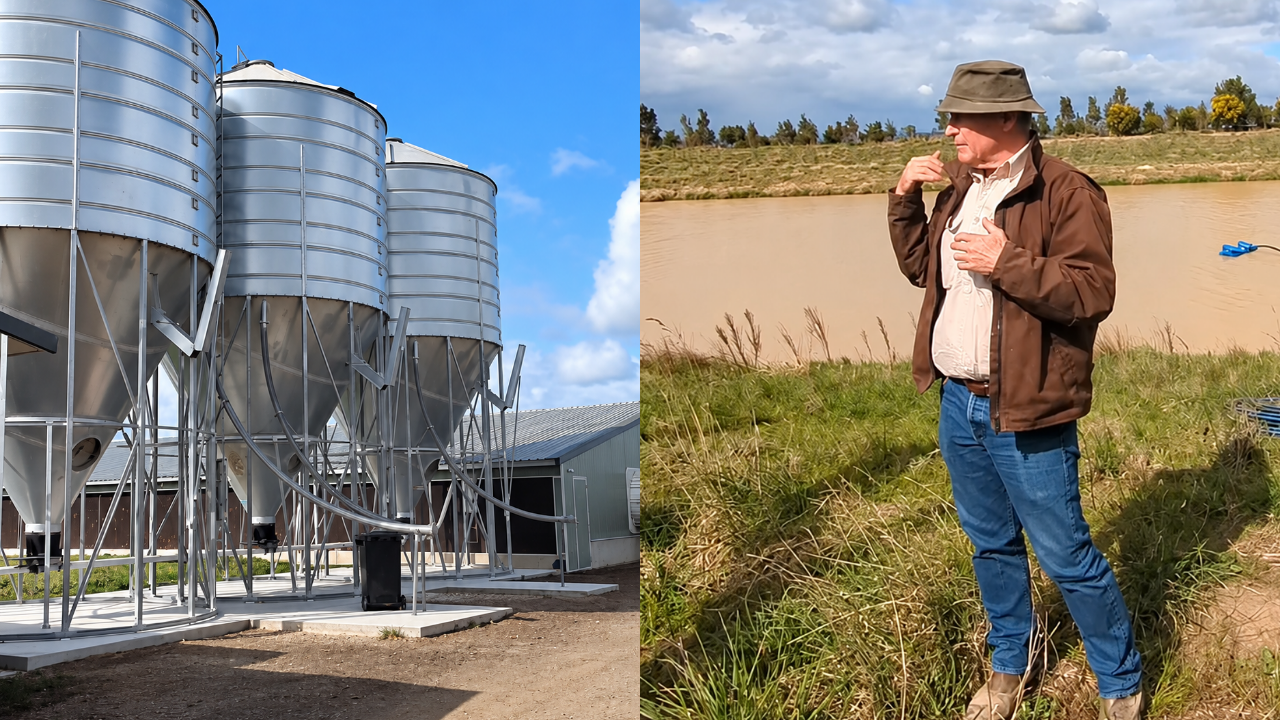
We have a massive waste problem in modern agriculture, and nobody wants to talk about what actually happens to the mountains of manure left behind by industrial livestock. Most people assume it goes straight to the fields or sits in giant, stinking piles. But in Victoria's Gippsland region, one poultry farmer decided to look at that mountain of waste and see an energy grid waiting to happen.
Chris Freney operates a farm in Toongabbie. Instead of letting thousands of tonnes of chicken litter become an environmental headache, he designed a system to convert 35,000 tonnes of poultry waste annually into electricity, agricultural fertiliser, and even natural blue food coloring. It is an ambitious pivot that bridges waste management, renewable energy, and commercial agriculture. Let's look at how this works and why it matters for the future of farming. Meanwhile, you can read similar developments here: Why Chinese Markets Are Slumping While Hsbc Steals The Show.
The Reality of Poultry Litter
If you have never stepped foot inside a commercial chicken shed, you might think poultry waste is just bird droppings. It is actually much more complicated than that.
Poultry litter is a dense mix of manure, bedding materials like wood shavings or sawdust, spilled feed, and feathers. On a standard farm, managing this mix is a massive expense. Farmers shovel it out, pay to haul it away, or spread it across paddocks, which can cause nutrient runoff and water pollution if mismanaged. To explore the full picture, check out the excellent analysis by Bloomberg.
Freney's home farm alone generates about 10,000 tonnes of poultry litter every year. To feed a larger processing facility, he needs to pull in material from neighboring farms, scaling the operation up to 35,000 tonnes. That is a lot of muck, but it carries immense potential energy.
Turning Muck into Megawatts via Anaerobic Digestion
The core engine behind this operation is anaerobic digestion. If you are wondering how trash becomes power, the mechanics are straightforward.
Microorganisms break down organic material in a completely oxygen-free environment. As they feast on the poultry litter, they produce biogas rich in methane. You capture that gas, burn it in an engine connected to an electricity generator, and you suddenly have a reliable source of power.
Proposed generation capacity for the larger plant sits around 8 to 8.5 megawatts. That is enough electricity to theoretically power about 1,200 homes. On a practical level, Freney plans to use a huge share of that electricity right back on the farm to run ventilation, heating, and automated equipment.
Energy is one of the highest operating costs in the poultry sector. Freney already installed solar panels across his eight chicken sheds, saving roughly A$40,000 a year on power bills. Adding a biogas system creates a powerful backup. Solar panels stop producing when the sun goes down, but an anaerobic digester runs day and night, supplying power right through evening peak-demand hours when energy prices spike.
Beyond Power: Fertiliser and Blue Food Dye
Electricity is only part of the equation. The anaerobic digestion process leaves behind a solid and liquid residue known as digestate. This material is packed with recovered nutrients, making it an ideal base for high-grade agricultural fertiliser. Instead of synthetic inputs that cost a fortune and harm soil microbiomes, farms can loop their own waste back into the soil safely.
Then comes the most surprising twist in the operation: natural blue food coloring.
Rather than turning chicken manure directly into food ingredients—which would be a regulatory nightmare—the facility uses nutrients recovered from the waste stream to cultivate spirulina. This blue-green microalga produces phycocyanin, a sought-after natural blue pigment used by food manufacturers globally.
Synthetic food dyes are falling out of favor with health-conscious consumers and regulators. By feeding microalgae with recycled farm waste, the project taps into a lucrative alternative revenue stream. Of course, the commercial success of this depends heavily on strict food-safety standards, consistent algae yields, and stable market demand. But the conceptual bridge between chicken manure and food-grade pigments is brilliant.
Facing the Regulatory and Practical Hurdles
Nothing in green technology is simple, and this project comes with notable hurdles.
Environmental approvals require careful navigation. For instance, while the broader vision targets a massive 35,000-tonne processing capacity, initial development licenses from the Environment Protection Authority Victoria outline configurations closer to 15,000 tonnes with a smaller 1.1-megawatt combined heat and power unit. Scaling up requires balancing local zoning laws, odor control, and strict management of digestate runoff.
Furthermore, running an anaerobic digester is not free. The systems require energy to operate, and if methane escapes due to system leaks, it cancels out the climate benefits. It is not a magical fix that erases every environmental footprint. It is an industrial-scale recycling framework that demands strict engineering discipline.
What This Means for Agriculture Moving Forward
The takeaway here is not that every chicken farmer should build a multi-million-dollar biogas plant tomorrow. The real lesson lies in how we view agricultural waste.
Farmers operate on razor-thin margins, squeezed by volatile energy prices and rising fertilizer costs. Treating waste as a liability guarantees low profits. Treating waste as a feedstock for power, soil nutrients, and specialty chemicals changes the business model entirely.
If projects like this prove scalable, they point toward a future where modern farms stop relying on external grids and chemical supply chains. They close the loop right on site.