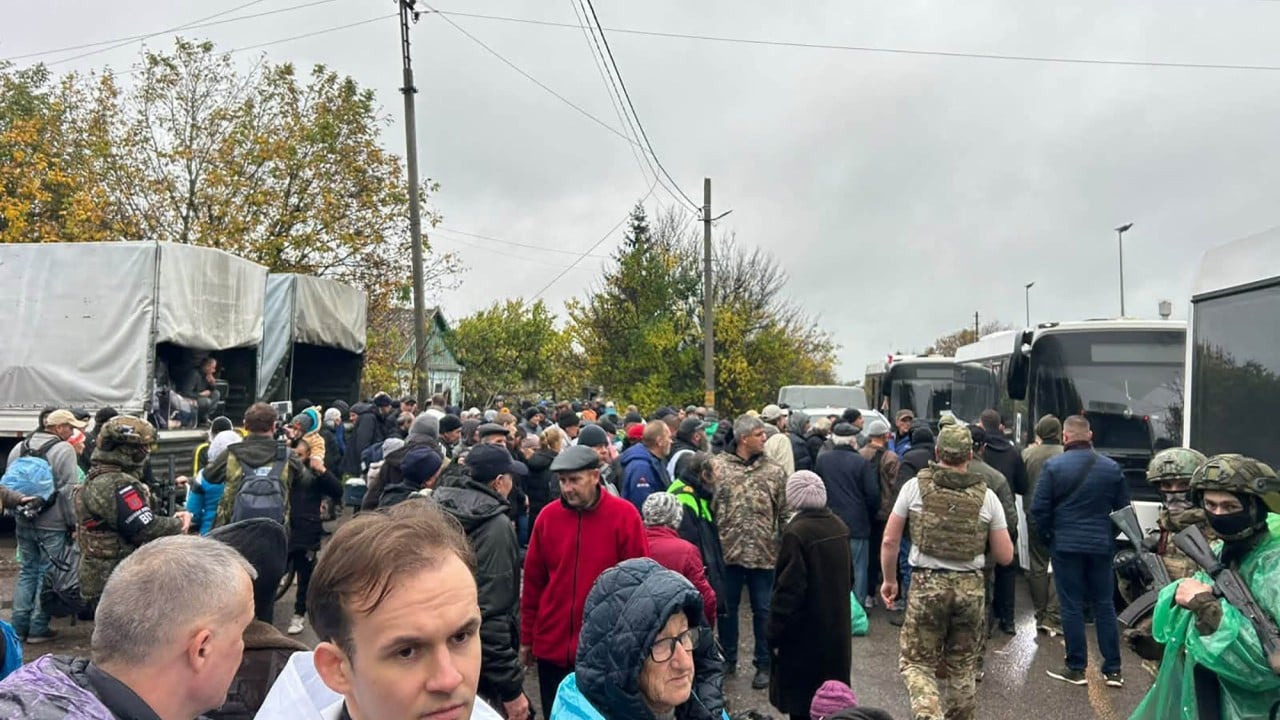
Civilian buses carrying people out of war-ravaged Oleshky crossed into Belarus on Saturday, marking a rare logistical breakthrough in a conflict defined by absolute deadlock. If you've been following the diplomatic currents, you know this corridor didn't open by accident. It emerged from a localized ceasefire tied to a diplomatic push involving a U.S.-brokered framework, drawing immediate international attention. But behind the diplomatic handshakes and televised reunions, the reality of moving evacuees from Russian-occupied southern Ukraine through Belarus and back into Ukrainian-held territory is fraught with complex security questions.
Let's look at what's actually happening on the ground and why military analysts aren't popping champagne quite yet.
The Logistics of a High-Stakes Civilian Corridor
Oleshky, located in the Kherson region across the Dnipro River, has been battered by years of relentless artillery exchanges and occupation. For the residents trapped there, survival has meant living beneath anti-drone nets stretched over local markets and enduring constant infrastructural collapse.
When the evacuation convoys finally started rolling, the mechanics were tightly controlled. De-mining operations cleared designated routes late into the week—tragically costing two lives during the prep work. Once the path was secured, civilian buses began moving people away from the front lines.
The route itself is a geopolitical maze. Evacuees arrive in Belarus as an intermediary step before transiting onward to Ukraine. Russian human rights officials and Ukrainian representatives have monitored different segments of these movements, with some civilians choosing to head toward Russia and others opting for Ukraine-controlled territory.
Why Both Sides Are Playing Along
You have to ask yourself: why would Moscow and Kyiv agree to this specific humanitarian corridor right now?
The answer comes down to optics and international pressure. Both governments have been keen to placate Washington, particularly following diplomatic initiatives backed by figures like Melania Trump. Stopping the fighting—even in a tiny, localized sector—gives all parties a rare PR win. It projects a temporary image of humanitarian compliance to an exhausted global audience.
Yet, stepping back from the theater of diplomacy reveals a starkly different operational reality. While buses rolled through Oleshky without a single shot fired during the local truce, the broader war didn't pause for a second.
Just as the evacuation corridor made headlines, a Russian strike on a passenger train station in Dnipro killed at least 14 people. Overnight attacks battered Kyiv’s energy grid, and Ukrainian long-range strikes targeted Russian oil infrastructure. The localized pause in Oleshky was an isolated bubble floating inside an active storm.
The Skepticism on the Ground
If you talk to local journalists and regional experts in Ukraine, the mood isn't celebratory. It's deeply suspicious.
Many fear that localized ceasefires and humanitarian missions are double-edged swords. Ukrainian commentators have openly warned that temporary freezes in combat allow military forces to reposition assets, shift logistical lines, and potentially concentrate troops under the guise of aid distribution. When you're fighting an existential war, every humanitarian gesture is automatically scrutinized for tactical positioning.
Furthermore, the psychological toll on the evacuees is immense. Leaving a destroyed hometown via Belarus means embarking on a long, exhausting detour through multiple borders just to reach safety on the other side of your own country. It's a sobering reminder of how fractured daily life has become for millions caught in occupied zones.
Where Things Stand Now
The buses are moving, and a handful of families have finally reunited with Ukrainian authorities. That is an undeniable human victory for the individuals involved. However, treating this corridor as a template for broader peace agreements is a mistake.
Watch how both sides handle the aftermath of this transit. If similar localized deals crop up elsewhere, it might signal a new pattern of pragmatic civilian extraction. If it remains a one-off event born of intense external pressure, it will simply go down as a brief humanitarian exception in a brutal war of attrition.
Check local reporting updates from regional monitors if you want to track the exact number of civilians successfully completing the transit through Belarus into Ukraine over the coming days.