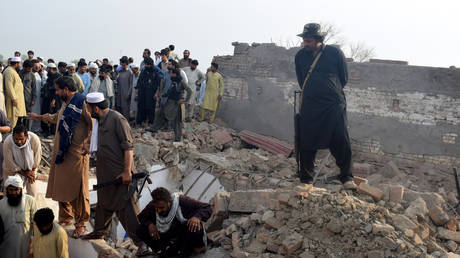
Sixteen human lives vanished in seconds. A suicide car bomber and a squad of armed assailants tore through a police compound in Khyber Pakhtunkhwa province.
Friday prayers should be safe. Instead, the mosque inside the Kohat city police facility became a slaughterhouse.
Let's look at the grim reality on the ground. Provincial police chief Zulfikar Hameed confirmed the worst. An explosives-laden vehicle rammed directly into an outer wall of the compound. Gunmen followed the blast. Security personnel fought back, killing at least one suicide vest-wearing attacker, but the damage was done. Five police officers are among the dead, alongside local civilians and family members who gathered for weekly prayers.
Nobody claimed immediate responsibility. But you don't need a formal claim to understand the pattern. Northwest Pakistan is burning, and the fire is spreading fast.
The Escalating Violence in Khyber Pakhtunkhwa
This wasn't an isolated incident. It's part of a relentless, brutal wave of militant aggression targeting state infrastructure and security forces in Pakistan's border regions.
Back in May, a strikingly similar car bombing and coordinated ambush hit a police post in Bannu, leaving fifteen officers dead. In February, a devastating mosque bombing in Islamabad claimed over thirty lives. The borders are porous. The threat is persistent.
Islamabad points an angry finger at Kabul. Pakistani officials routinely accuse neighboring Afghanistan of harboring the militant networks orchestrating these assaults. In response, the Pakistani military has launched targeted air operations across the border. Kabul fires back with accusations of civilian casualties, citing strikes on homes and local facilities.
It's a bitter cycle of accusation, retaliation, and bloodshed.
What Leaders Are Saying Versus What Is Actually Happening
President Asif Ali Zardari and Prime Minister Shehzad Sharif offered the expected condolences. They expressed deep grief. They condemned the violence.
Condolences don't stop car bombs.
Citizens living in Kohat and surrounding areas are left asking hard questions. How did an explosives-packed vehicle breach security perimeters so easily? Why do worshipers inside secure police facilities remain vulnerable to coordinated assault squads?
Security experts have warned for months that border tensions are spilling inward. When cross-border friction mounts between Islamabad and the Taliban administration, domestic security in provinces like Khyber Pakhtunkhwa suffers immediate blowback. Intelligence gaps and under-resourced local posts leave officers sitting ducks.
Where Pakistan Goes From Here
The geopolitical fallout is massive. Tensions with Afghanistan complicate every counterterrorism initiative Islamabad attempts. Diplomatic channels are frayed. Military solutions have failed to secure lasting peace along the frontier.
Ordinary families pay the highest price. Every time a prayer service turns into a war zone, trust in state protection evaporates.
If Islamabad wants to stem this tide, rhetoric must give way to radical internal security overhauls, tighter intelligence sharing, and serious diplomatic engagement with its neighbors before another community buries its dead.