Celebrations can turn catastrophic in a single second. When thousands of Newcastle Knights supporters flooded the streets near a major roundabout to farewell their team heading to the grand final, nobody expected a festive send-off to become a disaster scene.
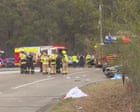
An 18-year-old P-plater, Indika Bambrick Samarasinghe, allegedly floored his car on wet ground after stopping at a roundabout, plowing directly into a crowd of fans. Ten people sustained injuries. A five-year-old girl ended up in an induced coma with critical injuries, while locals like Wallsend grandfather Dave Martin suffered severe leg fractures trying to shield his two granddaughters. Samarasinghe was subsequently denied bail during a court appearance on Sunday, facing nine charges including dangerous driving occasioning grievous bodily harm. If you found value in this piece, you might want to check out: this related article.
The immediate police response and subsequent court denial of bail raise vital questions about road safety, young drivers, and how communities manage mass public gatherings.
The Danger of Impulsive Driving in Crowded Public Spaces
Public celebrations involving moving vehicles and excited pedestrians carry massive inherent risks. Witnesses described a joyful atmosphere where cars beeped horns and fans waved. Yet, mixing heavy machinery with dense pedestrian crowds creates a razor-thin margin for error. For another perspective on this event, see the latest coverage from BBC News.
Samarasinghe's vehicle reportedly lost traction on wet pavement after he accelerated hard. Investigators have indicated the crash was not believed to be deliberate, pointing instead to reckless execution or loss of control under poor road conditions. But intent matters little when human bodies absorb the kinetic energy of a moving car.
Young and inexperienced motorists face strict license conditions in New South Wales for a reason. High-powered vehicles or sudden erratic accelerations demand advanced spatial awareness and vehicle control that provisional drivers simply haven't developed. When an 18-year-old handles a car near a crowd of cheering sports fans, the potential for disaster multiplies exponentially.
Community Fallout and the Human Toll
The physical and emotional wreckage extends far beyond the courtroom. Six people remain hospitalized at John Hunter Hospital, with two in serious conditions. Families who gathered to share a moment of civic pride are now navigating intensive medical care and trauma.
Dave Martin, a beloved local barber known for decking out his Nelson Street shop in Knights merchandise, sustained multiple fractures in both legs while protecting his young family members. Stories like his expose the vulnerable reality of roadside fan send-offs.
Community resilience has emerged rapidly through fundraisers established for the young victims and families. Newcastle Knights chief executive Peter Parr emphasized the strength of the local population, urging compassion and support for those impacted. However, community spirit cannot replace structural safety measures.
Rethinking Street Parades and Local Authorities
Incidents like this force local councils and police to reevaluate how sports send-offs are managed. Spontaneous gatherings along major roundabouts and open roadways lack traffic management plans, barricades, or designated pedestrian zones.
When thousands of fans spill onto active asphalt to cheer for a departing football squad, the risk profile changes entirely. Relying on individual driver responsibility in high-adrenaline environments is a gamble cities can no longer afford to take. Better crowd control infrastructure, police presence, and designated fan zones are necessary to prevent future tragedies.
As Samarasinghe prepares for his next court appearance at the Newcastle local court on 15 October, the conversation must shift toward accountability and systemic prevention. Public celebration should unite a city, not fill hospital wards.