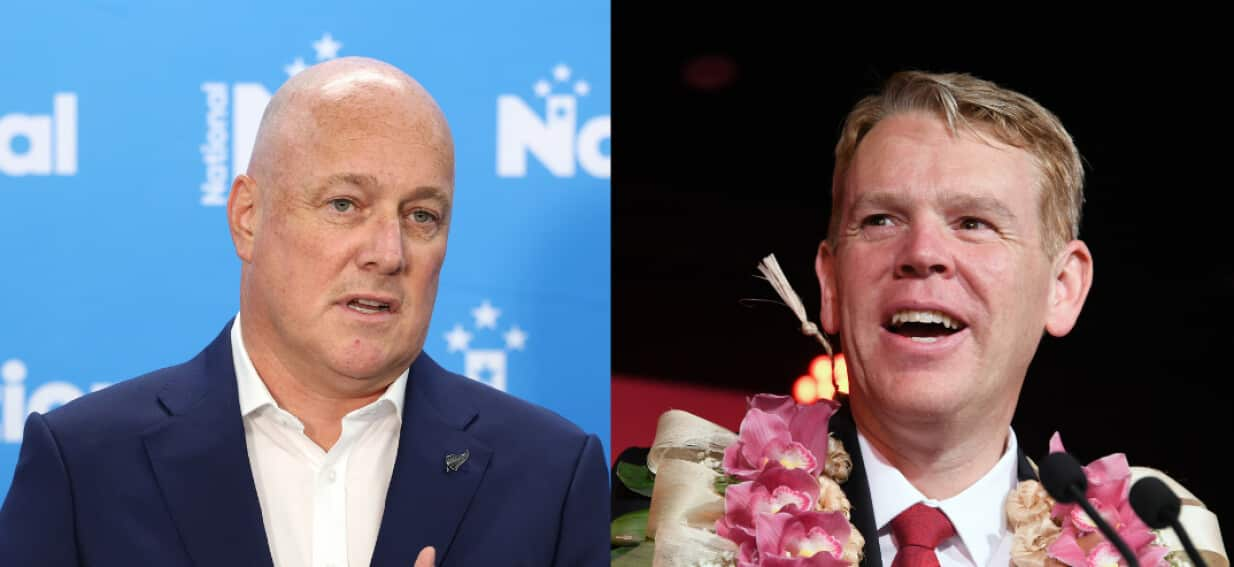
When the votes stopped rolling in on election night and no clear winner emerged, the immediate reaction across Wellington was polite disbelief. Within forty-eight hours, that disbelief hardened into anxiety. New Zealand’s political machinery is built for MMP coalition negotiations, but this cycle broke the standard rules. We are looking at an election deadlock that leaves businesses unable to plan, ministers fighting for their political survival, and an entire economy stuck in neutral while party leaders haggle behind closed doors.
The real cost of this deadlock isn't about whether the eventual government leans left or right. It is about how long a modern country can run without one.
The Math Is Worse Than It Looks
Mixed Member Proportional voting is supposed to provide proportionality, not paralysis. Yet, when neither major bloc secures a clean mandate on election night, the system’s quirks become glaring liabilities. Special votes take weeks to clear, overhang seats can distort party tallies, and minor parties suddenly hold outsized leverage that bears little resemblance to their actual public mandate.
Nobody wanted to claim victory too early, and nobody wanted to concede. That left the country in a state of suspended animation. Parties spend weeks counting votes while employers spend weeks counting the cost of pure uncertainty.
When you look at the raw numbers, the margin for stability is razor-thin. A single seat shifting one way or another during the final tally can completely rewrite the coalition playbook. This isn't just a close race; it's a structural puzzle where every available piece is jagged and resistant to compromise.
The Caretaker Handbrake Is Already On
The moment an election ends in a hung parliament, the caretaker convention kicks in. Ministers stay at their desks, but their hands are tied. They can't make major policy shifts, sign off on long-term capital investments, or commit the public purse to anything beyond routine administration.
The timing could hardly be worse. Treasury’s pre-election economic forecasts banked on the country's recovery shifting gears from export-led growth to domestically driven consumption and business investment. Those are precisely the economic levers that seize up when nobody can tell you who will set the tax rules next month.
Bank economists usually tell clients that election jitters are temporary noise that fades by Monday morning. That comforting cliché assumes voters deliver a decisive verdict. When the result hangs in limbo for weeks, the psychological barrier turns into a real liquidity freeze. Capital expenditure plans get shelved. Hiring freezes take effect. Projects that require regulatory sign-off sit in bureaucratic purgatory because public servants are waiting for political masters who don't exist yet.
The Personnel Damage Inside the Beehive
Deadlocks aren't just about party blocs; they chew up individual careers. The electoral fallout claims heavy casualties among experienced ministers. When winning local electorates costs parties their most seasoned parliamentary operators, the institutional memory of government takes a massive hit.
Figures like Finance Minister Nicola Willis, Paul Goldsmith, Gerry Brownlee, and Chris Bishop face fierce battles to retain their seats once every ballot box is emptied and counted. Even if their party manages to cobble together a majority coalition, the economic policy team that businesses spent years learning to trust will look entirely different.
You cannot swap out core economic architects overnight without shaking market confidence. Investors care deeply about who holds the portfolio levers. Losing veteran negotiators mid-crisis means the people sitting at the coalition table may lack the institutional scars needed to forge a durable agreement.
The Brutal Timeline Ahead
The calendar itself works against stability. Even after the initial preliminary count, a recount can be requested within three days. The official return of the writ stretches toward early December, and Parliament constitutionally must meet by mid-January.
Add weeks of intense horse-trading behind closed doors, and New Zealand faces a scenario where summer arrives before anyone signs a coalition agreement. Businesses are expected to navigate peak trading periods, Christmas staffing, and inventory planning while the government is technically on pause.
This creates a brutal operational reality for small and medium enterprises. You cannot budget for next year when you don't know whether tax thresholds, labor laws, or sectoral regulations will shift underneath your feet.
What Businesses and Investors Must Do Right Now
Sitting on your hands until the dust settles sounds safe, but it can be fatal in a competitive market. The realistic coalition outcomes differ primarily in fiscal degree—how much borrowing occurs and how fast the books get repaired—rather than in a total overhaul of New Zealand's economic direction.
If a commercial project stacks up under multiple fiscal scenarios, stop waiting for political clarity. Perfect certainty is a luxury that modern politics rarely provides. Focus on cash flow management, keep communication lines open with key suppliers, and build flexibility into your operating model.
The parties will spend the next month fighting over ministerial portfolios. You need to spend that exact same window hardening your business against external shocks so that when Wellington finally wakes up, you are already moving forward.