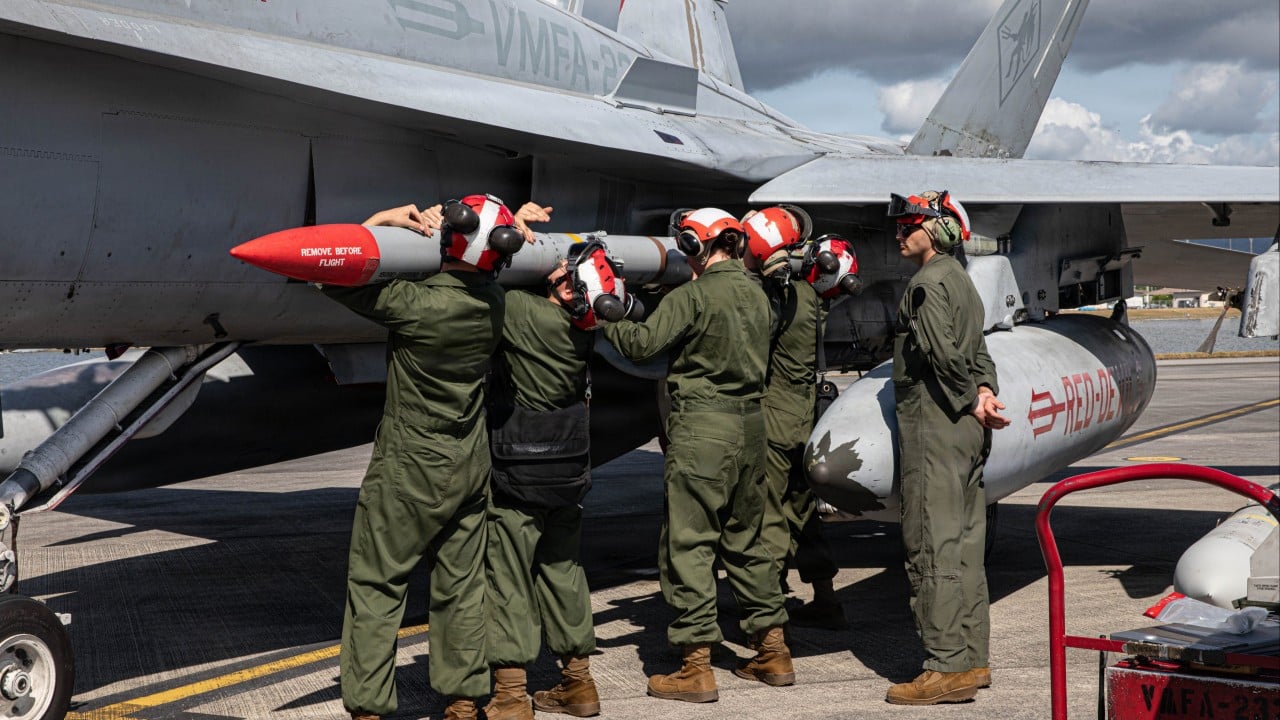
Tokyo is shedding its post-war pacifist shell faster than most analysts predicted. Japan and the United States just locked down a major defense pact to establish a joint production facility for the AIM-120 Advanced Medium-Range Air-to-Air Missile (AMRAAM). This isn't just a standard bureaucratic weapons purchase. It marks a foundational shift in how Japan manufactures and maintains its expanding long-range arsenal.
For decades, Tokyo stayed strictly within self-imposed defense limits. Constitutional constraints kept the Self-Defense Forces entirely focused on domestic shielding. Those days are history. Facing heightened regional tensions involving China, Russia, and North Korea, Japanese defense planners are rewriting the rules. The country isn't just buying foreign hardware anymore. It's building the supply chain at home.
The Strategic Shift Behind the AMRAAM Agreement
Why build AMRAAMs locally now? The U.S. defense industrial base is strained. Washington cannot keep up with global demands for advanced munitions while simultaneously restocking its own reserves and supplying partners abroad. By setting up a final assembly enterprise inside Japan, Tokyo secures its own stockpiles while easing the burden on American factories.
This move directly supports Japan's acquisition of fifth-generation stealth fighters like the F-35. When you deploy advanced combat jets, you need immediate access to cutting-edge air-to-air missiles. Waiting months for shipments to cross the Pacific doesn't work when security dynamics shift overnight. Local production guarantees operational readiness.
Beyond air defense, Tokyo is aggressively extending its military reach. During the recent Keen Sword military exercises—which brought together roughly 56,000 Japanese and U.S. personnel alongside forces from several other countries—Japan's newly acquired long-range anti-ship missiles took center stage. Tokyo is moving from a posture of purely reactive defense to one capable of credible counterstrike deterrence.
What Tokyo's Long-Range Arsenal Means for Regional Security
Critics argue that these developments push Japan back toward militarism. Japanese officials reject that framing entirely. They point to a harsh regional reality where ballistic missile tests and maritime incursions happen with alarming regularity.
Building a robust long-range capability changes the math for potential adversaries. If an opponent knows Japan can strike back far beyond its immediate coastline, aggression becomes much riskier. It's a classic deterrence model, but it requires serious industrial backing. That is precisely why joint manufacturing deals with Washington matter so much right now.
The partnership also highlights a deeper economic integration between the two allies. Japan is pouring record budgets into defense, exploring artificial intelligence applications, and developing autonomous underwater systems. Partnering with the U.S. allows Tokyo to bypass decades of trial and error in defense tech development.
The Road Ahead for the Alliance
The new missile assembly plant represents just the beginning of a tighter, more integrated defense posture. Expect more joint ventures, shared maintenance hubs, and cooperative military training exercises across the Indo-Pacific. Tokyo is stepping up as a full-fledged security partner, sharing the heavy lifting that Washington has carried alone for decades.
The security environment in East Asia won't calm down anytime soon. By securing local missile production and expanding its offensive capabilities, Japan is making it clear that it intends to shape its own destiny rather than wait for help to arrive.
Japan Preparing For War? US Arms Tokyo With Tomahawk Missiles
This video provides additional context on how the U.S. and Japan are integrating long-range missile systems like Tomahawks to strengthen regional deterrence.