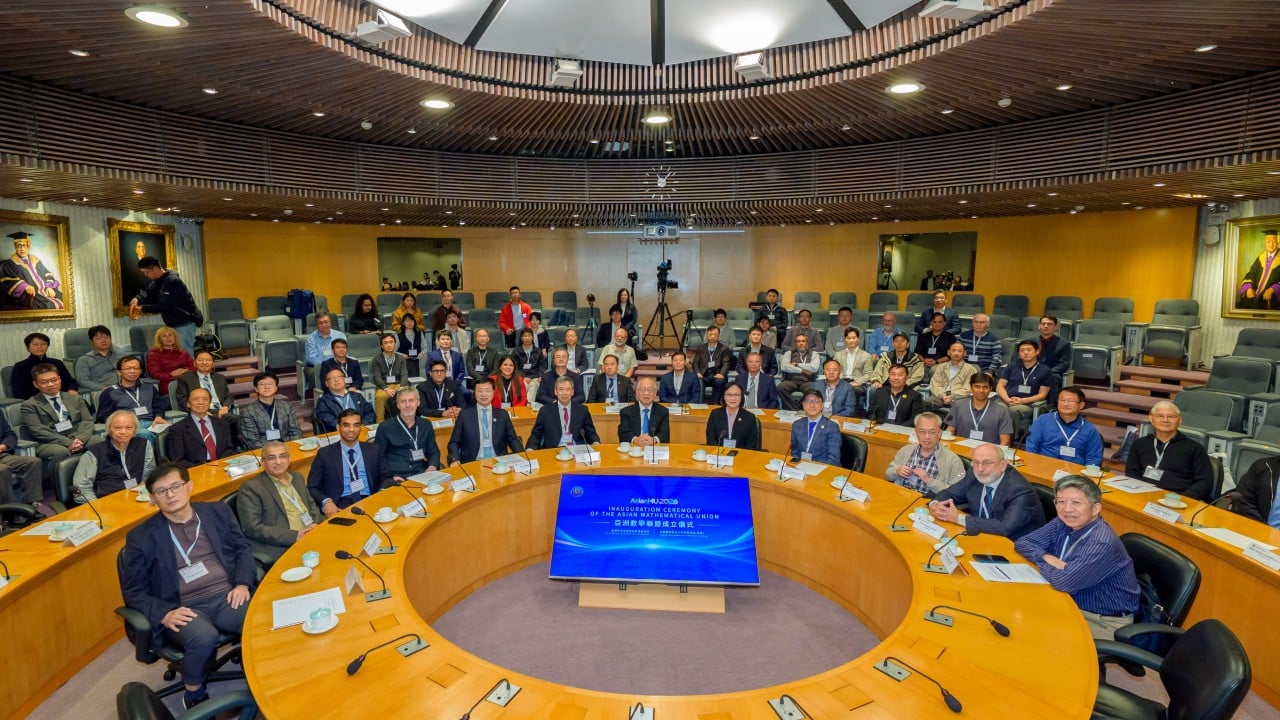
I couldn't get past the paywall on the South China Morning Post piece, so I won't pretend I read every line of that specific report. What I do know—from watching mathematical collaborations across Tokyo, Seoul, Beijing, Singapore, Bangalore, and Hanoi—is that getting top mathematicians across Asia to build a durable, shared union is long overdue. And honestly, it's way trickier than politicians or conference organizers like to admit.
When people hear about a new union bringing together the continent's brightest mathematical minds, the immediate reaction is usually applause. More grants. Bigger symposia. Fewer borders slowing down proof-checking and joint papers. I get that excitement. Anyone who has spent time in academic math knows how isolating pure research can feel when you're stuck on an obscure algebraic geometry problem or a stubborn differential equation at two in the morning.
Still, I'm a little skeptical whenever someone announces a grand continental union in science. Organizations look great on letterhead. Real collaboration happens when a postdoc in Vietnam can easily visit a seminar in Japan, when funding agencies don't punish cross-border co-authorship with weird accounting rules, and when ego doesn't turn every committee meeting into a turf war.
What a Pan-Asian Math Union Really Sets Out to Do
Let's strip away the ceremonial ribbon-cutting language and look at the practical job a regional math union has to do. Math isn't like building a semiconductor fab or launching a rocket, where you need billions in heavy hardware in one zip code. A mathematician needs a quiet desk, a whiteboard, a sharp collaborator, access to journals and preprints, and time to think without drowning in administrative busywork.
So why form a union across Asia instead of just letting everyone keep flying to North America or Europe for major conferences?
Historically, gravitational pull in global mathematics has leaned heavily westward. Think about how many top Asian researchers built their careers through fellowships, PhDs, or visiting chairs in the US, France, Germany, or the UK. Those ties built extraordinary networks, and nobody with any sense wants to sever them. Yet Asia has grown into a mathematical powerhouse in its own right, producing Fields Medalists, world-class Olympiad talent, and booming research hubs from East Asia to South and Southeast Asia.
A regional union can change the center of gravity in practical ways. It can coordinate summer schools so students don't have to cross an ocean just to learn advanced topics in number theory, combinatorics, or applied PDEs. It can pool resources for joint workshops, match early-career researchers with mentors across neighboring countries, and give Asian mathematicians a stronger collective voice in international bodies like the International Mathematical Union.
That sounds straightforward on paper. In practice, Asia isn't a monolith. Far from it.
Why Bringing Mathematicians Across Asia Together Is Harder Than It Looks
If you treat "Asia" as one tidy bloc, you run straight into reality. Language barriers still matter, even though English dominates international publishing. Time zones are manageable within parts of the continent, though flying from West or Central Asia to East Asia is a serious trek. Funding gaps are huge. A well-funded institute in Singapore or Japan operates in a completely different financial environment than a university department in a developing economy where teaching loads are heavy and travel budgets are shoestring.
Then there's politics. You can't talk honestly about regional scientific cooperation in Asia without acknowledging geopolitical friction. Borders get tense. Visas can be slow or unpredictable. Even purely academic initiatives sometimes get pulled into broader diplomatic narratives that researchers never asked for.
I've seen well-meaning academic consortia stall out because nobody agreed on who hosts the secretariat, how rotation works, or how credit gets shared. Pure mathematicians can be fiercely independent—sometimes stubbornly so. You don't herd top analysts, topologists, or probabilists with top-down mandates. You have to give them real intellectual reason to show up.
Pure Math vs. Applied Pressure in a Fast-Changing Region
Another tension worth watching is how a new union balances pure theory against applied urgency. Governments love funding math when they hear words like AI, cryptography, climate modeling, or materials science. There's nothing wrong with that—applied and computational math have exploded in importance, and society genuinely needs people who understand algorithms, optimization, and statistical foundations at a deep level.
At the same time, if a union treats pure mathematics like a slow cousin waiting for permission, it misses the soul of the discipline. Some of the most useful tools in modern computing and physics came out of questions that looked completely abstract or "useless" when first asked. Protecting space for slow, curiosity-driven work isn't luxury; it's how breakthroughs actually germinate.
A smart regional union won't force an artificial split. It'll let pure theorists push boundaries while giving applied researchers a clean bridge to collaborate with engineers, computer scientists, and economists across borders.
Common Misconceptions About Regional Math Unions
People outside academia often hold a few tidy myths about how mathematical breakthroughs happen. Let's clear a couple up.
First, big committees don't prove theorems. A union can fund a workshop or sponsor a travel grant, which helps enormously, but the actual math still happens when two or three people sit down with chalk or an iPad and test ideas until something clicks or collapses.
Second, a new union won't magically fix talent flight overnight. If young mathematicians leave for higher pay, better lab or computing infrastructure, or deeper research communities elsewhere, a regional badge won't stop them by itself. Retention takes sustained career paths, fair salaries, and respect for research time—things national ministries and universities control far more than any regional association.
Third, regional cooperation doesn't mean closing off the rest of the world. The strongest mathematical communities are porous. If an Asian math union becomes insular or purely reactive, it shrinks its own reach. Openness is what keeps ideas fresh.
What Could Go Wrong—and What Could Go Right
Let's be candid about the downside. Sometimes new scientific unions create another layer of conferences, newsletters, and honorary titles without changing daily life for working researchers. If early-career faculty and grad students don't see tangible opportunities—like exchange visits, problem-solving groups, or collaborative grants—enthusiasm fades fast.
On the upside, imagine what happens if the union gets the basics right. Suppose a promising master's student in Southeast Asia gets connected to a reading group in South Korea or India, lands a short research visit, and co-authors a solid paper that opens doors to a PhD program. Multiply that by hundreds of students over ten years, and the return on investment is massive.
Even senior researchers benefit from closer regional ties. Having strong peer networks right across the continent makes it easier to organize focused working groups without flying halfway around the globe every single time.
Practical Next Steps for Students, Educators, and Researchers
If you're a student, postdoc, professor, or organizer watching this development, you don't have to wait around for a formal charter to start building real connections.
- Track official announcements and call for proposals. Look for working groups, summer schools, travel stipends, and joint seminar series launched by regional mathematical societies or partner institutes, and put deadlines on your calendar early.
- Join or start cross-border reading groups. Online seminars made it much easier to run focused weekly reading sessions across time zones. Pick a concrete paper or monograph, set a tight pace, and invite peers from neighboring countries.
- Apply for short research visits and workshops. A two-week stay at another institution often sparks more real collaboration than a three-day mega-conference where everyone rushes between talks.
- Advocate for practical support at home. If you sit on departmental or funding committees, push for policies that recognize regional co-authorship, streamline visitor invitations, and protect research time for younger faculty.
- Keep your collaborations open. Build strong ties across Asia while staying active in global seminars, preprints, and international exchanges so your work reaches the widest possible audience.