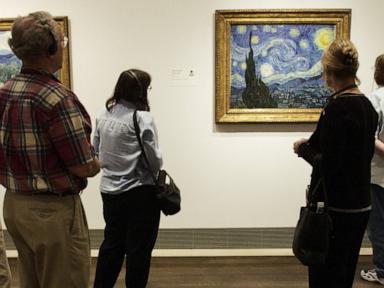
For over a century, people assumed Vincent van Gogh painted his legendary swirl of cosmic energy in June 1889 while locked away in an asylum room at Saint-Rémy-de-Provence. It's an iconic piece of art history you've probably seen on a million tote bags, coffee mugs, and smartphone wallpapers. But a fresh study published in Scientific Reports throws a massive wrench into that traditional timeline, using forensic astronomy to claim the painting actually matches a very specific pre-dawn sky from July 22, 1889.
If you care about how art and science collide, this new research changes how you look at the canvas. But let's be real—art historians aren't popping champagne quite yet, and the debate is getting spicy.
The Case for July 22
Led by researchers from South Korea, including astronomy startup founder Elijah Jeong-hyun Kim, the team ran deep astronomical simulations, checked historical weather patterns, and cross-referenced letters written by the artist himself. They argue that the placement of celestial bodies like the Moon and Venus, combined with specific star patterns resembling the Hyades cluster, line up geometrically with the morning sky on July 22, 1889.
Think about what that means for the creation process. Historians traditionally thought van Gogh painted the scene around June 18 or 19. Shifting the date to late July suggests he might have ideated early on, but tinkered with or completed the piece after observing a very specific window before sunrise weeks later.
It sounds airtight on paper. But as with anything involving a tortured genius who died more than a hundred years ago, reality is messier.
Why Experts Aren't Convinced
The Van Gogh Museum in Amsterdam didn't wait long to push back. Their experts maintain the original June dating because records show the artist received a roll of canvas in early June and mailed a drawing based on the painting to his brother Theo by July 2. On top of that, historical records show van Gogh suffered a severe mental breakdown right around July 22, rendering him unable to hold a brush for over a month.
Other independent astronomy experts, like Texas State University professor emeritus Donald Olson, pointed out glaring flaws in the new study's math. Olson argued that the celestial positions don't actually match the way the startup team mapped them out, and that the narrow field of view required for their theory clashes with the sweeping, wide-angle landscape of the rolling hills and cliffs in the foreground.
Van Gogh wasn't a modern astrophotographer pointing a DSLR at the cosmos with a tracking mount. He was working from memory, emotional intensity, and a desire to capture feeling rather than literal topographic precision. As the museum put it bluntly, exact celestial likenesses were never his primary concern.
What You Should Take Away From This
If you're hunting for absolute truths in art history, you're going to leave empty-handed. This new study is a fascinating exercise in forensic astronomy, but it reminds us why painting isn't a photograph.
- Artists alter reality to serve emotional truth. Van Gogh didn't need a telescope to know how the universe felt.
- Historical timelines are rarely set in stone; researchers will continue arguing over diary entries and letters for decades.
- Science can date the night sky, but it can't completely decode the mind of a master while he stares out a barred asylum window.
Take a look at the canvas next time you visit New York's Museum of Modern Art. Don't worry about whether the stars match a July calendar or a June ledger. Just appreciate the chaos.
New research finds Van Gogh's 'Starry Night' skies align with physics
This video explores how researchers use modern science and physics models to decode the turbulent skies behind Vincent van Gogh's famous masterpiece.
http://googleusercontent.com/youtube_content/1