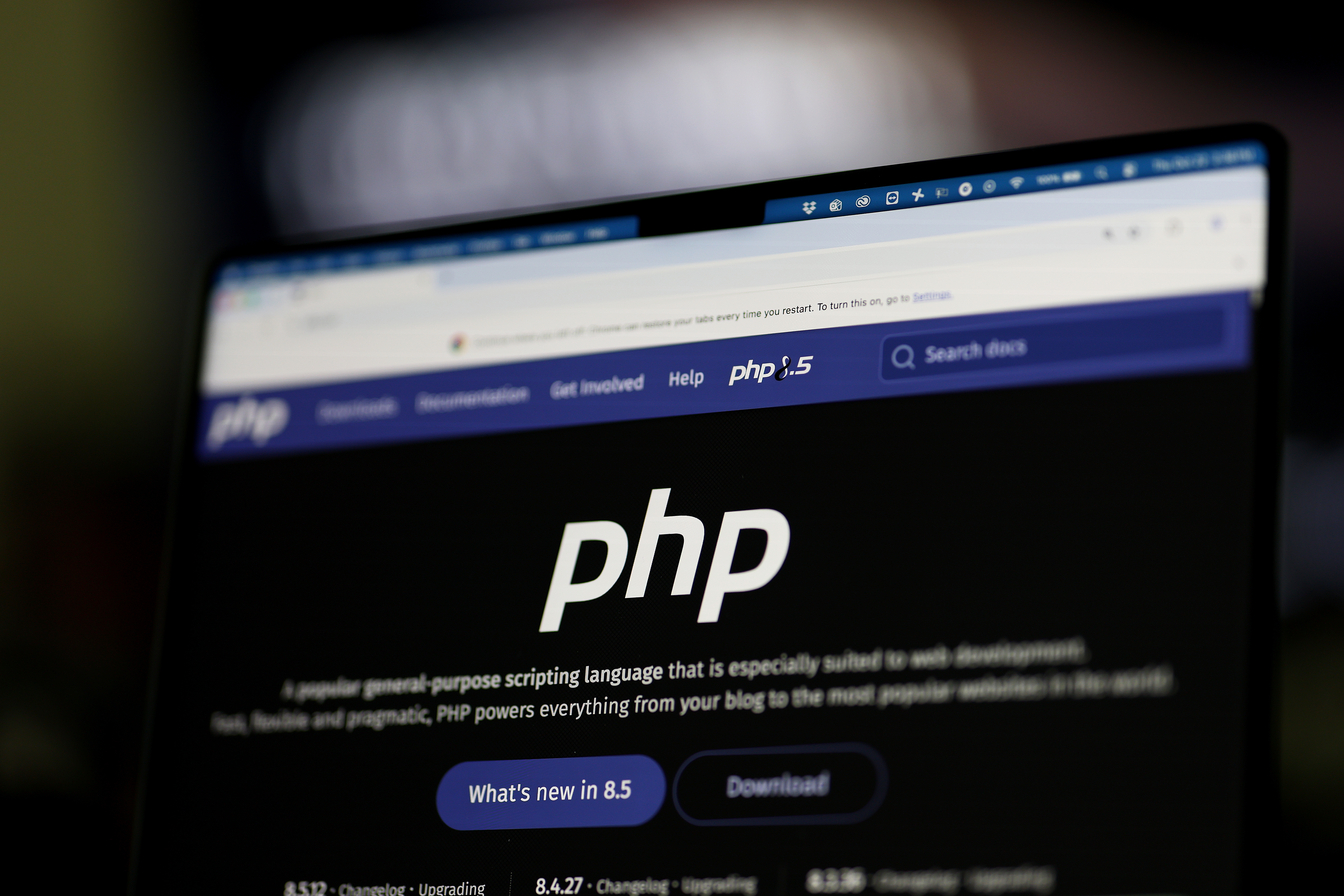
Millions of hacking attempts are flooding servers worldwide right now. Why? Because security researchers uncovered critical remote code execution vulnerabilities in PHP, the programming language that quietly runs roughly 70 percent of all websites on the internet.
When details broke regarding these flaws—dubbed PHP2Shell by some security analysts—the response wasn't a slow trickle of caution. It was immediate panic. Governments took public portals offline. Cloudflare logged tens of thousands of attack attempts within the first forty-five minutes, ballooning rapidly into millions.
If you manage a web property, a content management system, or backend hosting infrastructure, this isn't just another routine advisory. It is an urgent wakeup call. Let's break down what actually happened, why these specific flaws took decades to surface, and what you need to do right this second to protect your systems.
What Are the PHP2Shell Vulnerabilities
The crisis centers on two major remote code execution flaws tracked under CVE-2026-109618 and CVE-2026-109619, both scoring an alarming 9.2 CVSS rating. These issues stem from memory corruption during out-of-memory handling and stale global states within core PHP interpreters.
Here is what happens under the hood. PHP enforces memory limits by aborting requests exceeding pre-configured boundaries using internal jumps. However, if this happens during early request parsing—such as handling a file upload—cleanup routines can treat invalid data as valid. They attempt to free memory that was never fully initialized, leaving an opening for attackers to manipulate pointers.
Similarly, internal request states can persist after fatal errors occur, bleeding into subsequent requests handled by the same worker process. An unauthenticated attacker can trigger these conditions with a single crafted request before application code even executes. This gives them a direct path to execute arbitrary commands, siphon sensitive database contents, or take over the underlying server completely.
The Role of AI in Uncovering Decades-Old Code Traps
What makes this disclosure uniquely terrifying is how the bugs were found. Security firm Wiz Research revealed that these vulnerabilities had lurked quietly in core PHP code for years. Demonstrating their exploitability used to require an exceptionally intricate chain of steps at the absolute edge of human capability.
Artificial intelligence changed the math. Advanced models helped trace complex execution paths across millions of lines of foundational code, turning a theoretical, decades-old logic flaw into a viable exploit vector.
This brings up an uncomfortable truth about open-source software development. The global internet relies heavily on core projects maintained by small, overworked teams of contributors. When automated tooling can parse legacy code faster than human maintainers can audit it, the attack surface expands exponentially.
Who Is Most at Risk Right Now
Every PHP installation handling web requests is technically vulnerable, but the exposure level depends entirely on your setup.
According to advisories from CERT-EU and the PHP Group, configurations using Apache with mod_php face the highest risk profile. Other environments like PHP-FPM, php-cgi, FrankenPHP, and LiteSpeed are also affected.
The biggest danger zone belongs to legacy infrastructure. Shodan telemetry indicates that a massive share of internet-facing servers still run unsupported, end-of-life PHP versions like 8.1 and older. Because the PHP Group does not backport security patches to deprecated branches, millions of legacy sites have no official upstream vendor fix available. Simply updating WordPress, Drupal, or Laravel plugins won't help you here. If your underlying PHP runtime is out of date, your entire stack remains exposed.
Immediate Steps to Secure Your Infrastructure
If you're staring at server dashboards wondering what to prioritize, follow these concrete steps right now.
First, check your server's PHP version immediately through your hosting control panel, cPanel, Plesk, or command line interface. The PHP Group has released emergency patches across supported branches: upgrade to PHP 8.5.12, 8.4.27, 8.3.36, or 8.2.35 immediately.
Second, if you run an end-of-life version and cannot patch instantly, isolate your internet-facing applications from public networks. Government agencies across Europe and Asia have proven that taking portals offline temporarily is far safer than gambling with an unpatched RCE vulnerability.
Third, apply tactical hardening if patching is delayed. Disable upload progress by setting session.upload_progress.enabled = 0 in your php.ini file and restart your worker processes. Avoid using older process-level resource limits like RLIMIT_AS that induce memory allocation failures, and instead enforce container boundaries using Docker limits or Linux cgroups.
Stop treating foundational open-source dependencies as background utilities that run on autopilot. Audit your hosting stack today, verify your runtime versions, and apply those patches before automated scanner scripts find your endpoints first.
PHP Vulnerability 2026: The 2-Year-Old Bug an AI Found That Took Government Sites Offline
This video provides a detailed breakdown of the emergency PHP security patches and how the recent vulnerabilities impacted government servers worldwide.
http://googleusercontent.com/youtube_content/1