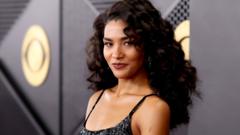
If you streamed Olivia Dean’s track "I've Seen It" and immediately felt a heavy wave of nostalgia, you aren't the only one. Mattie Music Group and Bleunig Music—the publishers holding the rights to Bill Withers' catalog—heard the exact same thing. They filed a federal lawsuit in Manhattan against Capitol Records and Universal Music Group. They argue that Dean's song lifts a distinctive, protectable melody straight out of the 1980 R&B classic "Just the Two of Us."
Lawsuits like this always spark a fierce debate between copyright defenders and music lovers who think every chord progression has already been used. Let's look at what's actually happening behind the headlines. Recently making waves lately: Why Contra Ice Vol 1 Ice Out Is The Protest Album We Need Right Now.
The Details Behind the Copyright Claim
The legal complaint filed against Dean’s label doesn't actually name Olivia Dean herself as a defendant. Instead, it targets the heavy hitters behind her distribution: Capitol Records, Universal Music Group, and associated publishing companies.
The publishers claim they reached out with an infringement warning back in August. When the track stayed up on streaming platforms with hundreds of millions of plays, they took it to court. They brought in a professional musicologist who analyzed both tracks. According to court filings, the expert found substantial similarities in protectable musical expression, pointing directly to a repeated melody line. Additional details regarding the matter are explored by GQ.
"Just the Two of Us"—originally written by Bill Withers, Ralph MacDonald, and William Salter, and made famous by Grover Washington Jr. with Withers on lead vocals—is a giant of modern music history. It has racked up nearly a billion streams on Spotify alone. Because the song has spent decades dominating radio rotation and TikTok loops, the lawsuit argues that the writers of "I've Seen It" had ample opportunity to absorb and echo those specific notes.
Is It Plagiarism Or Accidental Parallel Thinking?
Music history is packed with high-profile copyright battles. From Ed Sheeran defending "Shape of You" to the massive fallout from Robin Thicke and Pharrell Williams losing the "Blurred Lines" case against Marvin Gaye's estate, the line between heavy inspiration and outright theft gets blurrier every year.
Pop music is built on a finite set of notes and chord changes. When you write thousands of songs every single month across the globe, melodies are bound to overlap. Listeners online have pointed out that while the cadence and smooth vibe share DNA with Withers' masterpiece, modern pop tracks frequently channel vintage R&B textures without malicious intent.
Did Dean and her co-writers, Bastian Langebaek and Max Wolfgang, intentionally swipe a line from a legendary soul icon? Or did they absorb the groove subconsciously while crafting a modern acoustic-soul ballad? That is the exact question the courts will have to unpack using expert testimony rather than internet opinions.
What Happens Next for Olivia Dean
Dean won the Grammy Award for Best New Artist, positioning her as one of the brightest rising stars in contemporary pop and soul. This lawsuit lands at a critical moment in her momentum.
The plaintiffs are seeking an injunction to stop further distribution of the infringing material, alongside demands for all profits generated by the track. While it's rare for a copyright battle to completely derail a major artist's career, it forces labels to pay much closer attention to pre-release musicology clearances.
Keep an ear on how Universal Music Group responds in court over the coming weeks. If settlements or musicological depositions start rolling in, it will set yet another precedent for how modern pop artists draw inspiration from classic soul royalty.