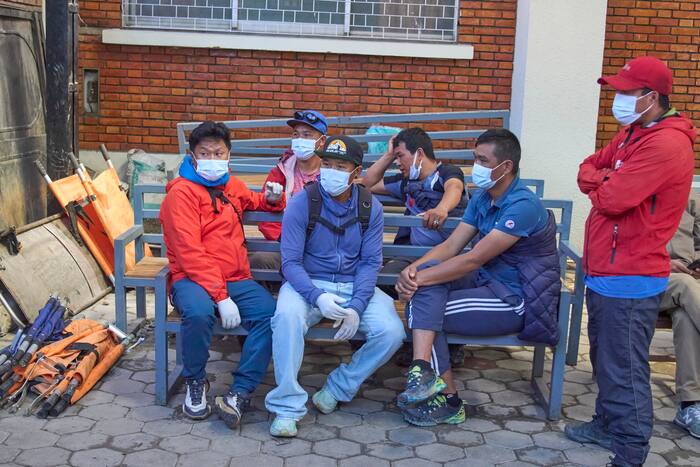
Winter in the high mountains doesn't negotiate. When a massive wall of snow and ice collapsed in Nepal, it instantly triggered a desperate race against the clock. Rescue teams in Nepal search for 12 missing after avalanche kills 4, putting local authorities and specialized mountain guides right back into a familiar, harrowing routine.
You see headlines about these disasters every climbing season. They flash across screens for a day or two, then vanish. But the reality on the ground is brutally complex. Mountain rescue isn't just about sending a helicopter up a valley. It's a dangerous puzzle involving thin air, shifting weather systems, and terrain that fights you at every single turn.
The Brutal Reality of High Altitude Search Operations
People usually picture rescue missions like an episode of a drama series. Rescuers jump out of hovering aircraft, dig people out in minutes, and fly away to safety. That is pure fiction.
At high altitudes, helicopters lose lift. Pilots deal with freezing winds, invisible downdrafts, and zero visibility. If the weather closes in, aircraft stay grounded. Period. When machines can't fly, ground teams must rely on foot travel. Walking through fresh avalanche debris at high elevation drains a person's energy five times faster than normal.
Let's look at the logistics. A team of elite sherpas and local rescue personnel has to hike into remote sectors carrying heavy medical gear, avalanche probes, and emergency shovels. Every breath feels like breathing through a straw.
- Oxygen levels drop drastically above 4,000 meters.
- Temperatures plunge below freezing the moment the sun drops.
- Secondary avalanches threaten rescuers while they dig.
If you are missing in an avalanche zone, the first twenty minutes matter more than anything else. After that window shrinks, survival rates drop dramatically. When rescue teams face a delay of hours due to remote geography, the odds tilt heavily toward recovery rather than rescue.
Why Do Climbers and Trekkers Keep Getting Trapped
It's easy to point fingers at adventurers and ask why they took risks. The truth is much messier. Weather patterns in the Himalayas are shifting. Traditional seasons are less predictable than they used to be. Unseasonal heavy snowfalls and sudden temperature spikes destabilize mountain slopes overnight.
Local agencies try to enforce permit rules and monitor trail conditions. Yet, the sheer scale of the region makes total oversight impossible. Thousands of independent trekkers and climbing groups hit the trails every year. Many underestimate how fast conditions can turn lethal.
A sunny morning turns into a whiteout blizzard within thirty minutes. You can't outrun a massive snowslide once it lets go. It moves like an express train, snapping ancient pines and burying entire paths under tons of dense, heavy debris.
The Human Toll Behind the Statistics
We read cold numbers on a screen. Four dead. Twelve missing. Behind those digits are families waiting in Kathmandu or halfway across the world, staring at their phones.
The local communities carry the heaviest burden. Sherpa guides and mountain porters take on the highest risks to find missing strangers. They know the risks intimately. Many have lost friends or family members to the exact same peaks. When disaster strikes, they are the first to lace up their boots and head up into the white silence.
Governments and international agencies pledge better safety frameworks after every major tragedy. Satellite tracking devices and emergency beacons have saved countless lives. Yet technology has limits against gravity and raw weather.
What Travelers Must Understand Before Heading Into the Himalayas
If you plan to trek or climb in Nepal, throw away any notion that you are entirely safe because you hired a guide. Mountains demand absolute respect.
- Check forecasts daily, but stay skeptical because mountain weather writes its own rules.
- Carry a personal locator beacon and know how to use it.
- Listen immediately when your guide says turn around.
The latest disaster in Nepal proves that nature holds all the cards. Until warning systems improve and climate shifts stabilize, rescue teams will continue fighting impossible odds to bring people home. Stay humble out there, because the mountains don't care about your itinerary.