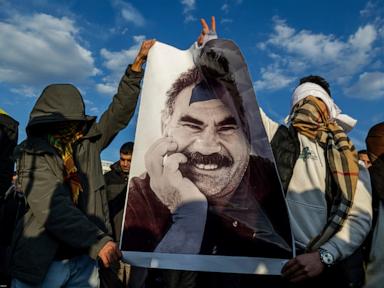
Decades of low-intensity conflict don't just end with a handshake. They change shape slowly, often behind stone walls and heavily guarded maritime borders. Turkey has quietly transferred imprisoned Kurdistan Workers' Party leader Abdullah Ocalan to a newly built section of his isolated prison on Imrali Island, signaling a subtle yet crucial shift in an ongoing, fragile peace push.
If you've followed the decades-long clash between the Turkish state and the PKK, you know that Ocalan's detention conditions have long served as a political lightning rod. For years, Kurdish politicians and activists demanded better treatment and communication access for the co-founder of the militant group. This latest housing upgrade isn't just about square footage or better amenities. It’s a calculated political signal.
Inside the Imrali Island Transfer
Ocalan has been locked away on Imrali Island in the Sea of Marmara since his capture in Kenya back in 1999. For most of that time, his isolation was absolute. But politics move fast when states realize military solutions have hit a ceiling. Lawmakers from the pro-Kurdish Peoples' Equality and Democracy Party, known as the DEM Party, confirmed the relocation after ongoing visits to the island.
Why does a cell change matter? Because Ocalan remains the central gravitational pull for the Kurdish political movement. Back when he issued a historic call for the PKK to disband and lay down its arms, the dynamic on the ground shifted. That declaration led directly to the PKK announcing an end to armed hostilities and subsequent legislative moves in the Turkish parliament offering conditional pardons for fighters.
The new facility is built to accommodate higher-level political engagement. Sources close to the delegations indicate that the updated infrastructure gives Ocalan better facilities to coordinate negotiations and potentially meet with a wider array of interlocutors, including journalists under specific state guidelines.
The Hurdles Ahead for the Peace Process
Scepticism remains high on both sides, and frankly, it's warranted. A prison transfer doesn't rewrite forty-two years of bloodshed that has claimed tens of thousands of lives.
Kurdish political figures argue that the state cannot expect a one-way street. Mithat Sancar and other DEM Party representatives have pointed out that moving Ocalan must accelerate real structural changes. They want a faster pace and less rigid demands from Ankara. President Recep Tayyip Erdogan's administration faces a delicate balancing act. Moving too fast risks alienating nationalist coalition partners, while moving too slow risks killing a rare window for a permanent settlement.
Trust is scarce. Past peace initiatives collapsed in bitterness and violence, leaving deep scars across southeastern Turkey and northern Iraq. Weapons decommissioning ceremonies and parliamentary pardons are good headlines, but verification and political rights remain sticky, unresolved problems.
What to Watch Next
Keep an eye on who gets access to Imrali in the coming weeks. If journalists and broader political delegations start making regular trips to Ocalan's new quarters, the peace process has entered an operational phase. If access remains locked down tightly, this move is merely cosmetic window dressing.
The real test is whether Ankara is willing to treat Ocalan as a legitimate counterparty for a political transition rather than just an isolated security asset. Until concrete legal reforms match the architectural upgrades on the island, treat every diplomatic breakthrough with cautious realism.


