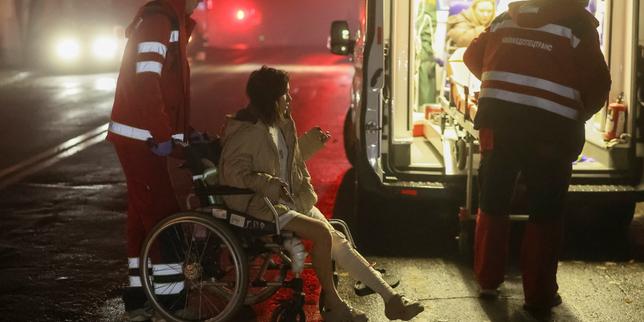
Freezing temperatures arrive early in Eastern Europe, and with them comes a deliberate campaign to break civilian resilience. Russia has systematically ramped up drone and missile assaults targeting Ukraine's power grids, heating plants, and water distribution networks. It is a calculated strategy designed to turn the harsh winter climate into an active combat multiplier.
When power substations in regions like Vinnytsia, Zhytomyr, and Kryvyi Rih absorb direct hits overnight, the consequences extend far beyond flickering lights. Water pumps stop working, district heating fails, and hospitals must rely immediately on backup diesel generators just to keep operating theaters warm. The objective isn't merely tactical disruption on the front lines. It is an attempt to erode the will of the urban population through sheer physical exhaustion and cold. Discover more on a similar issue: this related article.
The Mechanics of Infrastructure Warfare
Military analysts have watched this pattern repeat across multiple years of conflict, but the scale of the current assault cycle shows a distinct evolution. Data compiled by organizations monitoring the conflict indicates that monthly aerial strikes have surged dramatically compared to previous phases. Moscow is concentrating firepower on high-voltage transmission nodes and major power substations rather than decentralized local targets.
Taking out a major regional substation can trigger cascading blackouts across multiple oblasts, isolating hundreds of thousands of civilians from basic utilities. Municipal engineers and repair crews now operate in a constant race against time. They patch transformer yards and weld fractured water pipes under the threat of secondary strikes, knowing that as soon as a grid is repaired, another wave of drones may target the exact same spot. Additional analysis by Reuters explores similar views on this issue.
Humanitarian Realities on the Ground
International organizations, including United Nations agencies and humanitarian groups, have issued stark warnings about the compounding crisis. Freezing apartments, damaged windows, and broken sewage systems create severe health hazards, particularly for elderly residents and displaced families living in collective shelters. While local authorities rush to deploy mobile boiler units and hybrid solar backup systems, humanitarian aid can only patch over structural vulnerabilities.
You cannot substitute a national power grid with a generator. The sheer volume of destruction requires heavy industrial replacement parts—transformers, circuit breakers, and specialized cables—that take months to manufacture and deliver.
The Broader Strategic Calculus
Why focus so heavily on municipal utilities right now? Beyond the immediate humanitarian toll, this approach serves a psychological and political function. By making daily survival increasingly difficult, the strategy aims to fracture societal cohesion and test the limits of public endurance.
Yet, the response from Ukrainian civil society has been characterized by grim adaptation. Local communities have established thousands of neighborhood warming hubs equipped with independent generators, satellite internet, and hot water stations. People know what to expect because they have lived through previous winter campaigns.
The battle for the grid remains a central front in this war. As temperatures drop below freezing, the outcome depends just as much on the speed of engineering repairs and international air defense supplies as it does on the resilience of the troops holding the line.